
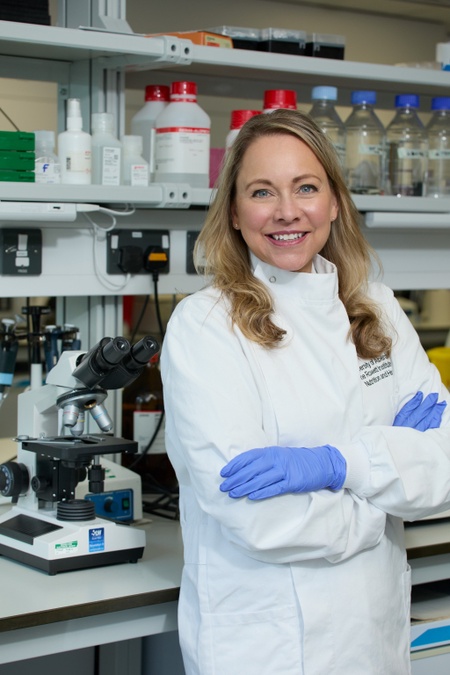

A team of scientists led by Professor Lora Heisler at the University of Aberdeen's Rowett Institute has identified a specific brain circuit that contributes to the natural decline in physical activity that occurs with aging.
Physical inactivity is a major risk factor for chronic disease and premature mortality, yet why people naturally become less active as they age has remained largely unknown.
In this study, which is published in Science Direct, researchers first demonstrated that adults aged 50 to 70 years walk more slowly, cover less distance each day, and carry more body fat than younger adults aged 17 to 30 years. Mice showed a similar age-related profile, allowing the team to investigate the underlying biology.
The team discovered that aging alters activity in parts of the brain involved in motivation and movement. Age-related increases in serotonin signalling appeared to suppress dopamine pathways that help drive physical activity
Professor Heisler said: “Think of the brain's movement system as a bicycle. The brain chemical dopamine helps push the pedals, driving the urge to move, while another chemical called serotonin puts a break on this pathway. With age, that brake becomes increasingly engaged, slowing voluntary movement. We found that releasing the brake restored more youthful levels of activity in older mice.
"Rather than the aging brain running out of fuel, our findings suggest it may be applying too much brake. By reducing signalling through this serotonin pathway, we were able to release that brake and restore more youthful patterns of movement in older mice."
Most strikingly, blocking this pathway restored youthful levels of activity in older mice. Older animals became more active, moved faster, accumulated less body fat, gained lean mass, and even showed improved grip strength.
The work reveals, for the first time, a defined brain circuit that programs age-related declines in spontaneous physical activity.
Professor Heisler continued: "Going forward, our findings suggest that targeting serotonin signalling in this pathway could one day provide new approaches to maintain mobility, independence, and healthy aging in an increasingly older population."
Dr Amanda Collis, Executive Director for Strategic Research and International at UKRI-Biotechnology and Biological Sciences Research Council (BBSRC), said:
"We all tend to slow down as we get older, but until now it hasn't been clear why.
“This BBSRC-supported research shows that part of the answer lies in the brain, identifying a pathway that appears to dial down our natural drive to be physically active with age.
“It's a great example of how fundamental bioscience can reveal the mechanisms behind healthy ageing and open up new possibilities for helping people stay active and independent for longer."