
Research led by University of Aberdeen and NATO Energy Security Centre of Excellence (ENSEC COE) has contributed to a new assessment of Europe's future fuel security, examining the challenges and opportunities facing NATO Allies in both peacetime and conflict.
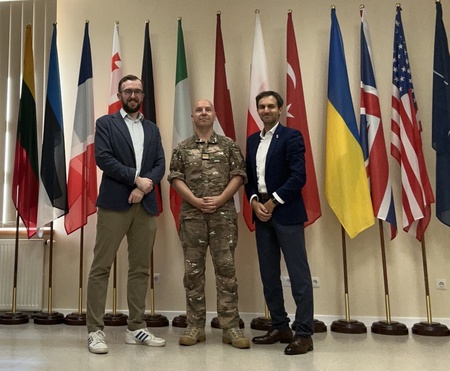
Dr Alfonso Martinez-Felipe, Senior Lecturer in Chemical Engineering at the University of Aberdeen, undertook a fellowship with the NATO Energy Security Centre of Excellence, headquartered in Vilnius, Lithuania. The fellowship focused on sustainable fuels, energy resilience and the role of future fuel supply chains in supporting defence and security.
The work has now culminated in the publication of the report Fuelling the Forces to 2050, produced under the ENSEC COE’s Future of Fuel Programme.
Two postgraduate students from the University’s MSc in Energy Transition Systems and Technologies - Jose Luis Megchun Rivera and Utibe-Abasi Ime Okon - also supported the Centre’s research as part of their MSc dissertations, contributing to the research and analysis underpinning the project.
The report considers whether NATO Europe can fuel its forces to 2050 and how fuel requirements and supply could evolve under different circumstances, including both peacetime and conflict scenarios.
The findings are intended to support professionals responsible for petroleum, oils and lubricants (POL) strategy, policy, analysis and logistics across NATO, national governments and military services. The report will be distributed to high-level representatives from NATO Headquarters and Supreme Headquarters Allied Powers Europe (SHAPE), as well as senior officials and policy advisers from the UK Department for Energy Security and Net Zero (DESNZ).
On 7 September, the research team presented the work to the NATO Energy Security Centre of Excellence and representatives from across NATO. Dr Martinez-Felipe attended the presentation in person in Vilnius, while the wider research team joined remotely.
During his visit, Dr Martinez-Felipe was also welcomed by Colonel Precheur, Chief of Staff of the ENSEC COE, and Colonel Kazokas, Director of the Centre, providing an opportunity to strengthen links between the University and the NATO-accredited organisation.
Dr Martinez-Felipe said: “It has been extremely rewarding to see the work undertaken during the fellowship develop into a published report and to have the opportunity to present our findings directly to NATO stakeholders in Vilnius.
“The project has also provided an excellent opportunity for our MSc students to gain experience working on a real-world energy security challenge, contributing to research with direct relevance to NATO and national decision-makers.
“Energy security, sustainable fuels and resilience are increasingly interconnected with defence and security. This collaboration demonstrates the value of bringing together academic expertise, students and international organisations to address these complex challenges.”
Ben Cook – UK Senior National Representative, said: “The University of Aberdeen’s support has been invaluable throughout this project. The research and analysis conducted by Alf, Jose-Luis and Ime have helped drive forward this landmark report on fuel security for the Alliance. Their contribution has been instrumental, and we remain excited about future collaboration with the University”
The report Fuelling the Forces is available through the NATO Energy Security Centre of Excellence.