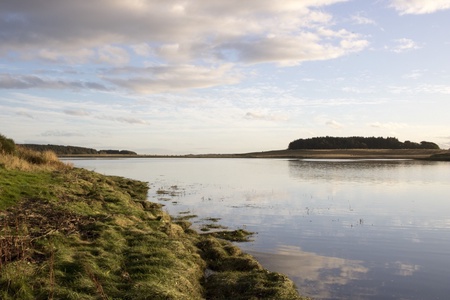

Scotland's rivers, lochs and coastlines deliver health benefits worth up to £123m a year in the Forth region alone, according to new research from the University of Aberdeen that puts a monetary value on the impact of blue spaces.
The Worth of Water report by University of Aberdeen and Public Health Scotland, published by Greenspace Scotland, found that around 1.1 million adults - 83.7% of the region’s adult population- visited a blue space during the past year.
Together they spent an estimated 105 million hours at rivers, lochs, beaches, coastlines and other blue spaces, underlining the scale of their role in everyday health and wellbeing.
The study, supported through the FORTH2O Commissioning Fund, uses three separate approaches to assess health value, estimating annual benefits worth £105.2m from exposure to nature, £123.3m from physical activity and £39.6m from aquatic activities. The figures measure different pathways to health benefits and should not be added together.
Lorraine Tulloch, Chief Executive of Greenspace Scotland, said “This research gives us hard evidence of something many people already feel instinctively, that spending time beside water can make a meaningful difference to our health and wellbeing.
“Putting a value on those benefits makes the case much stronger for rivers, lochs and coasts to be recognised not simply as attractive places to visit, but as important public health assets.
“The next step is making sure more people can benefit, particularly those who currently face the greatest barriers to accessing these spaces.”
Mental wellbeing emerged as one of the clearest benefits, with 93% of visitors saying blue spaces lifted their mood, 89.7% saying they helped them de-stress and 86% reporting a positive impact on their mental health.
Water itself was also a major reason for visiting. Almost half of users- 46.6%- said water was the primary reason for the majority of their visits, rather than simply the surrounding landscape or wider natural environment.
The report estimates that 57% of the benefits associated with exposure to nature and physical activity came from visits where the presence of water was a key motivation.
Walking was by far the most common activity, reported by 87.5% of visitors, while water sports including swimming were less common at 7.6%.
Dr Luis Loria-Rebolledo, Research Fellow at the Health Economics Research Unit at the University of Aberdeen, who led the research into blue spaces said: “One of the most important findings is that, for the first time, we have been able to separate the value of water itself from the wider natural environment, showing it is a significant health asset in its own right.
“As we did previously for NHS open spaces and adapting them for the Forth's blue spaces, we are expressing those benefits in terms of the equivalent NHS cost of delivering the same health gain, giving policymakers a clearer picture of the value these environments provide.
“People do not need to be swimming, sailing or taking part in organised water sports to gain these benefits- everyday physical activities such as walking beside a river, or simply spending time in nature on the coast, can also contribute to health and wellbeing.”
However, the study also found that access to those benefits is unequal.
People in high-income households were 23% more likely to visit blue spaces than those in low-income households, while disabled adults were almost three times as likely never to visit one.
Adults in poorer health were also almost twice as likely never to visit, despite the potential wellbeing benefits associated with spending time near water.
Car access was strongly linked to whether people visited blue spaces at all, while living close to one increased how frequently people visited.
Among existing users, poor weather and a lack of toilet facilities were the most commonly cited barriers to visiting more often.
For people who did not use blue spaces, distance and a lack of interest were the most frequently identified reasons.
The report says improving facilities, site quality, transport links and accessibility could help existing users visit more often, while targeted outreach could encourage greater use among communities currently benefiting least.
Dionne Mackison, Head of Place, Environment and Health Harms at Public Health Scotland, said: “This study adds to the growing evidence that Scotland’s blue spaces can support health and wellbeing, particularly through improved mental wellbeing and opportunities for physical activity.
“It also highlights that not everyone can equally access and benefit from these environments.
"Understanding the value of blue spaces can help inform action to support healthier communities and reduce health inequalities.”
The report points to a wider role for blue spaces within Scotland’s prevention and population mental health approaches, with the authors calling for their health value to be recognised alongside their environmental, recreational and social importance.
Its findings provide a new evidence base for decisions around investment, access and the future management of blue spaces across Scotland.
The Worth of Water report was supported through the FORTH2O Commissioning Fund.
The FORTH2O Partnership (Stirling Local Policy Innovation Partnership) was funded by the Economic and Social Research Council (ES/Y502364/1).