
While the clean energy transition offers major opportunities, a new report from University of Aberdeen researchers warns that current governance arrangements may leave coastal communities bearing the cost of energy transition while seeing limited long-term benefits.
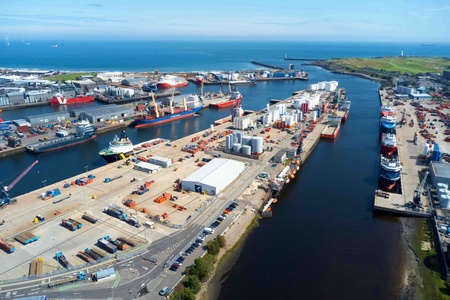
Drawing on more than 200 years of change across three coastal sites - Orkney, North-east Scotland and the Humber Estuary - the Just Transition Lab research suggests that today’s shift to offshore renewables must guard against echoing long-standing patterns of economic instability, limited local control, and uneven distribution of wealth.
The TRANSitions in Energy for Coastal Communities Over Time and Space (TRANSECTS) project examines successive waves of marine industry development - from 18th century whaling and fisheries, through offshore oil and gas, to the rapid expansion of renewable energy - showing how each has left lasting social and economic imprints on coastal areas.
Based on an analysis of 181 historical and contemporary records spanning the 1800s to the present day, the report finds that marine energy transitions are not isolated events, but cumulative processes. Decisions made decades, or even centuries ago, continue to shape how communities experience change today.
Across all three case studies, the report identifies persistent challenges for coastal communities, including:
- Limited local influence, driven by centralised and reactive governance structures
- Boom-and-bust economic cycles that leave communities vulnerable once industries decline
- Unequal distribution of benefits, with jobs, profits and investment often flowing elsewhere while local areas absorb environmental and social impacts
The research also highlights the deep connection between coastal communities and the sea, and how previous transitions have often been viewed locally as unfair when they disrupt long-standing industries, cultural identity, and ways of life.
Dr Amy McCarron, Research Fellow at the University of Aberdeen, said: “Marine energy transitions are not new for coastal communities - they have been happening for centuries. What our research shows is that many of the same challenges continue to reappear, particularly around who benefits, who bears the costs, and whose voices are heard in decision-making.”
The report warns that, without targeted intervention, the current expansion of offshore renewables could reinforce existing disparities rather than reduce them.
However, it also identifies clear opportunities to deliver a fairer transition. These include:
- adopting more place-based and forward-looking planning approaches
- improving coordination between national and local decision-making
- creating clearer, more consistent pathways for community benefit
Sustained investment in local capacity, skills and participation is also highlighted as critical to ensuring communities can actively shape their own futures.
Dr Daria Shapovalova, Just Transition Lab at the University of Aberdeen, said: “Understanding how past transitions have unfolded is essential if we are to deliver fairer outcomes in the future. Coastal communities have repeatedly adapted to major economic and environmental change, but too often without the tools or influence needed to shape those transitions.”
Dr Karen Alexander from Heriot-Watt University, principal investigator of TRANSECTS, added: "Given current debates regarding energy sovereignty, this report reveals that the decisions we make around marine energy can have complex implications and leave long-lasting legacies for communities.
"This report shows that we must adapt our governance processes if we are to support the creation of resilient coastal communities in the transition towards marine renewable energies, a key component of our future energy mix."
The report forms part of the wider TRANSECTS project, an interdisciplinary programme combining natural capital, social and cultural research to better understand marine energy transitions across time and place.
Its findings will inform ongoing policy discussions around offshore energy development, community benefit, and the UK’s pathway to net zero.
The Just Transition Lab continues to work with policymakers, industry and communities to support a more inclusive, planned and fair transition for coastal regions across the UK.