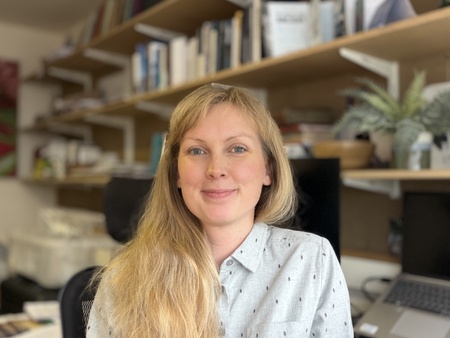

University of Aberdeen lecturer Dr Elisabeth Niklasson has been awarded a prestigious Philip Leverhulme Prize in recognition of her pioneering work on archaeology and political polarisation, heritage policy and governance, and archaeological funding mechanisms.
Chosen from over 350 nominations, Dr Niklasson is one of just 30 outstanding researchers across the UK to receive the £100,000 prize from the Leverhulme Trust. The awards support scholars whose work has already attracted international recognition and whose future careers are considered exceptionally promising. A total of £3million will be shared among this year’s winners, spanning the fields of Archaeology, Chemistry, Economics, Engineering, Geography, and Languages and Literatures.
“When I first heard I had received the Leverhulme Prize, I couldn’t believe it was true. It’s such an honour, and it’s incredibly energising for my research,” said Dr Niklasson.
She added: “It feels especially important in this moment, as society seems to be spiralling into ever deeper ‘us and them’ divisions. Heritage is often imagined as something that unites us, but it can also be weaponised in ways that deepen those divides.
"This prize encourages me to keep asking hard questions about the political uses of heritage and to take that work in new directions with my collaborators and students, who constantly inspire me with their curiosity and bold ideas.
"It provides the rare freedom to take intellectual risks, build new collaborations, and pursue ideas that can genuinely expand how we understand the role of the past in today’s world.”
Professor Anna Vignoles, Director of the Leverhulme Trust, said: “Selecting the winners becomes increasingly challenging year on year due to the extraordinarily high calibre of those nominated. We are immensely grateful to the reviewers and panel members who help us in our decision-making.”
Now in its 24th year, the Philip Leverhulme Prize scheme commemorates the contribution to the work of the Trust made by Philip, Third Viscount Leverhulme and grandson of William Lever, its founder.
“We continue our centenary celebrations with the announcement of this year’s prize winners,” Professor Vignoles added. “The Trust is delighted to support them through the next stage of their careers. The breadth of topics covered by their research is impressive — from landscape archaeology to biomolecular mass spectrometry, applied microeconomics to adaptable wearable robotics, and pyrogeography to critical applied linguistics.”