

The key to understanding how climate change affects the local biodiversity might lie with the youth, scientists have recently discovered.
A new study from the University of Aberdeen and McGill University Canada, and published in Global Ecology and Biogeography, has found that the impact of climate change on adult animals is strongly affected by the impact they experienced as juveniles.
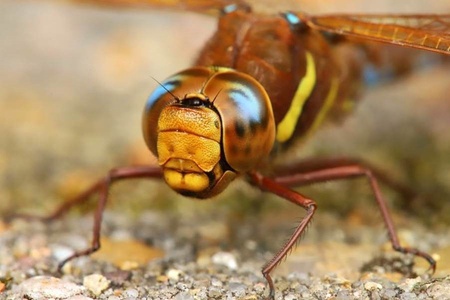
The scientists studied dragonflies, and found that, across Europe, the conditions in lakes, streams, and wetlands that shape the morphological diversity of aquatic juveniles (nymphs) are more important in explaining the diversity of terrestrial adults than conditions on land. These findings challenge conventional biodiversity models that focus only on the adult stage and provide a new framework for understanding the cascading effects of climate and habitat changes across life stages.
Study author Dr Lesley Lancaster from the University of Aberdeen’s School of Biological Sciences said: “This is a really important study, as many predictions for how climate might impact diversity are based on observations of adult stages, because these tend to be more active, visible, and larger. However, we find that the observed climate impacts are actually largely indirect consequences of processes impacting juveniles - but we did find that direct impacts of climate on adults becomes more important at higher latitudes.
Lead author Dr. Lars L. Iversen, from McGill University, added: “This is really useful going forward, as the results will provide a new general rule to guide how biodiversity scientists forecast climate responses - depending on juvenile or adult characteristics. The results can also help members of the public to understand how life stage is important in driving climate responses.
“Finally, scientists and policy makers will be able use the data to determine whether they should target juveniles or adults for active climate adaptation and mitigation practices.”
The study was funded by the Natural Sciences and Engineering Research Council of Canada, the Federal Ministry of Education and Research (Germany), and the Leibniz Association.