This is a past event
This presentation aims to contribute to the understanding of the emergence of (sub)/(post)-subcultures in Portugal, focusing particularly on female participants, and analysing the territorialisation of punk’s egalitarian and interventionist ethos as both an aesthetic and a reflexive praxis.
Although women have been present since the beginnings of punk, their visibility has been limited, revealing the persistence of symbolic violence and gendered exclusion within a movement that ostensibly advocated equality. This contradiction exemplifies the male hegemony that continues to shape popular and youth culture. Drawing on narratives of ten Portuguese women who experienced the early years of punk in Portugal (late 1970s to early 1980s), this study explores how these participants negotiated identity, visibility, and agency in a context that often relegated them to peripheral roles.
The absence of women in punk is particularly striking given the subculture’s focus on production rather than consumption: while previous youth cultures, such as mods or hippies, were largely defined by consumption patterns, punk privileged cultural production. Excluding women from creative roles effectively denied them full participation in the music scene. This absence was mirrored in theory. Cultural studies and sociology largely neglected the contribution of women to subcultural practices, reinforcing male dominance and perpetuating female invisibility. Women were thus confined to domestic spaces or subordinate positions as “girlfriends”, rather than recognised as active producers of cultural meaning. By analysing the experiences and representations of Portuguese punk women, this paper examines how gender differences and affinities were perceived, articulated, and transformed within this subculture. It aligns with recent critical perspectives that seek to expand the analysis of youth and musical cultures beyond Anglo-American contexts, foregrounding the local territorialisation of punk’s egalitarian and interventionist ethos as both a cultural and reflexive mode of action.
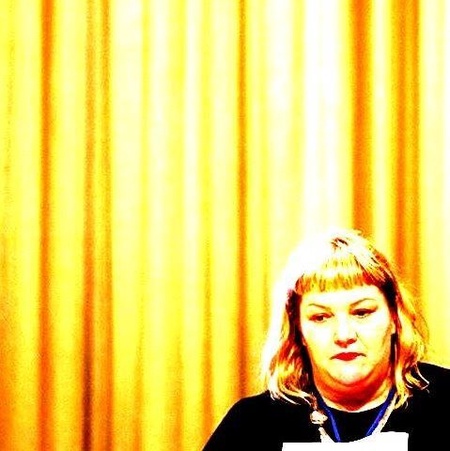
Professor Paula Guerra is associate professor of sociology at the University of Porto, Portugal, and researcher at the Institute of Sociology of the same university. Guerra is adjunct associate professor of the Griffith Centre for Social and Cultural Research in Australia. She is founder/coordinator of the Network All the Arts: Luso-Afro-Brazilian Network of the Sociology of Culture and the Arts. Guerra is the founder/coordinator of the KISMIF Conference, member of the Board of the Research Network of Sociology of Art of ESA and chair of IASPM Portugal.
Guerra is a leading international scholar on the topics of sociology of culture, of youth and arts. Based at University of Porto, Portugal, Guerra has consolidated worldwide partnerships and research networks. Guerra has been a visiting professor at numerous international universities. She is a member of the editorial council of several national and international journals, as well as editor and reviewer of several articles and books on a national and international level. Guerra is founding co-editor-in-chief (with Andy Bennett) of the Sage journal DIY, Alternative Cultures and Society (2023-) and the Bloomsbury Academic Series ‘Critical Studies in Do-it Yourself Cultures’.
- Speaker
- Professor Paula Guerra
- Venue
- King's College, KCF22
- Contact
-
Please contact Dr Christina Ballico should you wish to join us via Teams.