
This is a past event
In 2020, a consortium of more than 40 queer, intersectional rave collectives in Berlin organised a fully functioning mutual aid network within a month of the COVID-19 lockdown shuttering the city’s once-thriving electronic music scene. How was this possible, in such a short time? What latent skills and lived experiences contributed to this act of community care and organizing?
Seemingly in response to the rapid mainstreaming and concomitant white-/cishetero-washing of popular electronic music, the previous decade saw the emergence of numerous rave collectives seeking to re-center their local electronic music scenes around Black and Brown, queer and trans communities. Explicitly political in stance while also committed to local community-building, these collectives are notable for their adoption of principles, practices, and discourses from “grassroots” organizing and activism.
This lecture reflects on recent collaborative research activities that explore how research impacts queer electronic music collectives in Berlin. Over the summer of 2023, I worked with a community-based activist organisation to organise a series of Community Consultation Events (CCEs), aiming to capture the perspectives of nightlife collectives that serve intersecting communities of queer, trans, sex worker, migrant/refugee, and neurodiverse people. This constituted the preliminary phase of a larger research project that aims to investigate the resurgence in ‘grassroots’ community organising through electronic dance music in queer communities.
The lecture will present a preliminary analysis of these collectives’ experiences of research on and about their communities. This analysis will also afford a glimpse into the challenges, opportunities, and goals that impact queer, community-focused music organisers. The lecture will also reflect on methodology, particularly as it pertains to collaborative / participatory research methods as a means of integrating impact into the early phases of research, rather than as a post-fieldwork afterthought. Furthermore, it will share examples and insights regarding the methods, ethics, and logistics involved in conducting research among vulnerable communities—especially stigmatised ones.
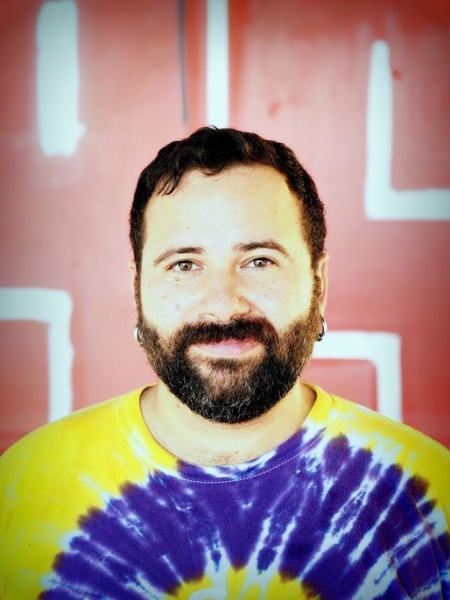
Luis Manuel Garcia-Mispireta is an Associate Professor in Ethnomusicology and Popular Music Studies at the University of Birmingham (UK). His research focuses on urban electronic dance music scenes, with a particular focus on affect, intimacy, stranger-sociability, embodiment, sexuality, creative industries and musical migration. He is a member and resident DJ of Berlin’s queer intersectional rave collective, ‘Room 4 Resistance’. Garcia-Mispireta is currently developing a project on “grassroots” activism and queer nightlife collectives; he also has a new monograph out, entitled Together Somehow: Music, Affect, and Intimacy on the Dancefloor (Duke University Press, 2023).
- Speaker
- Dr Luis-Manuel Garcia-Mispireta
- Venue
- MacRobert Building, MR055
- Contact
-
Please contact Dr Christina Ballico (Christina.Ballico@abdn.ac.uk) if you wish to join the event via Teams.