Adaku Ufere has achieved more in her 40 years than most people would manage across several lifetimes. An award-winning lawyer and expert in energy and development, she has, in the true spirit of the International Women’s Day theme of Give to Gain, tirelessly championed gender equality throughout her career.
Since graduating from Aberdeen with an LLM in Oil and Gas Law in 2012, Adaku has, among many other things, advised governments, multinationals and energy companies in more than 30 African countries, been named as one of the 40 under 40 leading lawyers in Nigeria and Attorney of the Year at the African Legal Awards, and been a Mandela Washington Fellow and Obama Foundation leader. She has also authored a respected fashion blog.
Inspired by the writing of John Grisham to become a lawyer, it was a role model of a different kind that took her into energy law – and to Aberdeen. “I started out at a maritime law firm, and at the time, a woman was named minister for petroleum in Nigeria. That was just very inspiring, because I thought this is a woman just like me; she’s fashionable, stylish, she doesn’t have to compromise her femininity, and she was still dominating in this very masculine environment. I thought ‘I want to be like that’.”
When she moved back to Nigeria after graduation, she began working for General Electric Oil and Gas, but she also became a volunteer legal adviser for a sexual and domestic violence charity in Lagos. “I guess when you have this lived experience growing up in an extremely patriarchal society, gender has always kind of been in the background somewhere,” she says. “I did that for a few years, and after I left GE I set up my own firm with a focus on energy and gender.”
Her eyes had been opened to concept of energy and gender partly by her experience as a Mandela Washington Fellow, a programme sponsored by the US State Department, and a Power Africa Fellowship. “It’s about how energy impacts women – this was not something I really understood at the time, how having lack of access to electricity could affect safety, health, education, economic power – all of that. So I set up a firm to kind of ‘mainstream’ gender.”
This involved training company managers in gender, creating gender toolkits, and mainstreaming HR processes. “Sometimes it was as simple as changing the gendered language in a job ad, or suggesting how they could accommodate women better, helping them to create gender policies,” she adds.
When she moved to her role as Deputy Chief of Party of the USAID-funded Power Africa West Africa Program in Ghana in 2019, becoming Chief of Party in 2021, she brought that expertise with her. This initiative is helping West Africa expand supply of, and access to affordable grid-connected electricity services through technical assistance, capacity building and transaction support and has a mandate to incorporate gender in everything they do.
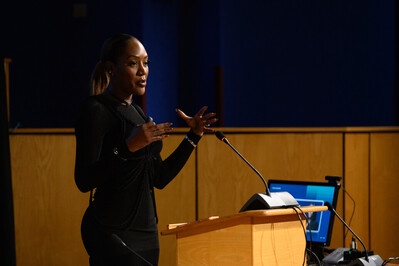
Adaku delivered the University’s Watt Hepburn Lecture in November 2025 with a talk entitled Purpose, Pivot, and Staying Power: Thriving Through the Energy Transition, where she shared insights from her career and valuable lessons on staying relevant and influential in times of transformation. She is now working with Mission 300, a country-led framework to accelerate energy access and clean energy deployment, which she combines with being a member of Court at the University of Aberdeen and a Board member at the UN Global Compact Network Ghana. Consistently true to herself and her beliefs, Adaku is committed to living the sort of life where she does absolutely everything that she enjoys - “I have a tattoo on my arm that says ‘uwa bu ofu mbia’, which means ‘you only live once’ in Igbo, my language.