Introduction
Art History and Theology & Religion at Aberdeen enable you to study art, architecture, and curation, situating European art in its global connectedness and its full complexities, together with the fascinating exploration of the origin, function, and meaning of religion, examining and comparing the major religions across the world, with special focus on Christian faith in historic and contemporary contexts.
Study Information
At a Glance
- Learning Mode
- On Campus Learning
- Degree Qualification
- MA
- Duration
- 48 months
- Study Mode
- Full Time
- Start Month
- September
- UCAS Code
- VVH6
- Pathway Programme Available
- Undergraduate Foundation Programme
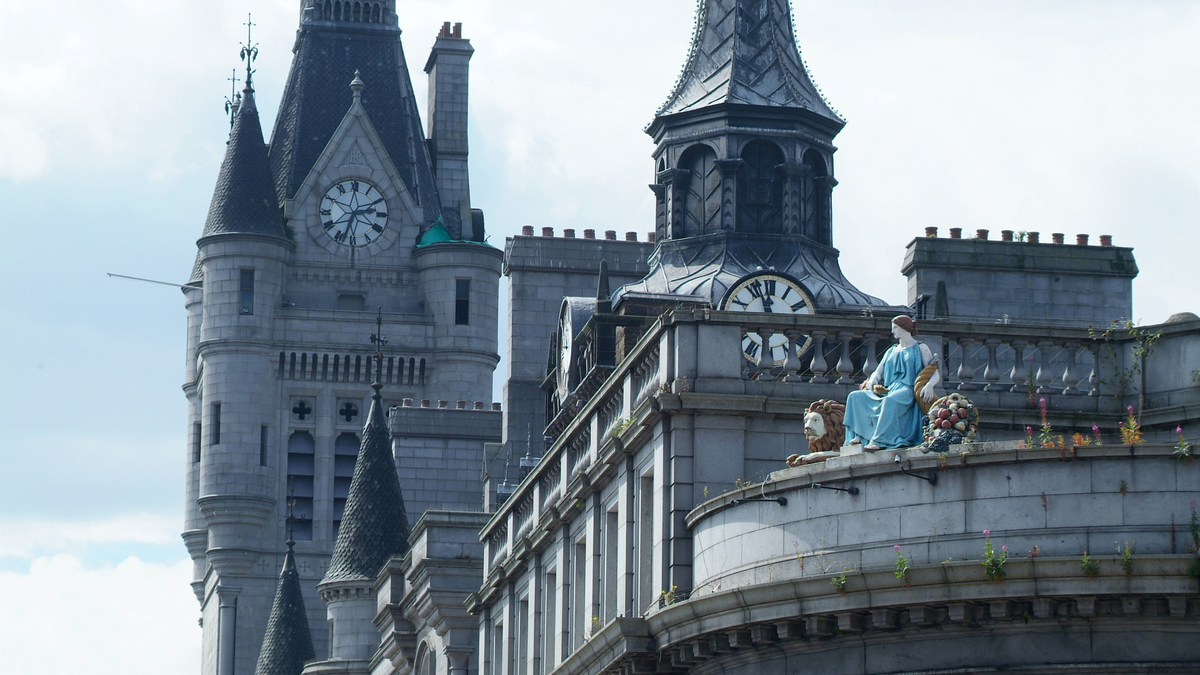
The undergraduate programme in Art History at Aberdeen achieves regular plaudits for its student satisfaction rates. Join us for an outstanding student experience at our beautiful historic campus in Old Aberdeen, inspired by academics whose specialisms include environmental and political art, exhibition history and curation, theory and historiography, from the medieval period to the present day. Beyond the classroom, you can get involved with the student-led Art History society and undertake paid internships and volunteering opportunities within our nationally significant University Collections, and local arts organisations including Aberdeen Art Gallery, Grampian Hospitals Art Trust and Peacock Visual Arts. And as a graduate, you will be ideally placed to pursue a career in the art gallery and museum sectors, arts education, auction houses, publishing and journalism, fine art conservation, or postgraduate study.
Studying Theology & Religion, you’ll gain a sound understanding of the major religious traditions of the world, including their historical development and contemporary importance, with a special focus on Christian faith, life and doctrine in its historical, institutional and contemporary context. You’ll study biblical languages, the history of the church in the West, the Reformation in Scotland, the role of religion in ethical and political debates, and religious aspects of disability.
As a graduate, you’ll have the specialist and the transferable academic skills to be highly employable in a wide range of roles, whether you choose to specialise in church ministry and related roles, art gallery and museum sectors, or many other careers for which your skills will be invaluable.
Aberdeen Global Scholarship
The University of Aberdeen is delighted to offer eligible self-funded international on-campus undergraduate students a £6,000 scholarship for every year of their programme.
View the Aberdeen Global ScholarshipWhat You'll Study
- Year 1
-
Compulsory Courses
- Academic Writing for Divinity, History & Philosophy (AW1007)
-
This compulsory evaluation is designed to find out if your academic writing is of a sufficient standard to enable you to succeed at university and, if you need it, to provide support to improve. It is completed on-line via MyAberdeen with clear instructions to guide you through it. If you pass the evaluation at the first assessment it will not take much of your time. If you do not, you will be provided with resources to help you improve. This evaluation does not carry credits but if you do not complete it this will be recorded on your degree transcript.
- Getting Started at the University of Aberdeen (PD1002)
-
This course, which is prescribed for level 1 undergraduate students (and articulating students who are in their first year at the University), is studied entirely online, takes approximately 5-6 hours to complete and can be taken in one sitting, or spread across a number of weeks.
Topics include orientation overview, equality and diversity, health, safety and cyber security and how to make the most of your time at university in relation to careers and employability.
Successful completion of this course will be recorded on your Enhanced Transcript as ‘Achieved’.
- Introduction to Art History (HA1004)
-
15 Credit Points
This course explores art history in the Western world from antiquity to the nineteenth century. We examine the artistic production of distinct historical periods, with reference to their social, religious, political and cultural contexts, and consider art history’s use of specific labels and chronologies, from Classical and Medieval, to Renaissance, Baroque, and Romantic art.
- Introduction to Modern and Contemporary Art (AH1503)
-
15 Credit Points
This course discusses key works and movements in the history of art from c. 1800 to today. It serves as an introduction to one of the most dynamic and multifaceted chapters in art history. Topics to be discussed may range from the Pre-Raphaelites and the rise of abstraction to contemporary performance art. The course will also consider the global intersections of Western art, aiming to de-centre our understanding of what counts as 'modern'
Optional Courses
Select at least 60 credit points from level 1 in Divinity or the following approved courses:
- Latin 1 (LT1009)
- Latin 2 (LT1507)
Also, select further courses of choice to make up 120 credit points.
- Latin 1 (LT1009)
-
15 Credit Points
Latin 1 is an introductory, intensive course for those with little or no previous exposure to Latin. Students completing this course should have a Latin vocabulary of about 400 words and a basic understanding of Latin grammar and syntax. Students successfully completing this course will be adequately prepared to attend Latin 2. Students will very likely discover that their knowledge of English vocabulary and grammar/syntax is improved by their study of Latin. The etymological roots of many English words can be traced to the Latin language.
- Latin 2 (LT1507)
-
15 Credit Points
Latin 2 picks up where Latin 1 finished in first term. By the end of this course students should have a more or less comprehensive understanding of Latin syntax and grammar, a Latin vocabulary of 700-800 words, and should be capable of translating simple Latin texts into idiomatic English. Students will very likely discover that their knowledge of English vocabulary and grammar/syntax is improved by their study of Latin.
- Year 2
-
Compulsory Courses
- Art Matters: Materials and Techniques (HA2511)
-
30 Credit Points
This course focuses on how artworks are made. Students will be introduced to a wide range of materials, techniques and processes over the centuries relating to paintings, prints, drawings, sculpture, photography and more. Each method and material will be examined using case-study examples, with discussion opening out to issues of the agency of materials and media and their cultural logics. In doing so, students will learn how artistic intentions are shaped and determined by material qualities.
Optional Courses
Select ONE course from the options below, plus a further 60 credit points from level 2 courses in Divinity.
- What is Art? (AH2001)
-
30 Credit Points
‘Art’ is a controversial category. In museums, you might see urinals and cardboard boxes exhibited – but what earns them this accolade? Is it about skill? Creativity? Beauty? Who decides what counts as ‘good’ art? And why are museums full of stuff made by white men? This course discusses these and related questions. It will introduce you to a wide range of historical definitions of art, and discuss key works, from antiquity to Instagram - many of which challenged the boundaries of ‘art’.
- Object Lessons: Ten Works in Context (HA2012)
-
30 Credit Points
This course focuses on ten art objects, mapping the wealth and diversity of art historical research: from iconic 'masterpieces' to popular imagery, votive objects and craft. Works discussed may range from the Parthenon marbles and Velazquez' 'Las Meninas' to wax penises and pub signs.
Each case study introduces different questions and approaches for discussing art objects: a series of lessons in critical interpretation.
- Year 3
-
Optional Courses
Select ONE of the following:
- AH3501 - Curation: Theory and Practice
- AH3507 - Climates of Classicism: Scottish Travellers in Greece, 1770-1880
- HA351A - Italian Mural Painting and the Making of Visual Cultures, 1400-1500
Plus, select ONE of the following:
- HA3082 - Painting in Tudor and Early Stuart England
- AH3008 - Reproduction and the Body in Modern and Contemporary Art after 1945
Plus, select 60 credit points from course(s) from level 3 courses in Divinity.
- Curation: Theory and Practice (AH3501)
-
30 Credit Points
This course focuses on the theory and practice of curation, making use of the internationally renowned University Museums and Special collections, which include artworks and material culture from the earliest times to the present day. The course comprises a series of seminars covering topics, including museum and exhibition history, object selection, exhibition texts and education, which prepare the ground for student curatorial teams to design an exhibition proposal. The course is assessed by portfolio work, a presentation and a position paper. It is co-taught by Art History and Museums and Special Collections.
- Climates of Classicism: Scottish Travellers in Greece, 1770 - 1880 (AH3507)
-
30 Credit Points
Throughout the 19th century, countless artists travelled to Greece in search for the splendours of antiquity. Many were disappointed by the rugged and mountainous country -
but for many Scottish travellers Greece proved surprisingly similar to their homeland. We will focus on these Scottish artists and antiquaries travelling to Greece, and their experiences.
The course is based on the study of material in Aberdeen collections, serving also as hands-on training in work with primary sources.
- Italian Mural Painting and the Making of Visual Cultures, 1400 - 1500 (HA351A)
- Painting in Tudor and Early Stuart England (HA3082)
-
30 Credit Points
This module develops students' knowledge and understanding of early modern European painting, providing a chronological overview of elite portraiture and diplomatic commissions in England between 1530 and 1650. Artists studied in their English contexts include Hans Holbein, Nicholas Hilliard, Peter Paul Rubens and Anthony Van Dyck. Furthermore, this module asks important questions about the persuasive and diplomatic possibilities of the visual arts, the relationship between painter and patron, and the impact and legacy of foreign artists on British painting and visual culture through the sixteenth and seventeenth centuries and beyond.
- Reproduction and the Body in Modern and Contemporary Art After 1945 (AH3008)
- Year 4
-
Optional Courses
Select ONE of the following dissertation options:
- Art History Dissertation (HA4588)
- Dissertation (DR4044)
- Dissertation (DR4544)
Also, select ONE of the following:
- AH4008 - Reproduction and the Body in Modern and Contemporary Art after 1945
- HA4082 - Painting in Tudor and Early Stuart England
- AH4011 - Art and the City
Plus, select further credit points from level 4 Divinity courses to gain 60 credits in the discipline.
Select 30 credit points from level 4 Art History courses if required to gain 60 credits in the discpline.
- History of Art Dissertation (HA4588)
-
30 Credit Points
Your dissertation is intended to give you the opportunity to carry out a piece of sustained research on a topic of your own choice and to demonstrate to the examiners your ability to present the results of such research in a proper, scholarly manner. Your research may be of various kinds. It may address works of art (or a single work of art) directly, through first-hand study in galleries, museums, or private collections, or it may be of a more literary kind, addressing critical or theoretical problems. Or it might involve both.
- Dissertation (DR4544)
-
30 Credit Points
This course involves the writing of a dissertation in one of the sub-disciplines in Divinity and Religious Studies. Independent Research work is done under the supervision of a member of staff. The dissertation is an extended essay, of no more than 10,000 words inclusive of references. Please note the 10,000 words does not include the bibliography
- Dissertation (DR4044)
-
30 Credit Points
This course involves the writing of a dissertation in one of the sub-disciplines in Divinity and Religious Studies. Independent Research work is done under the supervision of a member of staff. The dissertation is an extended essay, of no more than 10,000 words inclusive of references. Please note the 10,000 words does not include the bibliography
- Reproduction and the Body in Modern and Contemporary Art After 1945 (AH4008)
- Art and the City (AH4011)
-
30 Credit Points
This course focuses on the physical and social contexts for the production and consumption of works of art and architecture. At the core of this course is a subsidised fieldtrip to a European city, allowing for an in-depth study of the urban contexts of art across time. Seminars and the fieldtrip will discuss themes such as urbanism, the specificities of public and private, sacred and profane spaces, and histories of collecting.
- Painting in Tudor and Early Stuart England (HA4082)
-
30 Credit Points
This module develops students' knowledge and understanding of early modern European painting, providing a chronological overview of elite portraiture and diplomatic commissions in England between 1530 and 1650. Artists studied in their English contexts include Hans Holbein, Nicholas Hilliard, Peter Paul Rubens and Anthony Van Dyck. Furthermore, this module asks important questions about the persuasive and diplomatic possibilities of the visual arts, the relationship between painter and patron, and the impact and legacy of foreign artists on British painting and visual culture through the sixteenth and seventeenth centuries and beyond.
We will endeavour to make all course options available. However, these may be subject to change - see our Student Terms and Conditions page. In exceptional circumstances there may be additional fees associated with specialist courses, for example field trips.
How You'll Study
Learning Methods
- Field Trips
- Group Projects
- Individual Projects
- Lectures
- Tutorials
Assessment Methods
Students are assessed by a combination of assessment methods, including:
- Essays
- Source analyses
- Visual-based assessments
- Reflective reports
- Presentations
The exact mix of these methods differs between subject areas, year of study and individual courses. In addition, all Honours students submit a dissertation.
Why Study Art History and Theology & Religion?
Why Art History
- Our magnificent art collection, including the generous gifts of alumni through the centuries, and modern artworks by leading Scottish artists, makes our spaces special, adding thought-provoking inspiration to our campus.
- The inspiration of the beautiful King’s College Chapel, begun in 1495 by University founder Bishop Elphinstone, is a treasure-house of history, showcasing some of the finest work of medieval craftsmen in Europe.
- Spectacular, award-winning Sir Duncan Rice Library with an excellent modern collection of art history books covering all periods, particularly strong in 18th and 19th century material, including art theory and criticism, archaeology and travel.
- The Department of Art History believes in first-hand engagement with artworks and architecture. Field trips to galleries, museums and heritage collections take place at every level of study. Fourth-year students have the opportunity to study and then visit a major European city, with recent destinations including Florence and Berlin.
- Opportunities to undertake paid internships and volunteering with local arts and culture organisations, including Aberdeen Art Gallery, Grampian Hospital Arts Trust and Peacock Visual Arts.
- A vibrant urban arts scene featuring cultural events across the year, including Nuart, the internationally renowned street art festival, and Spectra, Scotland’s Festival of Light.
- A packed campus programme of student and public events, departmental research seminars, and exhibitions.
Entry Requirements
Qualifications
The information below is provided as a guide only and does not guarantee entry to the University of Aberdeen.
General Entry Requirements
- 2025 Entry
-
SQA Highers
Standard: BBBB
Applicants who have achieved BBBB (or better), are encouraged to apply and will be considered. Good performance in additional Highers/ Advanced Highers may be required.
Minimum: BBC
Applicants who have achieved BBC at Higher and meet one of the widening participation criteria above are encouraged to apply and are guaranteed an unconditional offer for MA, BSc and BEng degrees.
Adjusted: BB
Applicants who have achieved BB at Higher, and who meet one of the widening participation criteria above are encouraged to apply and are guaranteed an adjusted conditional offer for MA, BSc and BEng degrees.
We would expect to issue a conditional offer asking for one additional C grade at Higher.
Foundation Apprenticeship: One FA is equivalent to a Higher at A. It cannot replace any required subjects.
More information on our definition of Standard, Minimum and Adjusted entry qualifications.
A LEVELS
Standard: BBC
Minimum: BCC
Adjusted: CCC
More information on our definition of Standard, Minimum and Adjusted entry qualifications.
International Baccalaureate
32 points, including 5, 5, 5 at HL.
Irish Leaving Certificate
5H with 3 at H2 AND 2 at H3.
Entry from College
Advanced entry to this degree may be possible from some HNC/HND qualifications, please see www.abdn.ac.uk/study/articulation for more details.
- 2026 Entry
-
SQA Highers
Standard: BBBB
Applicants that present with BBBB will usually receive an unconditional offer.
Where we have more applicants than places we may need to ask for more than the minimum so continued engagement in school is recommended.
Widening Access: BBC
Applicants who meet one or more of our widening access metrics and present with BBC, are guaranteed an unconditional offer.
Foundation Apprenticeship: One FA is equivalent to a Higher at A. It cannot replace any required subjects.
Note: We do not double count a Higher and Advanced Higher in the same subject, but we do consider that a B grade at Advanced Higher is equivalent to an A grade at Higher.
National 5 English (or equivalent) is required at Grade C or above.
A LEVELS
Standard: BBC
Widening Access: CCC
GCSE English (or equivalent) is required at Grade C/4 or above.
BTEC LEVEL 3 EXTENDED DIPLOMA
DMM in related subjects.
Note: BTEC Level 3 Extended Certificate (Subsidiary Diploma) achieved at Distinction level, is normally acceptable in lieu of one A Level at grade B.)
GCSE English (or equivalent) is required at Grade C/4 or above. GCSE Mathematics at Grade C/4 is also required for Accountancy, Economics and Finance programmes.
IRISH LEAVING CERTIFICATE
Five subjects at Higher at H3.
INTERNATIONAL BACCALAUREATE
32 points including 5, 5, 5 at HL.
SL in English is also required.
The information displayed in this section shows a shortened summary of our entry requirements. For more information, or for full entry requirements for Arts and Social Sciences degrees, see our detailed entry requirements section.
English Language Requirements
To study for an Undergraduate degree at the University of Aberdeen it is essential that you can speak, understand, read, and write English fluently. The minimum requirements for this degree are as follows:
IELTS Academic:
OVERALL - 6.0 with: Listening - 5.5; Reading - 5.5; Speaking - 5.5; Writing - 6.0
TOEFL iBT:
OVERALL - 78 with: Listening - 17; Reading - 18; Speaking - 20; Writing - 21
PTE Academic:
OVERALL - 59 with: Listening - 59; Reading - 59; Speaking - 59; Writing - 59
Cambridge English B2 First, C1 Advanced or C2 Proficiency:
OVERALL - 169 with: Listening - 162; Reading - 162; Speaking - 162; Writing - 169
Read more about specific English Language requirements here.
International Applicants who do not meet the Entry Requirements
The University of Aberdeen International Study Centre offers preparation programmes for international students who do not meet the direct entry requirements for undergraduate study. Discover your foundation pathway here.
Fees and Funding
You will be classified as one of the fee categories below.
| Fee category | Cost |
|---|---|
| EU / International students | |
| Tuition Fees for 2026/27 Academic Year | £20,800 |
| Tuition Fees for 2026/27 Academic Year (Self-funded Students *) | £14,800 |
| Home Students | |
| Tuition Fees for 2026/27 Academic Year | £1,820 |
| England, Wales, Northern Ireland, and Republic of Ireland | |
| Tuition Fees for 2026/27 Academic Year | £9,790 |
Scholarships and Funding
UK Scholarship
Students from England, Wales and Northern Ireland, who pay tuition fees may be eligible for specific scholarships allowing them to receive additional funding. These are designed to provide assistance to help students support themselves during their time at Aberdeen.
Aberdeen Global Scholarship
The University of Aberdeen is delighted to offer eligible self-funded international on-campus undergraduate students a £6,000 scholarship for every year of their programme. More about this funding opportunity.Funding Database
View all funding options in our Funding Database.
Careers
Our graduates gain essential skills, including critical thinking, oral and written communication, task management and organised and disciplined working practices, which are crucial in a wide range of professional careers.
By working in partnership with local collections and cultural institutions, Art History students at Aberdeen develop desirable vocational awareness, preparing them for future careers. Our Art History alumni have gone on to work in museums and galleries, the art trade and auction houses, fine art and building conservation, publishing, journalism, libraries and universities.
There are many opportunities at the University of Aberdeen to develop your knowledge, gain experience and build a competitive set of both degree-specific and transferable skills to enhance your employability. This is essential for your future career success. The Careers and Employability Service can help you to plan your career and support your choices throughout your time with us, from first to final year, and beyond.
Our Experts
Information About Staff Changes
You will be taught by a range of experts including professors, lecturers, teaching fellows and postgraduate tutors. However, these may be subject to change - see our Student Terms and Conditions page.
Discover Uni
Discover Uni draws together comparable information in areas students have identified as important in making decisions about what and where to study. You can compare these and other data for different degree programmes in which you are interested.
Get in Touch
Contact Details
- Address
-
Student Recruitment & Admissions
University of Aberdeen
University Office
Regent Walk
Aberdeen
AB24 3FX