
7 results
-
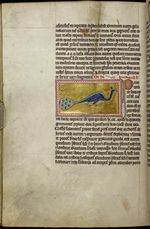
Folio 59v
The duck, continued. De pavone; Of the peacock
COMMENTARYText The peacock[...]Illustration A fine portrait including the peacock's tail[...] In fact the peacock was a great aristocratic delicacy but perhaps it was not often eaten by the clergy involved with producing the text
TRANSLATIONOf the peacock The peacock gets its name, pavo, from the sound of its cry[...] A certain poet said of it: 'You are lost in admiration, whenever it spreads its jewelled wings; can you consign it, hard-hearted woman, to the unfeeling cook?' (Martial, Epigrams, xiii, 70) 'Solomon's fleet went to Tharsis once every three years and brought from there gold and silver, elephants' teeth and apes, and peacocks' (see 2 Chronicles, 10: 21)
-
Folio 60v
The peacock, continued.
COMMENTARYText The peacock has a serpent's head, a sapphire breast, wing feathers tinged in red and 'eyes' on its tail
TRANSLATIONSince we have said a great deal by way of introduction, it remains for us Next to discuss the peacock, the subject we intended to deal with[...] The peacock, as Isidore says, gets its name from the sound of its cry[...] The peacock is called pavo, therefore, from pavor, fear, since its cry produces fear in those who hear it[...] When the peacock lives it Tharsis, it signifies the effete[...] The peacock has hard flesh, resistant to decay, which can only with difficulty be cooked over a fire by a cook, or can scarcely be digested in the stomach, because of the heat of its liver[...] The peacock has a fearful voice, an unaffected walk, a serpent's head and a sapphire breast[...] The peacock has a fearful voice, as does a preacher when he threatens sinners with the unquenchable fire of Gehenna
-
Folio 61r
The peacock, continued. De aquila; Of the eagle
COMMENTARYText The peacock should keep his tail down
TRANSLATIONThe red colour in the the peacock's feathers signifies his love of contemplation[...] The fact the peacock seems to have eyes in its tail, is a reference to every teacher's capacity to foresee the danger that threatens each of us at the end[...] The colour green, [on the peacock's serpent-like head], is also present in the tail, that the end might match the beginning[...] The diversity of the peacock's colouring, therefore, signifies the diversity of the virtues[...] Note also that the peacock, when it is praised, raises its tail, in the same way that any churchman gets ideas above his station out of vainglory at the praise of flatterers[...] The peacock sets out its feathers in an orderly fashion; in the same way, a teacher believes that no matter he does, he has done it in an orderly way[...] But when the peacock lifts its tail, it exposes its rear, in the same way that whatever is praised in the conduct of the teacher is derided when he succumbs to pride[...] The peacock, therefore, should keep its tail down, just as what a teacher does, he should do with humility
-
Folio 60r
The peacock, continued.
COMMENTARYText The peacock
TRANSLATIONThe fleet is sent to Tharsis, therefore, from where it is said to bring back gold, silver, elephants' tusks, apes and peacocks[...] The fleet also brought apes and peacocks, that is, the mockers and the effete, so that those who had been, in Tharsis, scoffers and pleasure-seekers might live with humility in the peace of conversion
-
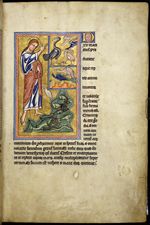
Folio 2r
Creation of the birds and fishes
COMMENTARYBelow, the peacock can be identified but the lighter birds are not specific
-
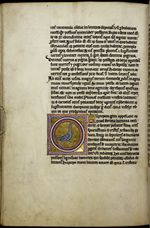
Folio 50v
The owl, continued. [De hupupa] ; Of the hoopoe.
COMMENTARYThe crest illustrated is more like a peacock's crest
-
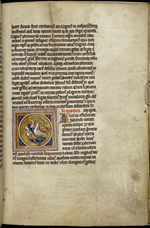
Folio 59r
The swan, continued. De anatibus; Of the duck
COMMENTARYPrick marks from the peacock illustration on f