
History and International Relations (MA)
Introduction
History and International Relations at Aberdeen is the perfect combination to immerse yourself in studying all aspects of human activity in the past and bring your knowledge right up to date with a broad exploration of our complex contemporary world and the developments which are making history today. You will graduate ideally prepared for a wide range of careers in international affairs, media and business and with skills to open many other career paths too.
Study Information
At a Glance
- Learning Mode
- On Campus Learning
- Degree Qualification
- MA
- Duration
- 48 months
- Study Mode
- Full Time
- Start Month
- September
- UCAS Code
- VLC2
- Pathway Programme Available
- Undergraduate Foundation Programme
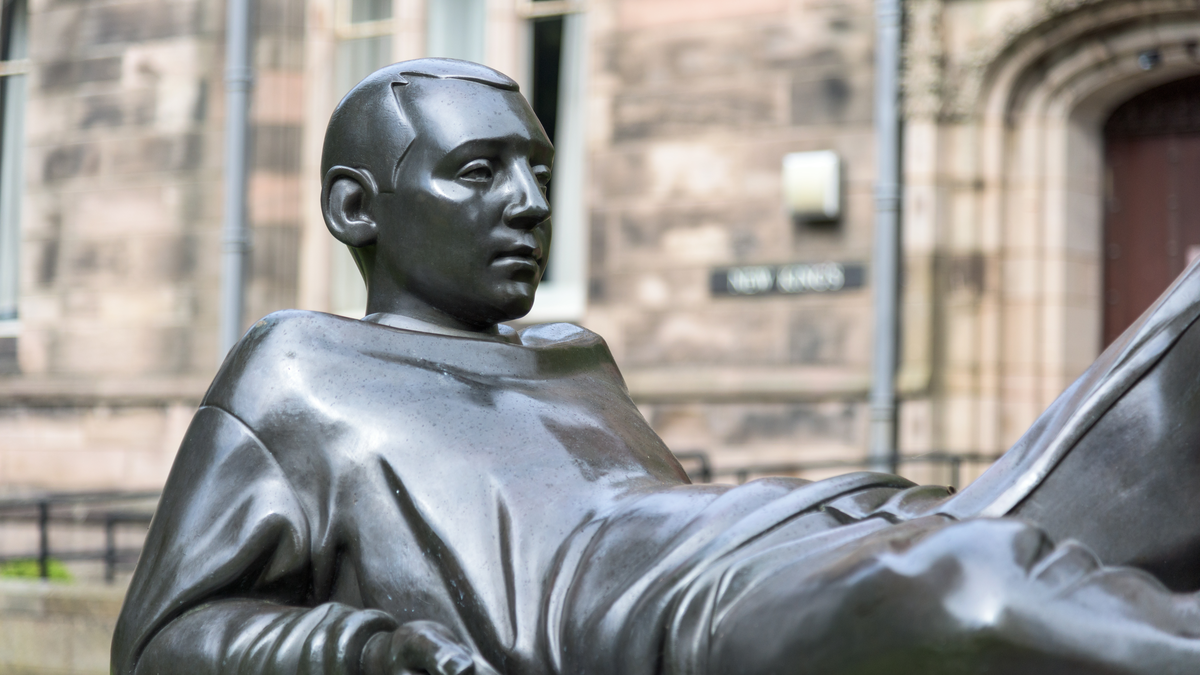
You will be enthused and inspired by teachers who are leaders in their fields, with expertise as diverse as medieval Scandinavia, early-modern Poland and modern East Asia and enthralled by our wonderful collections of historic treasures collected by distinguished alumni over the centuries.
In International Relations, you will look closely at how nations and organisations interact, what contributes to global wealth and poverty and persisting inequalities. You will study regional and international tensions, nationalism, concepts of democracy – and ever-present concerns of conflict and peace.
You will be taught by internationally renowned academics with strong track records in publishing international papers and articles and who appear regularly in the media, analysing and explaining national, European and world developments from the viewpoint of their own area of expertise and research.
You will gain the perfect foundation for international career possibilities including international business, NGOs and international development, plus local and national government, politics, and journalism and with transferable skills including critical analysis and communication sought by employers in all sectors.
What You'll Study
- Year 1
-
Year 1: Compulsory Courses
- Making History (HI1027)
-
15 Credit Points
This course will introduce students to the subject of university level history. Team taught lectures will introduce students to approaches, sources, and the dilemmas facing academic historians.
- Politics & International Relations 1: Democracy and Governance (PI1018)
-
15 Credit Points
Politics and International Relations impacts on all parts of our lives, with more specifically it being the study of ideas, events, institutions and choice. Studying these provides us with both knowledge of the world and also how it operates and functions. It also changes our perception of our surroundings and makes us aware of an ever changing global context. This course will introduce students to concepts and ideas that form the basis for the study of these disciplines while simultaneously also helping us understand our own place within a global context.
- Politics & International Relations 2: Power and Conflict (PI1518)
-
15 Credit Points
Politics is the study of multiple forms of power than impacts our lives and the world we live in. It shapes how people and groups cooperate or clash with each other. In this course, we will the ideas, institutions, complex histories, global dynamics, and systems that shape politics and international relations. Students will learn key concepts and theories of the discipline, and develop their skills in understanding and analysing global politics.
- Getting Started at the University of Aberdeen (PD1002)
-
This course, which is prescribed for level 1 undergraduate students and articulating students who are in their first year at the University, is studied entirely online, is studied entirely online, takes approximately 2-3 hours to complete and can be taken in one sitting, or spread across the first 4 weeks of term.
Topics include University orientation overview, equality & diversity, MySkills, health, safety and cyber security, and academic integrity.Successful completion of this course will be recorded on your Transcript as ‘Achieved’.
Year 1: Optional Courses
Plus a further 30 credit points from Level 1 History or History of Art courses.
Plus further course(s) of choice to gain 120 credit points.
- Year 2
-
Year 2: Compulsory Courses
- Ideas and Ideologies in Politics and International Relations (PI2009)
-
30 Credit Points
Ideas and ideologies are core to teaching, learning and research in Politics and International Relations. Theoretical developments are at the forefront of academic debates within the discipline, demonstrated by the appearance of a number of new approaches as more traditional theories have struggled to account for an ever changing world. This course will introduce students to these with profound questions and struggles over identity, belonging, justice and rights underpinning these theoretical debates.
- Global Politics: Equality and Inequality (PI2508)
-
30 Credit Points
Equality and inequality are at the forefront of many debates within contemporary Politics and International Relations. This course will examine the historical context, theoretical underpinnings, and also key concepts which continue to uphold equality and inequality on a global scale.
Year 2: Optional Courses
Plus 60 credit points from available Level 2 History courses.
- Year 3
-
Year 3: Compulsory Courses
Researching in the 21st Century (PI3069)
- Thinking History (HI356J)
-
30 Credit Points
This course looks at how history is written. It considers the problems involved in studying and explaining the past, and the many dilemmas faced by historians in reconstructing it. By examining the ways in which history has been written from the Ancient Greeks to Postmodernism, it considers the limits of historical study, asks whether history can ever be a science, and reveals the assumptions behind the various approaches to history that inform its writing. It is designed to provide honours history students with an essential understanding of what they are doing when they study history.
Year 3: Optional Courses
Plus 30 credit points from level 3 courses in History, or one of the following approved courses:
History of Medicine (ME33HM)
Architecture and Power (AH3014)
Painting in Tudor and Early Stuart England (AH3517)
Plus one Term 2 level 3 Politics and International Relations course from the Politics and International Relations:
Employer-led Interdisciplinary Project (ED3537)
International Security (IR3518)
Political Parties in Britain (PI3562)
Soviet and Post-soviet Russian Foreign Policy (PI3565)
International Terrorism Counterterrorism & International Relations (PI3567)
Memory and Politics of the Past (PI3570)
Human Rights in Global Politics (PI3572)
The Global Politics of Secession (PI3582)
- History of Medicine (ME33HM)
-
30 Credit Points
The course will involve each student working individually on a historical project of his or her own choice, under the supervision of the course co-ordinator.
Students will be required to produce a research proposal and progress reports, to prepare an essay and make a presentation of their findings to the class. The aim of the option is to give students the opportunity to research and present, individually, in spoken and written forms, a history of medicine topic of their own choice, using both primary and secondary sources. - Architecture and Power (AH3014)
-
30 Credit Points
Architecture can be a synonym for power. Castles that loom over the landscape, the country house and its links with the British Empire and the Victorian prisons designed to incarcerate and extinguish hope. This course takes a thematic approach to the history of architecture to examine the institutions that define our landscapes and cities. Far from being neutral blocks of stone, brick and wood, the architecture of power is designed to define the ways we navigate the world, to intimidate and to reinforce institutions and power structures.
- Painting in Tudor and Early Stuart England (AH3517)
-
30 Credit Points
This course examines the use of art as a tool for propaganda, diplomacy and education in England between 1520 and 1640. It explores how paintings were commissioned, created and consumed in a world of changing religious and political circumstances, and considers the role of art in both consolidating and challenging power. Case studies range from Queen Elizabeth I’s construction of a distinct visual identity as a female monarch, and Peter Paul Rubens’ creation of a grand mural scheme for King Charles I, to the function of jewel-like portrait miniatures, and the recording through pictures of the first encounters between English colonialists and Indigenous American peoples.
- Employer - Led Interdisciplinary Project (ED3537)
-
30 Credit Points
This course involves students working together in a small group to undertake a consultancy-style project hosted by a micro-business, organisation, or charity. It exposes students to real-world tasks, enabling them to apply their transferable skills, for example project management, problem-solving, communication and leadership, in different contexts. The combination of on-campus employability workshops with project-based learning offers students an opportunity to engage with authentic, collaborative, and interdisciplinary learning to develop key workplace skills.
- International Security (IR3518)
-
30 Credit Points
This course explores salient concepts of security and conflict, focusing on contemporary issues and problems. It examines traditional, state-centred topics ie. interstate and intrastate war, as well as the ‘new security agenda’ involving issues like terrorism, organized crime, environmental security, health security and population trends. Students will gain knowledge of international security and its role in contemporary International Relations through analysis of conceptual factors and case studies. In addition, students will develop critical thinking skills, communication skills and analytical skills, including being able to formulate lucid, concise and rigorous accounts of international security affairs
- Political Parties in Britain (PI3562)
-
30 Credit Points
The course involves a detailed examination of Britain’s party system and the individual political parties. Through this course, students should acquire a knowledge and understanding of a number of inter-related themes, including the role and democratic function of political parties in Britain, the development of party philosophies and how these relate to the realities of party policy, the organisation and distribution of power within Britain’s political parties, and elections and party campaigns. In this way, the course examines the contested and changing nature of political debate in British politics.
- Soviet and Post - Soviet Russian Foreign Policy (PI3565)
-
30 Credit Points
This course examines contemporary Russian Foreign Policy through the historical framework of Soviet foreign relations. International, domestic, cultural and ideological factors will be examined throughout the course. This will provide an understanding of a wide range of issues that have affected Moscow’s foreign policy decision making in both the recent past and their legacy in the contemporary situation.
- International Terrorism Counterterrorism & International Relations (PI3567)
-
30 Credit Points
International terrorism and counterterrorism are at the top of today’s agenda – of scholarly debates in International Relations (IR) as well as of policy discussions on international politics. The course focuses on both the (individual and/or structural) causes and different manifestations of terrorism and reviews the debates on how to respond to terrorism not only effectively but also without violating humanitarian principles and international law. The course is interdisciplinary and will provide both an overview on current research on international terrorism and counterterrorism in IR and also with in-depth knowledge of core aspects of the issue.
- Memory and Politics of the Past (PI3570)
-
30 Credit Points
This course examines the ways in which societal understandings of the past shape political outcomes in the present. Introducing students to the concept of ‘Collective Memory’, the course engages with key theoretical and empirical debates in this emerging field of Politics and IR. It asks such questions as: How can narratives of the past reproduce or challenge contemporary power relations? To what extent do political actors and institutions engineer particular historical narratives that serve their current interests? To what extent are societal ideas of the past malleable? What is the relationship between ‘remembering’, ‘forgetting’ and political power?
- Human Rights in Global Politics (PI3572)
-
30 Credit Points
Human Rights have long been at the epicentre of heated debates in contemporary global politics. This course will examine the theoretical and philosophical foundations of human rights within their historical context, along with the key controversies that shape current implementation and enforcement of the human rights regime in global politics. This course is suitable for specialist and non-specialist alike. No prior knowledge is required.
- The Global Politics of Secession (PI3582)
-
30 Credit Points
Scotland’s independence referendum encouraged many people to reflect on the process of state creation, sometimes called secession, for the first time. This course examines the bigger picture of independence and secession processes in a broad sense. We look comparatively at cases such as Kosovo, South Sudan, Chiapas, and Sri Lanka (as well as Scotland). We study the development of secession as a process and political outcome. Students are encouraged to reflect on how secessionist politics challenges or reinforces the role of the state and international organisations.
- Year 4
-
Year 4: Compulsory Courses
- Special Sub: Enlightenment Compared: Ireland, Scotland, Central Europe (HI4003)
-
30 Credit Points
This course examines the emergence and the variations of Enlightenment thinking in Scotland and Central Europe (with particular emphasis on the German and East Central European Enlightenment, to which the Scottish Enlightenment had strong historical links). It emphasises the varieties of the European Enlightenment, against the traditional assumption that the Enlightenment was exclusively 'located' in France.
- Special Sub.: Britain and Revolutionary Russia 1917 - 1924 (HI4012)
-
30 Credit Points
This course explores Britain's relations with Russia during the early years of the Soviet regime. It highlights a series of key developments in the relationship, especially major changes in British government policy that charted a course from military intervention to diplomatic recognition. Most of the seminars trace an aspect of the relationship within a fairly short time-frame, but some seminars investigate a particular issue through the whole period 1917–24. Several sessions will be used specifically for analysing gobbets. Knowledge of the Russian language is not required.
- Special Sub: the Child as Subject in the British World (HI401F)
-
30 Credit Points
Historians concur that ideas about the nature of children and the place of childhood have changed over time. This course explores both how modern societies have understood childhood and the way in which this has shaped the treatment of young people. It places a particular focus upon how ideas and understandings of childhood have spanned regional and national borders, as well as the ways in which the concept of youth has been adapted to suit new cultural contexts.
- Spec Sub: Court Society in Late Medieval Europe (C. 1300 – C. 1500) (HI401G)
-
30 Credit Points
The courts of kings and other rulers in the later middle ages (c. 1300 – c. 1500), in which they and their households lived and hosted their subjects as well as visitors from other lands, have been characterised by scholars as both a grand stage for a dying chivalric culture and a creator of conditions for the modern state. This course addresses this apparent paradox and examines the many facets of this phenomenon, using the Scottish royal court as its starting point but also making use of evidence from around Europe. It draws on theories and methods from a range of academic disciplines including sociology, anthropology, art history and literature. Topics include the household, the palace, the competition for status amongst elites at court and the court as a stage for presenting political messages. Students taking the course will emerge with a detailed understanding of the court and the different forms it took and a view on how it shaped the broader history of Europe.
- Special Sub:european Constitutional Monarchies in the Long 19thcentury (HI4023)
-
30 Credit Points
On the eve of the First World War Europe was a continent of monarchies. A long 19th century of revolutions, wars, growing literacy, an expanding public sphere, changes in social, economic, intellectual and technological life and imperial expansion lay behind them, but the continent’s monarchical systems had survived in surprisingly rude health. That monarchies had flourished throughout these profound transformations points to their suppleness and ingenuity. This course offers new perspectives on the political cultures of the states and societies of 19th-century Europe.
- Special Subject: History of the Israeli Palestinian Conflict (HI4025)
-
30 Credit Points
The course examines the origins of the history of the Arab-Israeli conflict and its developments from multiple angles in order to provide a comprehensive understanding of the complex dynamic that constitutes ‘the conflict’. The course will investigate the causes of the Palestinian refugee crisis and of the Arab-Israeli wars. It will introduce students to the Arab-Israeli peace process and familiarise students with the polarised historiography surrounding the Arab-Israeli conflict.
- Special Subject: Myths of the North (HI4026)
-
30 Credit Points
This course critically evaluates representations and functions of Old Norse myth and legend in both medieval and modern contexts. It will enable students to better understand the myths, beliefs and stories of Viking and medieval Scandinavia in their own historical contexts, and to analyse the political and cultural implications of their endurance, significance and popularity into the modern world.
Year 4: Optional Courses
PLUS EITHER:
Dissertation (International Relations) (IR4031)
History in Practice (HI4518)
Plus one Term 2 level 4 Politics and International Relations course from the Politics and International Relations:
Comparative Constitutional Systems (AT4557)
Extreme Right in Western Europe (PI4560)
Maritime Security (IR4535)
Political Islam: Islamist Ideologies and Practices (PI4573)
International Migration and Europe (PI4579)
Gender and Politics (PI4584)
Northern Ireland: Small, Dirty War (PI4588)
Corruption and Good Governance (PI4589)
US Presidents (PI4590)
OR:
One Term 1 level 4 Politics and International Relations course from the Politics and International Relations:
Contemporary French Politics: Race, Religion and Social Change B (LA401G)
Science, Technology & International Relations (IR4034)
War and Peace in International Politics (IR4036)
International Political Psychology (PI4086)
Scottish Politics (PI4091)
Plus one Term 2 level 4 Politics and International Relations course from the Politics and International Relations
- Dissertation (IR4031)
-
30 Credit Points
This course affords students the opportunity to apply their knowledge/research skills in the field of Politics & International Relations to an individual piece of research, focusing on a topic selected by the student and approved by the Dissertation supervisor. Over the course of the project, with guidance from a supervising member of staff, the student will conduct a literature review of relevant material, select appropriate research methods, gather data where necessary, analyse data, and write a final analysis in the form of the Dissertation. Particular emphasis will be given to helping students develop their own skills.
- History in Practice (HI4518)
-
30 Credit Points
History is not simply a dry, academic study of the past; it shapes a host of contemporary political, economic and cultural attitudes and is a central underpinning to the tourist and heritage industries - now one of the largest sectors of employment among mature western economies. This course is designed to give a critical understanding of the theoretical and practical links (as well as clear distinctions) between the practice of 'academic' History and 'public' History. This is done by having students assess how heritage and tourist businesses project a particular version of the past.
- Comparative Constitutional Systems (AT4557)
-
30 Credit Points
This course will examine anthropological theories of the state, political organization and violence. Through an analysis of both modern and historical case studies from Europe, Asia, Africa and the Americas, we will critically examine theories of state of modern and non-modern state formation and organisation, and the nexus of religion and colonial history. In the second half of the course, particular attention will we paid to the ethnography of violence as a mode of state and proto-state political action.
- Extreme Right in Western Europe (PI4560)
-
30 Credit Points
This course will provide an in-depth analysis of a European party family which is growing in electoral support as well as political influence. Individual countries and parties will be covered, as well as key concepts such as fascism, racism, xenophobia and populism. Students will also be familiarised with different theoretical approaches explaining the growth of extreme right parties, and responses from the political environment. The course will be beneficial to future study and work in a wide range of areas and contexts, and has relevance to social and political challenges such as integration, internationalisation, globalisation and social cohesion.
- Maritime Security (IR4535)
-
30 Credit Points
This course introduces maritime security as an essential element of national security. It enables students to understand and analyse contemporary national and international security from the vantage point of the oceans, seas, and rivers. It covers global maritime geography, seapower, maritime strategy, and contemporary national and international security threats in or from the maritime domain.
- Political Islam: Islamist Ideologies and Practices (PI4573)
-
30 Credit Points
Taking a historical approach, the course will trace the key events that have led to current Political Islam (Islamism) concentrating on the ideology and practice of various movements and groups. It will explore contemporary constructs of identity and political arrangements within Islamism and encourage critical analysis and independent thought in relation to the challenges Islamist poses to existing theoretical paradigms. Areas to be explored will include: the political construct of early Islam, the Sunni/Shia divide, key ideologues, and contemporary movements such as the Muslim Brothers, Hamas and Hizbullah.
- International Migration and Europe (PI4579)
-
30 Credit Points
International Migration has recently gained increased academic and policy interest. This course, while introducing the main analytical concepts concerning migration, addresses the policy dimension in the European context. Additionally the course will assist students in becoming active citizens in an ever changing world.
- Gender and Politics (PI4584)
-
30 Credit Points
This course introduces students to key ideas utilised in the analysis of gender and politics. It engages students with scholarship from the fields of Political Science and International Relations, offering an in-depth analysis of cases ranging from the racial politics of the #MeToo campaign to discussion of gender quotas, the politics of gendered labour, body and emotions, the causes and implications of gendered violence, political apologies and peace.
- Northern Ireland: Small, Dirty War (PI4588)
-
30 Credit Points
This course investigates claims that the British state and its security forces, and Republican and Loyalist paramilitary organisations, were engaged in a ‘dirty war’ in Northern Ireland. The theory and practice of dirty war is addressed via strategic and tactical evolution on the part of the British security forces and the IRA during the euphemistically termed ‘Troubles’.
- Corruption and Good Governance (PI4589)
-
30 Credit Points
This course investigates the politics of good governance and anti-corruption policies inside and beyond the borders of Europe. It focuses on the concepts of corruption and good governance, explores major theoretical approaches regarding fight against corruption and addresses specific cases such as corruption in old patrimonial communist states, state capture in Southeast Europe, oligarchs in Europe’s near abroad and lords of poverty in Africa.
- US Presidents (PI4590)
-
30 Credit Points
The President of the United States of America is commonly seen as the ‘Leader of the Free World’, US elections routinely capture the imagination of the rest of the world and the outcome influences politics far beyond the borders of the USA. Only 45 men have held this position since 1789 – but who are they, what drove their ambition, what were their strengths and weaknesses, their achievements and failures? This course analyses the impact of the individuals in the office of the president.
- Contemporary French Politics: Race, Religion and Social Change B (LA401G)
-
30 Credit Points
This course will involve critical study of keypolitical, cultural and social changes in contemporary France, focusing on the ways in which the French political system has responded to phenomena such as postcolonial migration, religious pluralism, feminisms, regionalism and changing perceptions of the family and sexuality from the 1980s onwards.
- Science, Technology & International Relations (IR4034)
-
30 Credit Points
This course investigates the international relations of science and technology, focusing on both the causes and effects of technology in terms of domestic and global governance. It examines issues such as ‘big science’ projects, technology transfer, the regulation of technology, competition in technology, and state policies toward technology using examples such as the nuclear industry, biotechnology, the internet, and others.
- War and Peace in International Politics (IR4036)
-
30 Credit Points
The course aims to provide students with an understanding of how conflict between ethno-national groups impacts on international politics. It explores the responses of the international community to intra-state conflict. Following an initial exploration of the relevant theories, the course focuses on a number of key conflicts in international politics. What explains violent conflict between ethnic groups? What role do external actors play in peace processes? Should the international community intervene to stop violent conflict? What kind of institutional frameworks do external actors promote in post-conflict states?
- International Political Psychology (PI4086)
-
30 Credit Points
This course investigates issues at the intersection of psychology and international politics, studying both the psychological causes and consequences of international relations. In addition to familiarising students with core concepts and methods of international political psychology, it develops their skills in analysing factors such as personality, beliefs, perception, emotions, trust, empathy, status, reputation, and social identity.
- Scottish Politics (PI4091)
-
30 Credit Points
This course delves into Scottish politics with a focus on the post-devolution era. We emphasize contemporary politics and trace the changes in Scottish political history, thinking and institutions over time. Students will engage with ongoing political debates and build a strong fundamental understanding of the policy-making process in the multi-level institutions that govern Scotland today.
- Undergraduate Dissertation in History (HI4516)
-
30 Credit Points
The undergraduate dissertation is the final-year major research undertaking, based on primary and secondary material and providing a critical analysis of a specific subject chosen by the student. It is obligatory for Single Honours students, whereas Joint Honours students choose to write their dissertation in either of the two subjects. After initial sessions about the nature of the dissertation and research approaches, students develop a topic with the help of a member of staff, who will also supervise their project throughout.
We will endeavour to make all course options available. However, these may be subject to change - see our Student Terms and Conditions page. In exceptional circumstances there may be additional fees associated with specialist courses, for example field trips.
How You'll Study
Learning Methods
- Individual Projects
- Lectures
- Research
- Tutorials
Assessment Methods
Students are assessed by any combination of three assessment methods:
- Coursework such as essays and reports completed throughout the course.
- Practical assessments of the skills and competencies they learn on the course.
- Written examinations at the end of each course.
The exact mix of these methods differs between subject areas, years of study and individual courses.
Honours projects are typically assessed on the basis of a written dissertation.
Why Study History and International Relations?
Why History
- Particular strengths in Irish and Scottish studies, Scandinavia, late medieval/early modern period, and research centres studying global empires, history and philosophy of science, technology and medicine, and Russian and Eastern European history.
- The inspiration of our beautiful historic campus in Old Aberdeen, where King’s College Chapel, begun in 1495 by University founder Bishop Elphinstone, is a treasure-house of history and religious turbulence.
- Major international treasures including 7,000 early printed books, the magnificent 12th century Aberdeen Bestiary, large Jacobite collection, works of the Scottish Enlightenment, and fascinating local records dating from the middle ages.
- A packed campus programme of student and public events, exhibitions, seminars, invited speakers and the annual WayWord literary festival.
- Spectacular, award-winning Sir Duncan Rice Library, combining top-class study facilities with state-of-the-art technology, and an online catalogue giving you access to thousands of books and millions of journal articles on the web.
Why Politics and International Relations
- A core curriculum with topical themes of conflict and security, representation and democracy, comparative politics and policy.
- Special focus on the Middle-East, Latin America, North and South Asia, the Nordic Countries, Central and Eastern Europe – as well as Scotland, the UK and the EU.
- Staff with specialist expertise in political parties and elections, democracy, energy politics, European integration and regionalism, human rights and development issues, interest groups, nationalism, conflict resolution and more.
- Opportunities to take advantage of spending your second year studying abroad, in Europe, Japan, Hong Kong or North America.
- The spectacular, award-winning Sir Duncan Rice Library, combining a top-class study environment with state-of-the-art technology, and extensive reference collections for your studies.
- A packed campus programme of events, seminars, invited speakers and the annual May festival, engaging prominent influencers, interest groups and public in debating major political issues such as Scottish independence and EU membership.
- All the history and legacy of being part of a university developed over 500 years of national and international political turbulence, social change, and emerging democracy.
Interested in this programme?
Entry Requirements
Qualifications
The information below is provided as a guide only and does not guarantee entry to the University of Aberdeen.
General Entry Requirements
- 2026 Entry
-
SQA Highers
Standard: BBBB
Applicants that present with BBBB will usually receive an unconditional offer.
Where we have more applicants than places we may need to ask for more than the minimum so continued engagement in school is recommended.
Widening Access: BBC
Applicants who meet one or more of our widening access metrics and present with BBC, are guaranteed an unconditional offer.
Foundation Apprenticeship: One FA is equivalent to a Higher at A. It cannot replace any required subjects.
Note: We do not double count a Higher and Advanced Higher in the same subject, but we do consider that a B grade at Advanced Higher is equivalent to an A grade at Higher.
National 5 English (or equivalent) is required at Grade C or above.
A LEVELS
Standard: BBC
Widening Access: CCC
GCSE English (or equivalent) is required at Grade C/4 or above.
BTEC LEVEL 3 EXTENDED DIPLOMA
DMM in related subjects.
Note: BTEC Level 3 Extended Certificate (Subsidiary Diploma) achieved at Distinction level, is normally acceptable in lieu of one A Level at grade B.)
GCSE English (or equivalent) is required at Grade C/4 or above. GCSE Mathematics at Grade C/4 is also required for Accountancy, Economics and Finance programmes.
IRISH LEAVING CERTIFICATE
Five subjects at Higher at H3.
INTERNATIONAL BACCALAUREATE
32 points including 5, 5, 5 at HL.
SL in English is also required.
- 2027 Entry
-
SQA Highers
Standard: BBBB
Applicants that present with BBBB will usually receive an unconditional offer.
Where we have more applicants than places we may need to ask for more than the minimum so continued engagement in school is recommended.
Widening Access: BBC
Applicants who meet one or more of our widening access metrics and present with BBC, are guaranteed an unconditional offer.
Foundation Apprenticeship: One FA is equivalent to a Higher at A. It cannot replace any required subjects.
Note: We do not double count a Higher and Advanced Higher in the same subject, but we do consider that a B grade at Advanced Higher is equivalent to an A grade at Higher.
National 5 English (or equivalent) is required at Grade C or above.
A LEVELS
Standard: BBC
Widening Access: CCC
GCSE English (or equivalent) is required at Grade C/4 or above.
BTEC LEVEL 3 EXTENDED DIPLOMA
DMM in related subjects.
Note: BTEC Level 3 Extended Certificate (Subsidiary Diploma) achieved at Distinction level, is normally acceptable in lieu of one A Level at grade B.)
GCSE English (or equivalent) is required at Grade C/4 or above. GCSE Mathematics at Grade C/4 is also required for Accountancy, Economics and Finance programmes.
IRISH LEAVING CERTIFICATE
Five subjects at Higher at H3.
INTERNATIONAL BACCALAUREATE
32 points including 5, 5, 5 at HL.
SL in English is also required.
Additional Information
Entry from College (Articulation)
Year 2 entry: Satisfactory completion of HNC Social Sciences (120 SCQF credit points). B in all Graded Units. Students should take units A and B of the discipline/s they wish to study at university e.g. Psychology A (FK8D 34) & B (J030 34). For joint honours programmes, students must take A and B for both disciplines.
The information displayed in this section shows a shortened summary of our entry requirements. For more information, or for full entry requirements for Arts and Social Sciences degrees, see our detailed entry requirements section.
Fees and Funding
You will be classified as one of the fee categories below.
- EU / International students
-
- Tuition Fees for 2026/27 Academic Year
- £20,800
- Tuition Fees for 2026/27 Academic Year (Self-funded Students *)
- £14,800
-
The above fee includes the £6,000 Aberdeen Global Scholarship provided to self-funded international students. Full terms and conditions apply.
- Home Students
-
- Tuition Fees for 2026/27 Academic Year
- £1,820
- England, Wales, Northern Ireland, and Republic of Ireland
-
- Tuition Fees for 2026/27 Academic Year
- £9,790
-
The UK Government has confirmed that the RUK fee cap will continue to increase each year to reflect inflation. Tuition fees will increase in line with the Government fee cap each year, and this should be taken into account when budgeting.
Scholarships and Funding
UK Scholarship
Students from England, Wales and Northern Ireland, who pay tuition fees may be eligible for specific scholarships allowing them to receive additional funding. These are designed to provide assistance to help students support themselves during their time at Aberdeen.
Aberdeen Global Scholarship
The University of Aberdeen is delighted to offer eligible self-funded international on-campus undergraduate students a £6,000 scholarship for every year of their programme. More about this funding opportunity.
Funding Database
View all funding options in our Funding Database.
Careers
There are many opportunities at the University of Aberdeen to develop your knowledge, gain experience and build a competitive set of skills to enhance your employability. This is essential for your future career success. The Careers and Employability Service can help you to plan your career and support your choices throughout your time with us, from first to final year – and beyond.
- More information on employability at the University of Aberdeen
- More information on the Careers and Employability Service
What our Alumni Say
Our Experts
Information About Staff Changes
You will be taught by a range of experts including professors, lecturers, teaching fellows and postgraduate tutors. However, these may be subject to change - see our Student Terms and Conditions page.
Discover Uni
Discover Uni draws together comparable information in areas students have identified as important in making decisions about what and where to study. You can compare these and other data for different degree programmes in which you are interested.
Get in Touch
Contact Details
- Address
-
Student Recruitment & Admissions
University of Aberdeen
University Office
Regent Walk
Aberdeen
AB24 3FX