The students' view
Students from our suite of Clinical Pharmacology Masters programmes describe their experiences here at Aberdeen and where their Masters degree will take them.
Develop your knowledge and understanding of how drugs and medicines are made and used safely with this MSc programme delivered by Scotland's leading pharmacology researchers and bio-entrepreneurs.
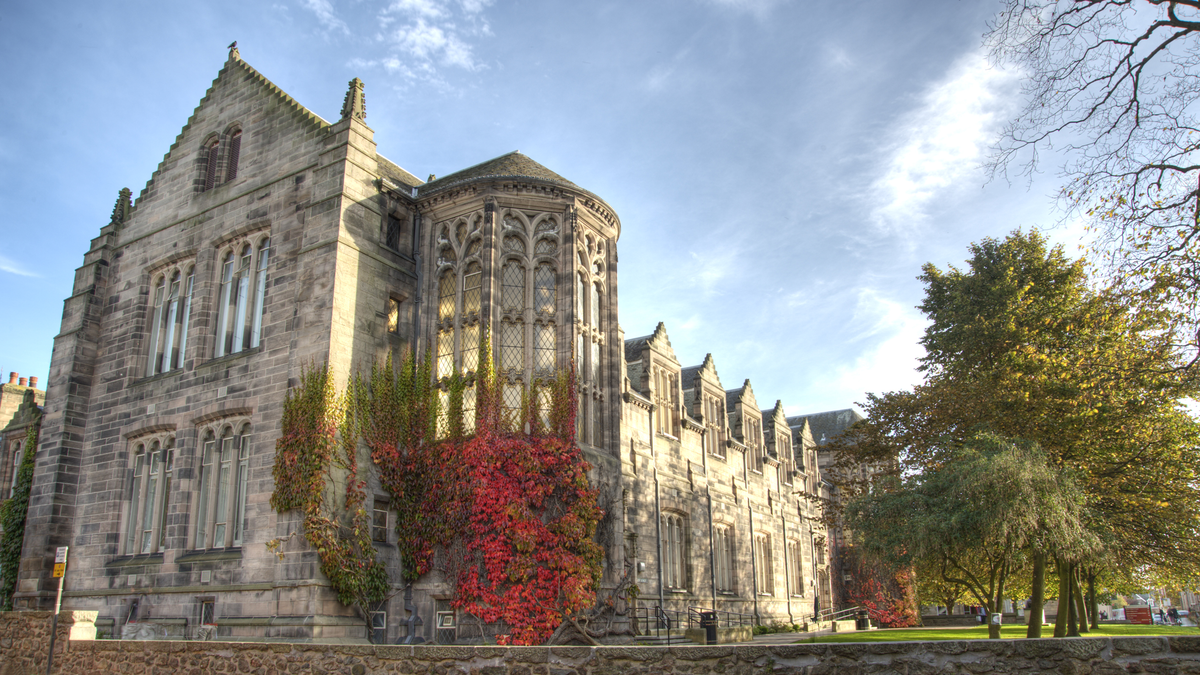
The University of Aberdeen has developed an enviable reputation in pharmacology and drug metabolism since the discipline was founded over 50 years ago.
The main areas covered in the MSc are:
In addition to these topics you will also learn about research methods which are key to understanding modern drug discovery and development. Uniquely, this programme will also teach you about Bio-Business which describes the commercialisation of scientific ideas, demystifies the language of business and explains the business models used by the pharmaceutical and biotechnology industries.
This MSc is suitable for graduates in biomedical science, pharmacy and medicine who want to improve their career prospects, widen their knowledge base and are interested in the pharmaceutical and biotechnology industries.
Students must take the following courses.
This course, which is prescribed for all taught postgraduate students, is studied entirely online, is studied entirely online, takes approximately 2-3 hours to complete and can be taken in one sitting, or spread across the first 4 weeks of term.
Topics include University orientation overview, equality & diversity, MySkills, health, safety and cyber security, and academic integrity.
Successful completion of this course will be recorded on your Transcript as ‘Achieved’.
15 Credit Points
This course will cover the principles of toxicology including molecular toxicology and target organ toxicity, mechanisms of cell death, molecular carcinogenesis and safety evaluation of carcinogens, adverse outcome pathways (AOPs) and new alternative methods (NAMs). These elements will be taught around the processes involved in drug discovery and development and will include advanced learning on drug metabolism and drug transporters. The course will also provide the principles and practice of risk assessment and regulatory toxicology. External experts are invited to provide their unique expertise on a range of topics, which include regulatory aspects as well as an industrial perspective on the drug discovery process.
15 Credit Points
The course will focus on small molecule drug discovery. Receptor theory and cell communication and signalling will be revised to facilitate understanding of the remainder of the course. The basis of the drug discovery process will be described and the phases of drug development discussed. A range of targets for drug discovery will be identified and how small molecule drug affect these will be described. Issues around drug regulation will be raised.
15 Credit Points
This course aims to help anyone who would like to work for big biopharma, for a medium-sized biotech company, for a micro-startup, or to continue in research: success in almost any scientific job requires the ability to spot opportunities, to find solutions, AND then to act to make these into a reality. This course will help you to develop a 'prepared mind' such that when an opportunity does come your way, you are ready to seize it.
The course combines lecture-based learning, tutorials and laboratory practical’s, with the aim of providing student with hands on, supported experience of the University of Aberdeen.
Early exercises will encourage engagement with the University IT systems and will help students transition into their programme.
A combination of simulated and wet practical classes will develop practical skills across the cohort, equipping those less experienced with necessary competence and confidence and offering those with more experience the opportunity to refresh and enhance their skills.
Throughout the course, students will be encouraged to communicate through the virtual learning environment about current research topics as a means of encouraging literature engagement and analysis, culminating in a student-led journal club event.
An early written exercise will encourage student engagement from the outset of the programme and provide the opportunity for students to seek support in completing their first assignment at the University.
Overall, the course aims to deliver a soft landing and a wealth of important skills to incoming students to help support their transition in the University of Aberdeen.
Students must take ONE of the following electives:
15 Credit Points
The course provides a detailed exploration of the structure and function of genes at the molecular and biochemical level. It covers the analysis of genome activity from the 3D structure of chromosomes through to RNA and DNA-protein interactions. The course will provide you with a thorough understanding of the approaches and molecular biology techniques used in modern molecular genetics research and its applications in gene editing and gene therapies.
15 Credit Points
The course focuses on the molecular mechanisms of drug action and how cutting edge research can advance current therapeutic approaches to disease. The utility of molecular pharmacology will be highlighted in the context of current and future drug discovery for cardiovascular, neurological and metabolic diseases and cancer.
15 Credit Points
This course in Applied Statistics focuses on the application of statistical techniques in postgraduate research for health professionals, with a particular emphasis on the correct interpretation of statistical analyses results. The course will NOT focus on the statistical theory underlying the subject. An important component of the course is the use of a statistical package (IBM SPSS), which can be used to implement all the methods taught on this course.
Students must take the following courses:
15 Credit Points
This advanced course builds on the basics provided in Introduction to Bio-business and the Commercialisation of Bioscience Research (BT5012). It provides more detail on financing and setting up a Bio-business.
The course deals in depth with finance, corporate governance and business models. The major assessment involves the students working together in teams to set up a virtual bio-business and to pitch this business to a group of experts in the pharmaceutical and biotechnology sector. The team will adopt the roles of senior management team and present to the experts their part of the business.
15 Credit Points
Pharmacokinetics describe “what the body does to a drug” and thus is a central feature of applied pharmacology. The course will develop an understanding of the role that pharmacokinetics play in all aspects of drug administration, distribution, metabolism and excretion and how these effects can be modelled and predicted graphically and mathematically. Such modelling is a fundament of therapeutic regimen design, drug development, clinical pharmacology and drug safety and will be considered within all of these contexts providing a broad and relevant appreciation of the importance of pharmacokinetics to the pharmacologist
15 Credit Points
This course reviews a range of essential methodologies that are currently used in medical research from molecular technologies to human studies. Experts in the various techniques will describe the fundamentals of the methodology and show how they can be applied.
15 Credit Points
Biologic therapies represent one of the most important and novel areas of drug discovery in the 21st century. The aim of this course is to provide an insight into the success of protein, peptide or antibody based biologic therapies and to examine how this exciting new area will develop over the next decade.
Students must take ONE of the following courses.
60 Credit Points
This course offers students the opportunity to complete a substantial piece of data-driven, empirical work within their field of study under the supervision of an experienced researcher.
Topics available will be varied but within the domain of their field of study. Alongside supervisors, students will identify a suitable topic area, describe an appropriate study design and implement an empirical study to be completed within a laboratory setting. Students will be involved alongside the supervisors in the process of defining the research question, and developing the research plan and, where appropriate, obtaining regulatory approvals. This course is for laboratory-based projects (if you are intending to undertake a project in non-laboratory setting you should register on PU5913)
60 Credit Points
This course offers students the opportunity to complete a substantial piece of data-driven, empirical work within their field of study under the supervision of an experienced researcher.
Topics available will be varied but within the domain of their field of study. Alongside supervisors, students will identify a suitable topic area, describe an appropriate study design and implement an empirical study. Students will be involved alongside the supervisors in the process of defining the research question, and developing the research plan and, where appropriate, obtaining regulatory approvals. This course is for non-laboratory based projects (if you are intending to undertake a project in a scientific laboratory setting, you should register on MB5904).
We will endeavour to make all course options available. However, these may be subject to change - see our Student Terms and Conditions page. In exceptional circumstances there may be additional fees associated with specialist courses, for example field trips.
| Fee category | Cost |
|---|---|
| UK | |
| Tuition Fees for 2025/26 Academic Year | £12,200 |
| Tuition Fees for 2026/27 Academic Year | £12,200 |
| Tuition Fees for 2025/26 Academic Year (University of Aberdeen Graduates *) | £7,000 |
| Tuition Fees for 2026/27 Academic Year (University of Aberdeen Graduates *) | £7,000 |
| EU / International students | |
| Tuition Fees for 2025/26 Academic Year | £26,250 |
| Tuition Fees for 2026/27 Academic Year | £26,250 |
| Tuition Fees for 2025/26 Academic Year (Self-funded Students *) | £18,250 |
| Tuition Fees for 2026/27 Academic Year (Self-funded Students *) | £18,250 |
Alumni Discount Scheme - we are pleased to offer a 20% discount for postgraduate tuition fees to all alumni who have an undergraduate degree from University of Aberdeen.
Please note that the Aberdeen Alumni Discount cannot be claimed in conjunction with any other scholarship award.
All eligible self-funded international Postgraduate Masters students will receive an £8,000 scholarship. Learn more about this Aberdeen Global Scholarship here.
To see our full range of scholarships, visit our Funding Database.
The teaching of our MSc Drug Development and Discovery programme is lecture based with self-directed learning, practical classes (where appropriate) and tutorials to support the lecture material. External experts are also regularly invited to provide specialist expertise. Many lectures are recorded via Camtasia and can be viewed again when required.
The MSc makes the most of hands-on learning to enable repeated exposure to evidence-based practice using real life examples. Some of the teaching methods employed in the programme include:
On-going support is provided by the University’s dedicated, interdisciplinary team of experienced researchers, who will be tutoring you. Peer support will develop throughout the course(s) as engagement with students from other countries and disciplines is actively encouraged.
Much of the teaching on this course is participatory and students are expected to consolidate all taught content by completing related tasks and activities and engaging in independent study in their own time.
Each course has its own continuous assessment criteria based on the progress of practical and course work as well as a written degree examination. Some examples of the course work assessed throughout the component courses are: essays, commercially focused presentations, business planning and bio-entrepreneurship, public communication of science and written examinations.
Progression to a research project is dependent on performance in the individual courses.
The information below is provided as a guide only and does not guarantee entry to the University of Aberdeen.
Applicants will usually require a second class Honours degree (2:2) or equivalent in a biomedical science subject such as biochemistry, biomedical science, pharmacology or a degree in medicine or pharmacy.
Please check the In My Country or Territory pages to find out if your degree is equivalent.
Please enter your country or territory to view relevant entry requirements.
Eligible self-funded Postgraduate Taught (PGT) students will receive the Aberdeen Global Scholarship. Eligibility details and further information are available on our dedicated page.
Aberdeen Global ScholarshipTo study for a Postgraduate Taught degree at the University of Aberdeen it is essential that you can speak, understand, read, and write English fluently. The minimum requirements for this degree are as follows:
IELTS Academic:
OVERALL - 6.5 with: Listening - 5.5; Reading - 6.0; Speaking - 5.5; Writing - 6.0
TOEFL iBT:
OVERALL - 90 with: Listening - 17; Reading - 21; Speaking - 20; Writing - 21
PTE Academic:
OVERALL - 62 with: Listening - 59; Reading - 59; Speaking - 59; Writing - 59
Cambridge English B2 First, C1 Advanced or C2 Proficiency:
OVERALL - 176 with: Listening - 162; Reading - 169; Speaking - 162; Writing - 169
Read more about specific English Language requirements here.
You will be required to supply the following documentation with your application as proof you meet the entry requirements of this degree programme. If you have not yet completed your current programme of study, then you can still apply and you can provide your Degree Certificate at a later date.
Completing the MSc in Drug Discovery and Development at the University of Aberdeen will give you a wide range of career opportunities within academia and industry.
The University of Aberdeen strongly believes in inter-disciplinary and multi-disciplinary working, meaning our programme will help you build an essential network of contacts that will prove useful in establishing your career in drug discovery and development.
On graduating from the programme, there are several career options you can choose from, some of which include:
We have strong links with the pharmaceutical and biotechnology industry including Servier, GSK, Pfizer and AstraZeneca and with small biotechnology companies such as Novabiotics, Antoxis, Cell ProTx and TC Biopharma. These companies provide expert teaching and training opportunities during the degree.

The programme will be delivered by a multidisciplinary team of world renowned and vastly experienced researchers in drug discovery and development with each course having its own specialised co-ordinator(s).
You will be taught by a range of experts including professors, lecturers, teaching fellows and postgraduate tutors. However, these may be subject to change - see our Student Terms and Conditions page.
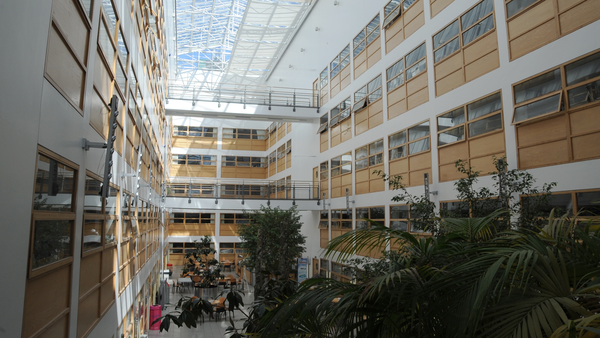
Focused on developing future effective therapies, the Institute of Medical Sciences houses nearly 400 researchers and support staff working on cutting-edge biomedical subjects aimed at understanding the human body's response to infection and disease.
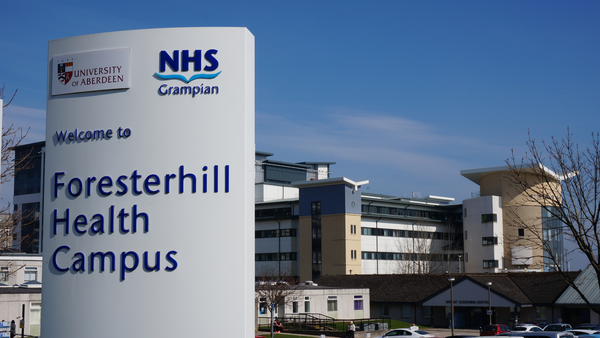
The Foresterhill Health Campus is one of the largest clinical complexes in Europe which includes the Medical School, large teaching hospital, the Institute of Medical Sciences and the Rowett Institute.