‘The part of Scotland which the University serves is firmly established in my affections’
Exploring the historic and recent connections between Queen Elizabeth II and the University community

From its earliest beginnings, the University of Aberdeen has enjoyed close Royal connections.
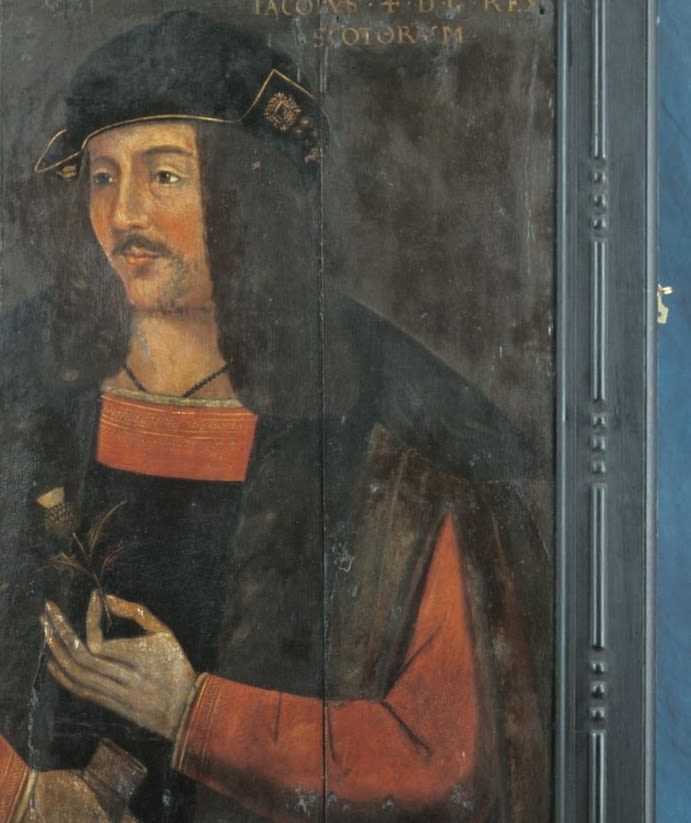
The University’s first collegiate body came to be known as King’s College in tribute to the crucial role King James IV played in the establishment of a university in north-east Scotland in 1495.
In more recent centuries the location of Balmoral Castle has enabled staff and students to participate in a range of high-profile Royal occasions and has provided a global platform for their voices. It has also brought them face-to-face with the Queen in more informal settings and without the pomp and ceremony that might be expected.
As Queen Elizabeth II celebrates her platinum Jubilee, we explore the unique connections which shaped the development of the University and continue to provide opportunities for our community.

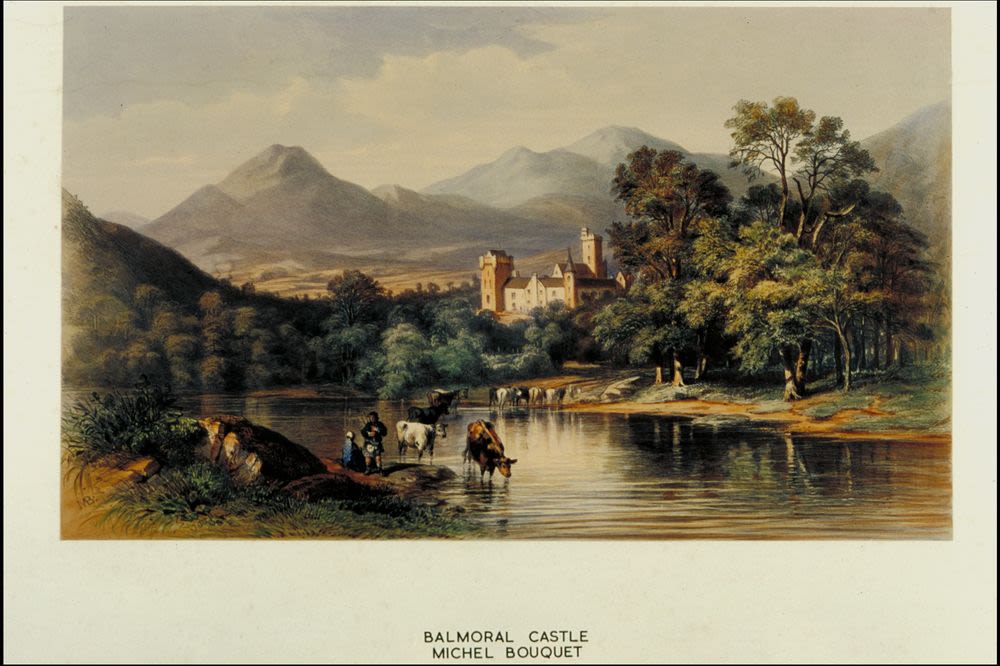
Pencil drawing and watercolour painting landscape, view of Balmoral Castle and the mountains from across the river with people and cows at the river edges, held in the University archives
Pencil drawing and watercolour painting landscape, view of Balmoral Castle and the mountains from across the river with people and cows at the river edges, held in the University archives
A Royal foundation
As an ancient university, Aberdeen belongs to the Privileged Bodies of the United Kingdom, a group of institutions and corporations which enjoy the historic right to present a Loyal Address to the Sovereign in person.
In modern times this right is exercised on significant occasions in the life of the monarch and at a ceremony specially organised for the purpose.
The University’s Special Collections show that following the death of George VI, on 21 May 1952, an address from the University of Aberdeen was scheduled for May 21, 1952, a year before the coronation of Elizabeth II.
In the address, delivered by Chancellor Thomas Johnstone, the University offered ‘our respectful sympathy in the loss which you have sustained by the death of His Late Majesty King George VI, whose memory we shall ever cherish’.
It went on to say: ‘In this northern land, which is well known to Your Majesty, we are not unmindful of the historic ties which have bound our University to your Royal House since the time when Your Majesty’s ancestor, King James IV, gave his name to the King’s College of Aberdeen.’
In response, Her Majesty wrote: ‘The part of Scotland which the University serves is firmly established in my affections, and I gladly assure you of my intention to continue the interest which my famly has always taken in your work.’
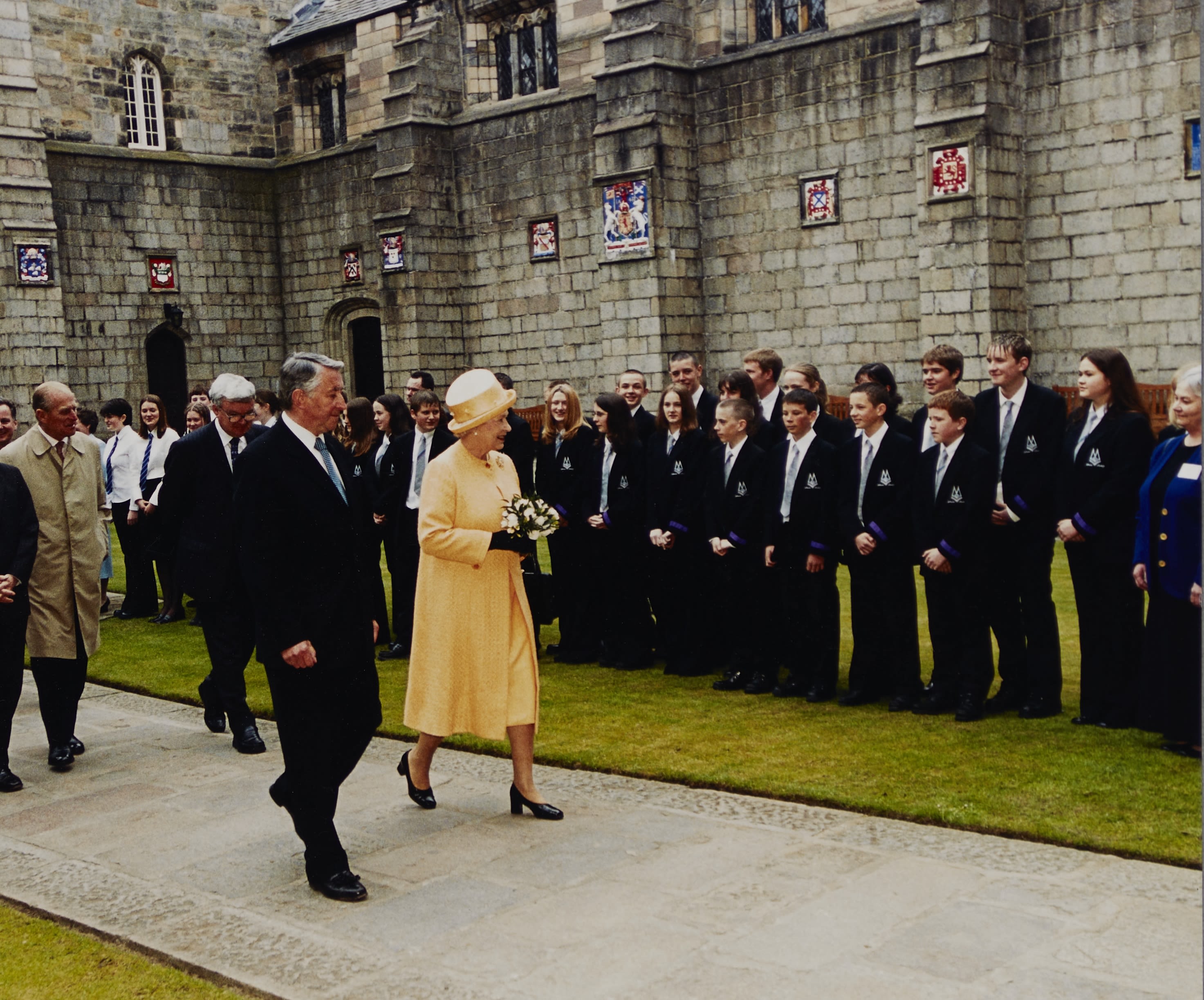
In line with this commitment, the Queen has made a number of official visits to the University spanning the decades of her reign.
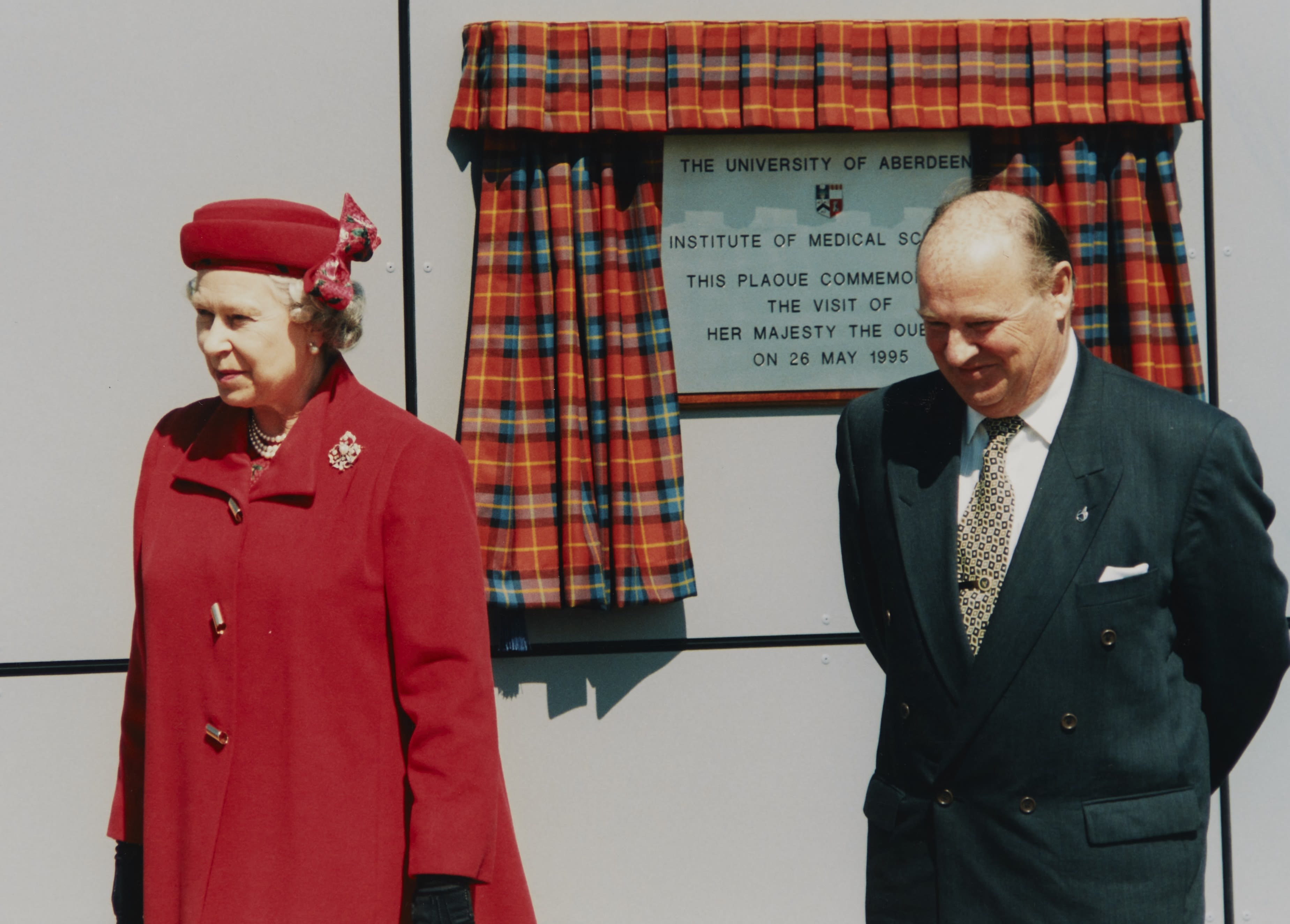
In 1960 she opened the University's first hall of residence and in 1995 her visit was a cornerstone of celebrations to mark the 500th anniversary of our foundation.
She unveiled a plaque at the site of the new £25m Institute of Medical Sciences building before joining staff and students at King’s College for Quincentenary events.
Her Majesty returned in 2002 as part of her Golden Jubilee tour when a special sitting of the Scottish Parliament was held in the University’s King’s Conference Centre.
It was the first time a head of state had addressed the parliament while it was in session.
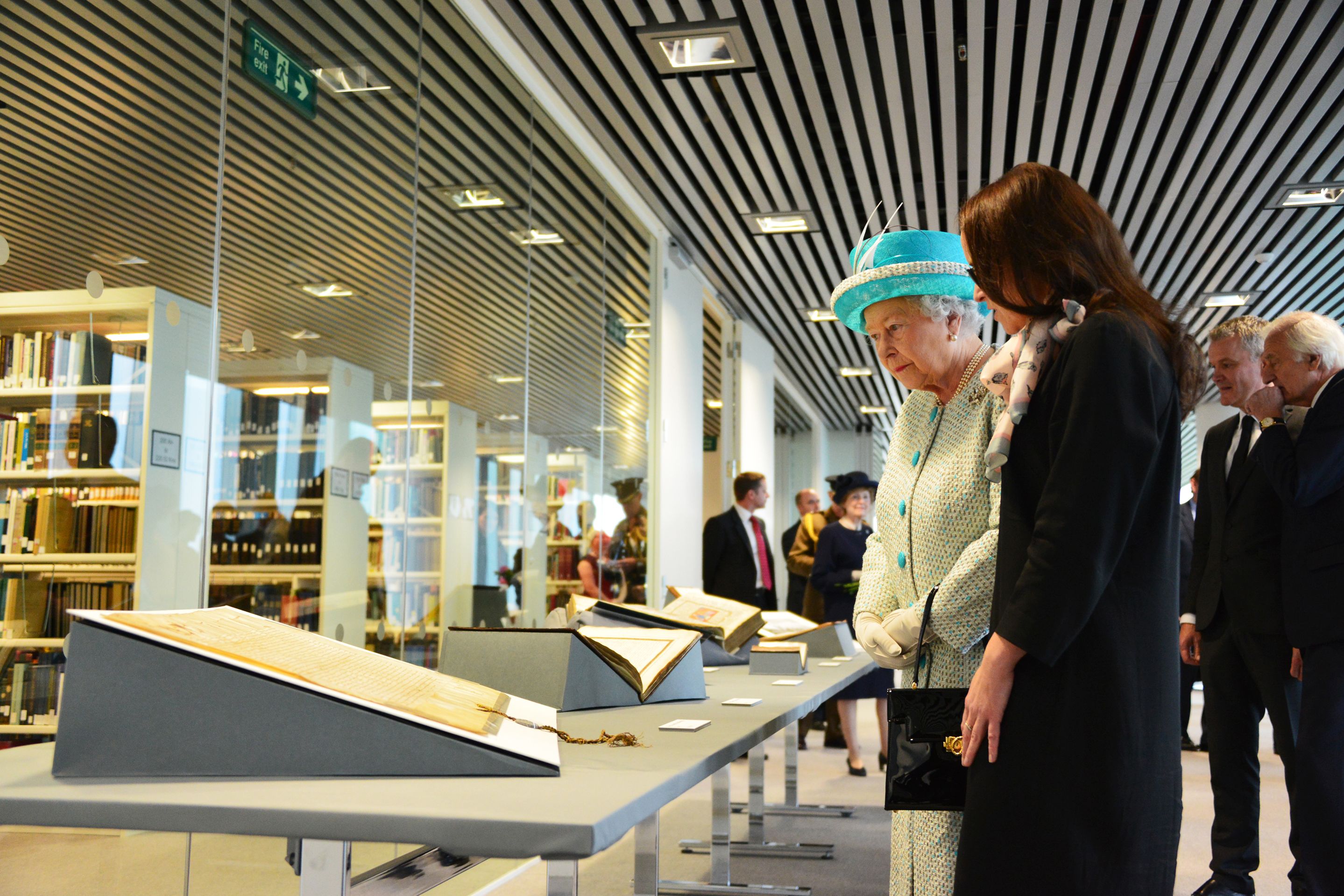
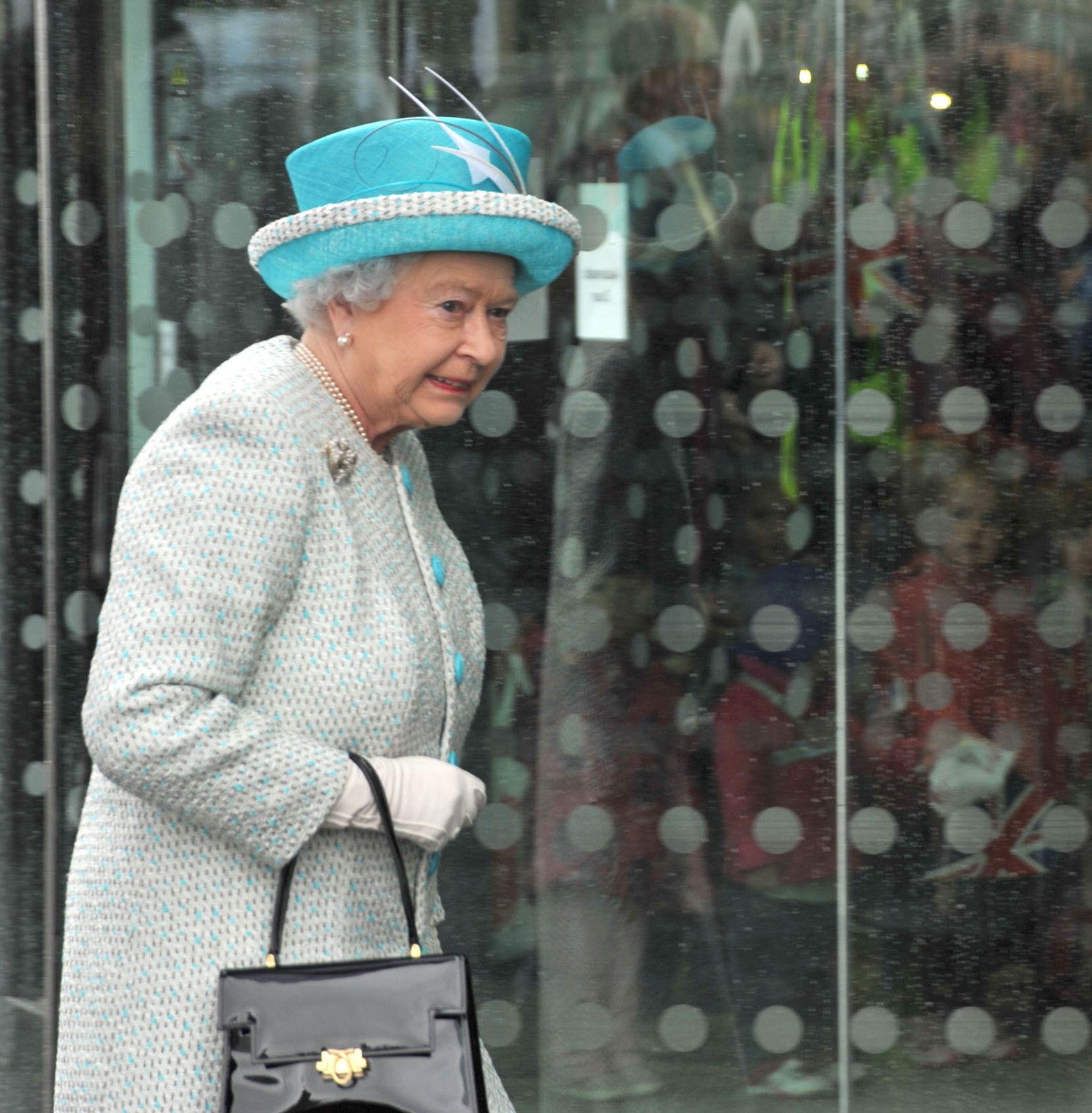
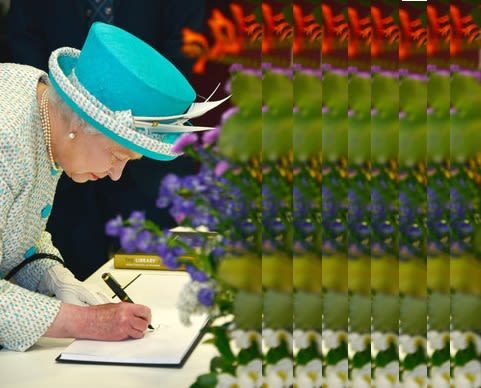
Her last official engagement at the University was to open the Sir Duncan Rice Library in 2012 when she was joined by the Duke of Edinburgh.
She was shown the Aberdeen Bestiary, one of the finest surviving examples of a medieval illuminated manuscript which has been in the care of the University of Aberdeen for almost 400 years. It was first created in England around 1200 and was once held in the library of King Henry VIII.
More recently, the University's Professor John Swinton was appointed as a Chaplain to Her Majesty. All chaplains are personally approved by The Queen and are people in whom she has placed her trust.



A region with a long history of Royal connections.
This image shows civic and University dignitaries assembled for the arrival of Queen Victoria and Prince Albert as the Royal yacht docked in Aberdeen Harbour in 1848.
From formality to familiarity
Documents in the archives show that the first invitation for the University to address Queen Elizabeth II in 1952 ahead of her coronation was a very formal affair.
Those attending Buckingham Palace were instructed to wear academic or municipal robes, or formal morning dress. They were also required to observe the mourning of King George VI with ‘weepers’ and black ties.
But with the Queen a frequent visitor to her residence at Balmoral in Aberdeenshire, University staff and students have enjoyed unique opportunities in more informal settings, and without the expected pomp and ceremony.
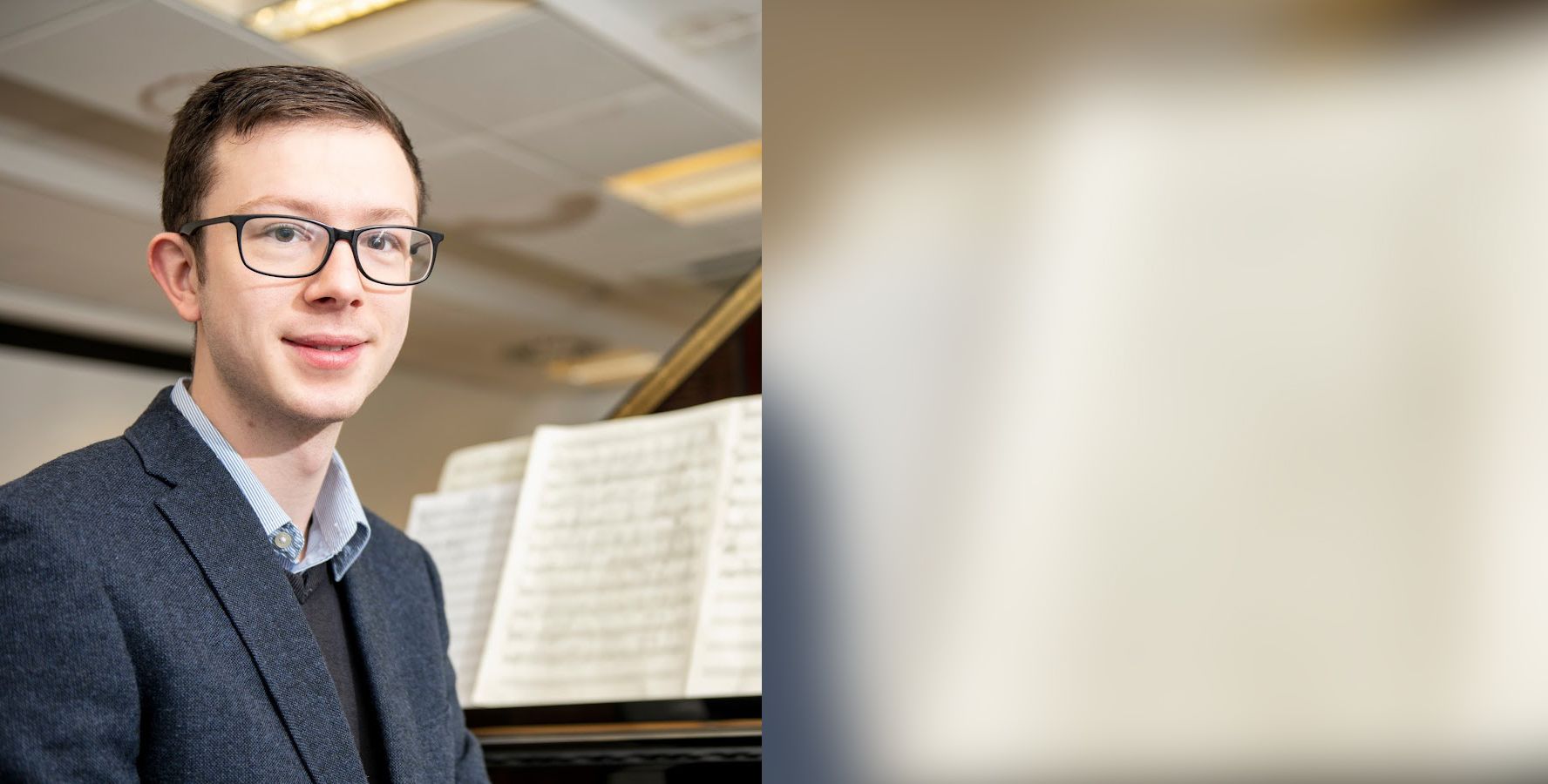
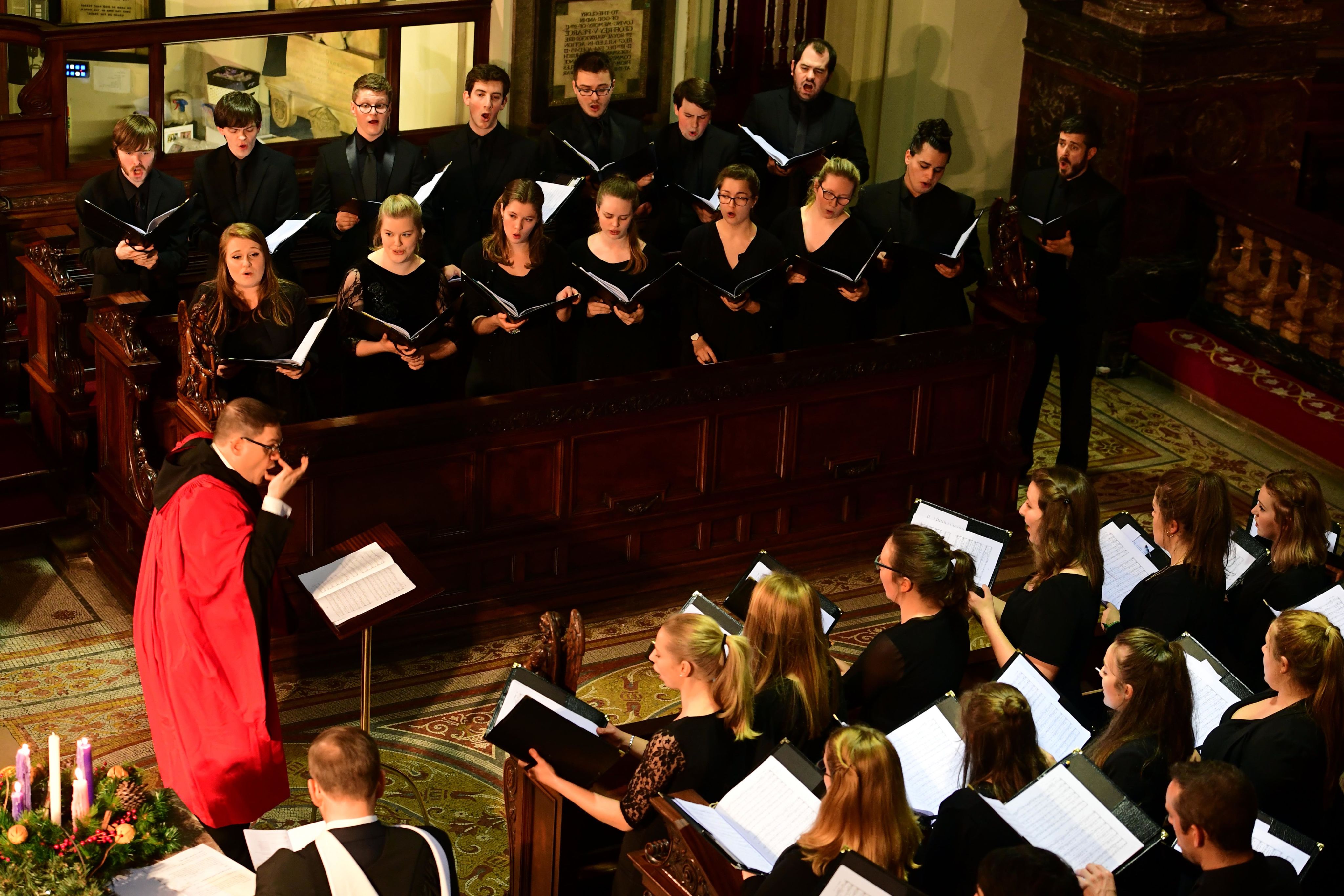
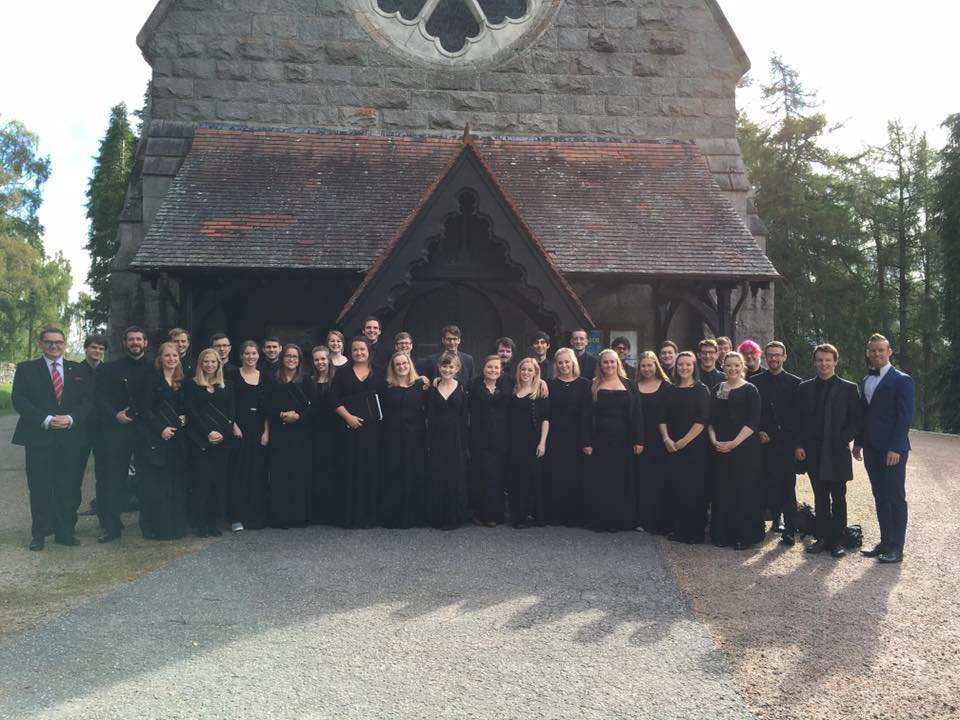
University musicians have performed for her on many occasions and as PhD student James Aburn explains, nothing can quite prepare you for singing the National Anthem directly to the monarch.
James first came to the University from his home in Kent in 2014 to study for a music degree and in his second year was successful in his audition to join the University’s highly regarded choir.
Such was the reputation that the singers had established, they were frequently invited to perform on Royal occasions.
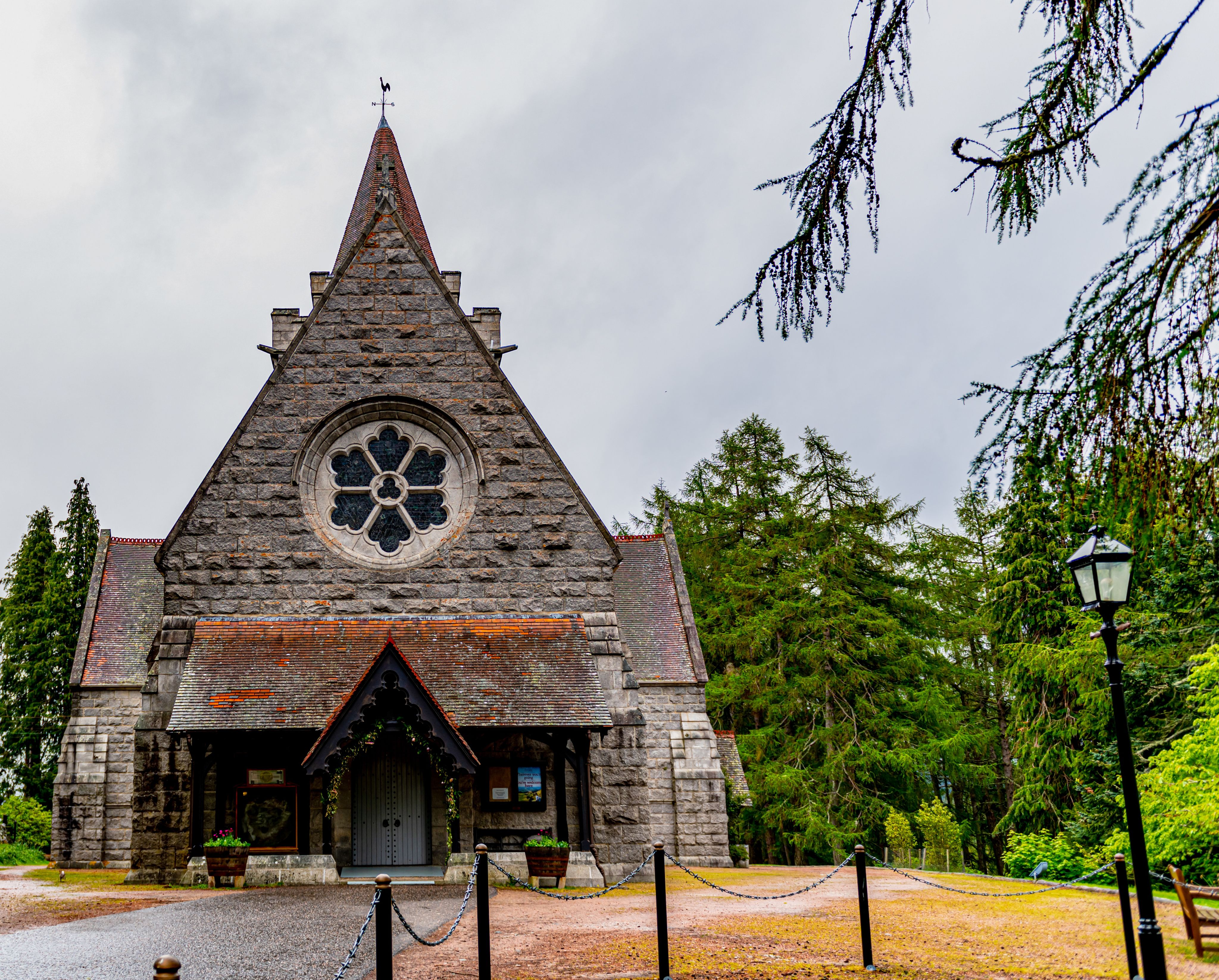
These included slots as the visiting choir at Crathie Kirk where the Queen attends regular Sunday service when staying at Balmoral.
But James hadn’t anticipated just how close this would bring him to Her Majesty.
“When I first heard we were to perform at Crathie, I was expecting a very formal event,” he says.
“I’ve seen images of her leaving the Church before often accompanied by Prime Ministers or Heads of State.
“But when we arrived, it was all treated very much like normal Sunday worship.
“We’d assumed that there would be something to announce her arrival but all of a sudden there she is just a few feet in front of you.”
James says that the choir members quickly became familiar with the unique layout of Crathie Kirk.
“The church is arranged in an L shape,” he explains, “so not all of the congregation at Crathie can see the Royal family but as the choir we were in a special position.
“Even within this the choir stalls on one side have a better view than the other so there was always a bit of friendly jostling to try and get the best spot. I was fortunate that as a bass my position in the choir meant I always had a direct line of sight to the Royal family.
“But this had its drawbacks as well as advantages. I’d never considered how strange it would feel to sing the national Anthem right in front of the Queen until we were in that position! Or that she herself would be the only one not singing. And, it was only after the service that I was able to reflect and realise what a unique honour it was to be a part of such an occasion, singing the national anthem directly to the Queen.”
Professor Paul Mealor, a former conductor of the choir whose music has been performed at a range of high-profile events including the wedding of the Duke and Duchess of Cambridge, recalls the delight of students telling him of the success of another visit to Buckingham Palace.
“Around 70 of our singers and musicians were invited down to London as part of birthday celebrations to mark the 10th anniversary of Dumfries House being saved for the nation”, he adds.
“They performed in the spectacular Throne Room but they told me afterwards that another highlight of their day had come from the allocation of a room in which to prepare that happened to overlook the Palace courtyard.
“They were relaxing before the performance when they noticed a car pull up to take the Queen to the state opening of parliament. Soon there were dozens of student faces pushed against the glass and several were bold enough to wave to her. They got quite a surprise to see her waving back!
“Because they were there for several hours and so also witnessed her return and then head out again – having changed in record speed – to go to Royal Ascot. The students were amazed at her schedule and that she waved not once but three times to the assembled group of Aberdeen faces as she came and went.”
They performed a range of Scottish music including pieces written by then Aberdeen students John Frederick Hudson and Sarah Rimkus, who have both have since graduated with PhDs and established global reputations as composers.




Providing a global platform for University voices
Showcasing University voices, in both performance and through highlighting important research, is another key tenet of the Royal relationships forged over more than five centuries.
James, who is now studying part-time for a PhD in composition alongside a busy teaching job, adds: “Performing at such significant occasions really embeds into you the idea of how to behave as a professional musician and is a boost to your confidence knowing that your performance is recognised as meeting the standard required to be part of Royal events.”
Professor Mealor says support from Her Majesty, as well as many other members of the Royal Family including the University’s Chancellor, The Duchess of Rothesay, has provided a platform for University voices of all kinds – be it musicians, composers or those conducting ground-breaking research.
“When you are performing for an important historical figure, who has a keen interest in music and has met some of the finest composers of our time, it is an amazing experience.
“There probably isn’t a choir outside of the Royal Palaces – and certainly not a student choir – that has been given the opportunity to be part of so many important celebrations.
“Seeing your talents acknowledged by the Queen is a real boost to confidence and it is wonderful to see the reactions of the choir and the positive benefits it had on the development of our students, and the doors that being able to say you meet such a high standard opens up.
“Her first formal words to the University back in 1952 were that she would continue the interest of her family in our work and that is certainly something she has fulfilled during her reign.”


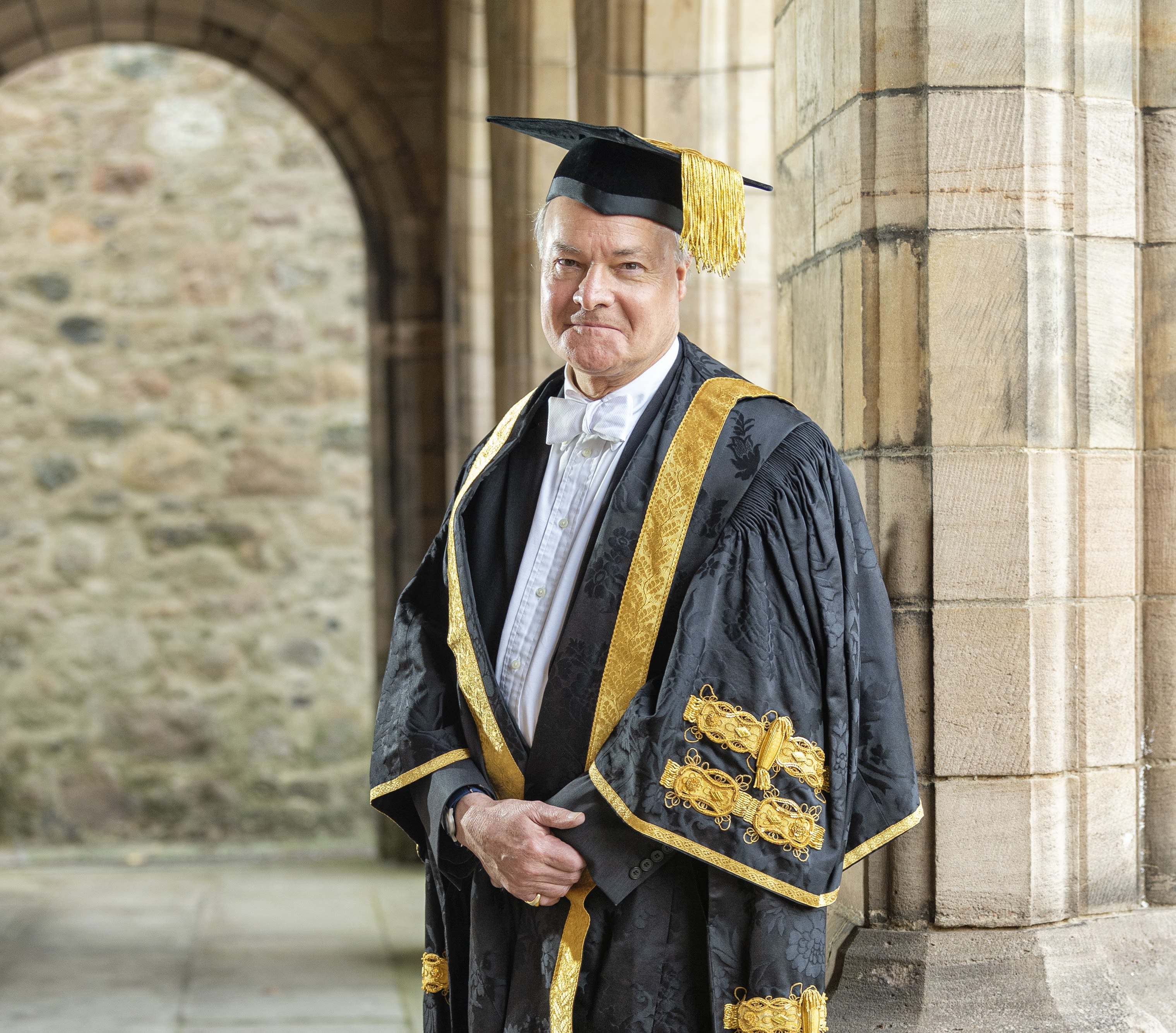
Professor Iain Torrance, the University’s Pro-Chancellor:
"It is truly wonderful to celebrate The Queen’s Platinum Jubilee. No Sovereign in our history has reigned for so long or presided over such fundamental changes in both domestic affairs and in our international relations. No Sovereign has been so steadfastly committed to service, so consistently gracious both in good times and in demanding ones. As a royal foundation, it has been an honour for us to have visits from The Queen on some of our grandest occasions. But as the ancient university of the North East, we take particular local pride in the fact that our students have been able to contribute to key regional events."

 Built with Shorthand