A lifetime of courage
100-year-old D-Day veteran honoured by the University

When 100-year-old Jim Glennie was presented with an honorary degree by the University of Aberdeen, it marked another chapter in an extraordinary life.
Jim was presented with the honour in recognition of his role as one of the last D-Day survivors – and for keeping the story of his fallen comrades alive for the many decades which have passed since they lost their lives on the beaches of Normandy.
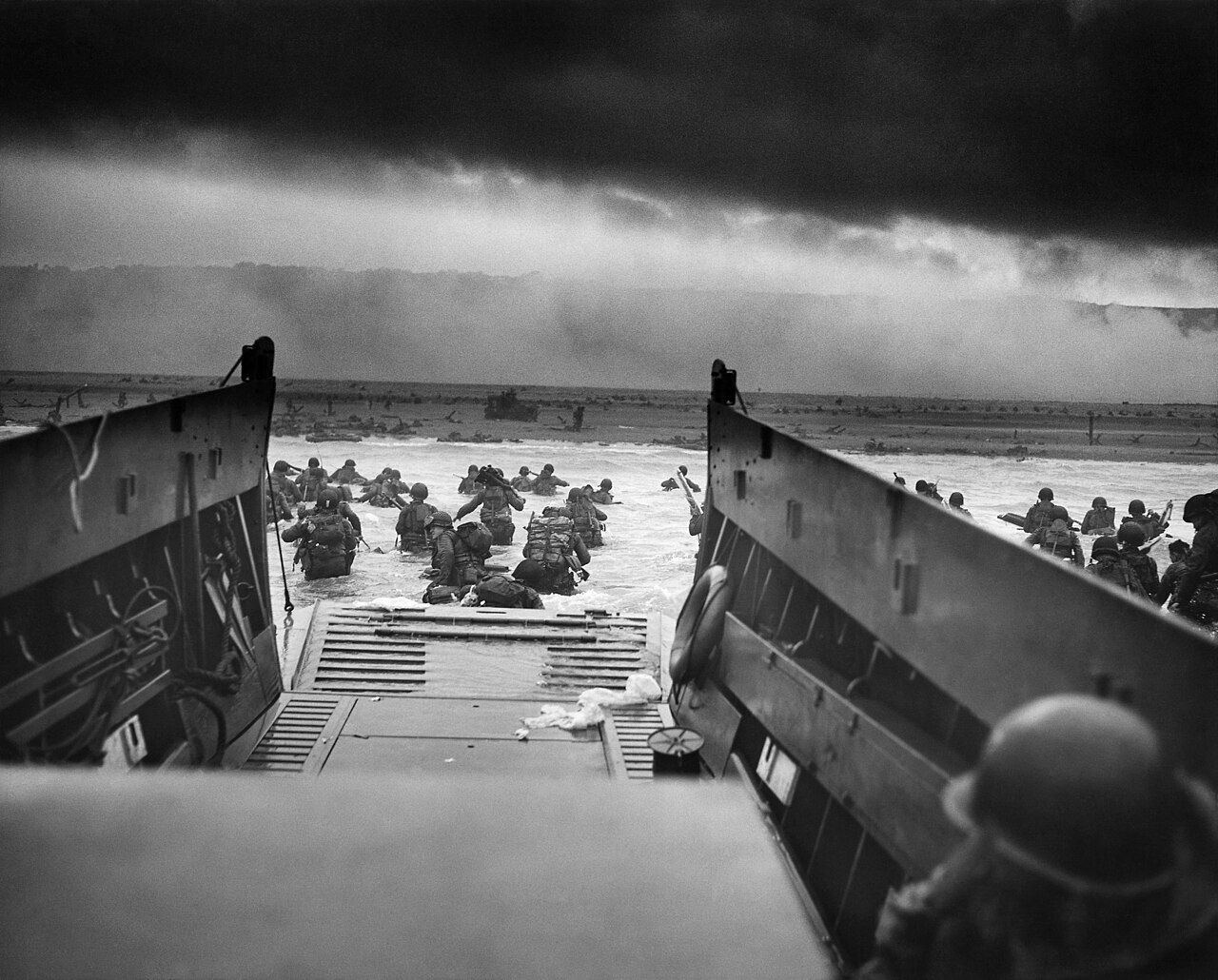
As a teenager he scrambled onto the sands of Juno beach on June 6, 1944, one of the five Allied landing beaches during Operation Overlord.
Over the course of that pivotal action during World War Two, Jim fought his way forward from the six-mile stretch of beach. But two weeks into the advancement, he was shot and taken prisoner in an ambush which saw his friend and comrade killed, like hundreds of other troops who undertook the dangerous mission.
Jim was presented with a Master of the University degree to honour his contributions to the D-Day story both in action and as a volunteer at the Gordon Highlanders Museum, where he spent more than three decades sharing the stories of his wartime endeavours.
From Aberdeenshire to ‘A Company’
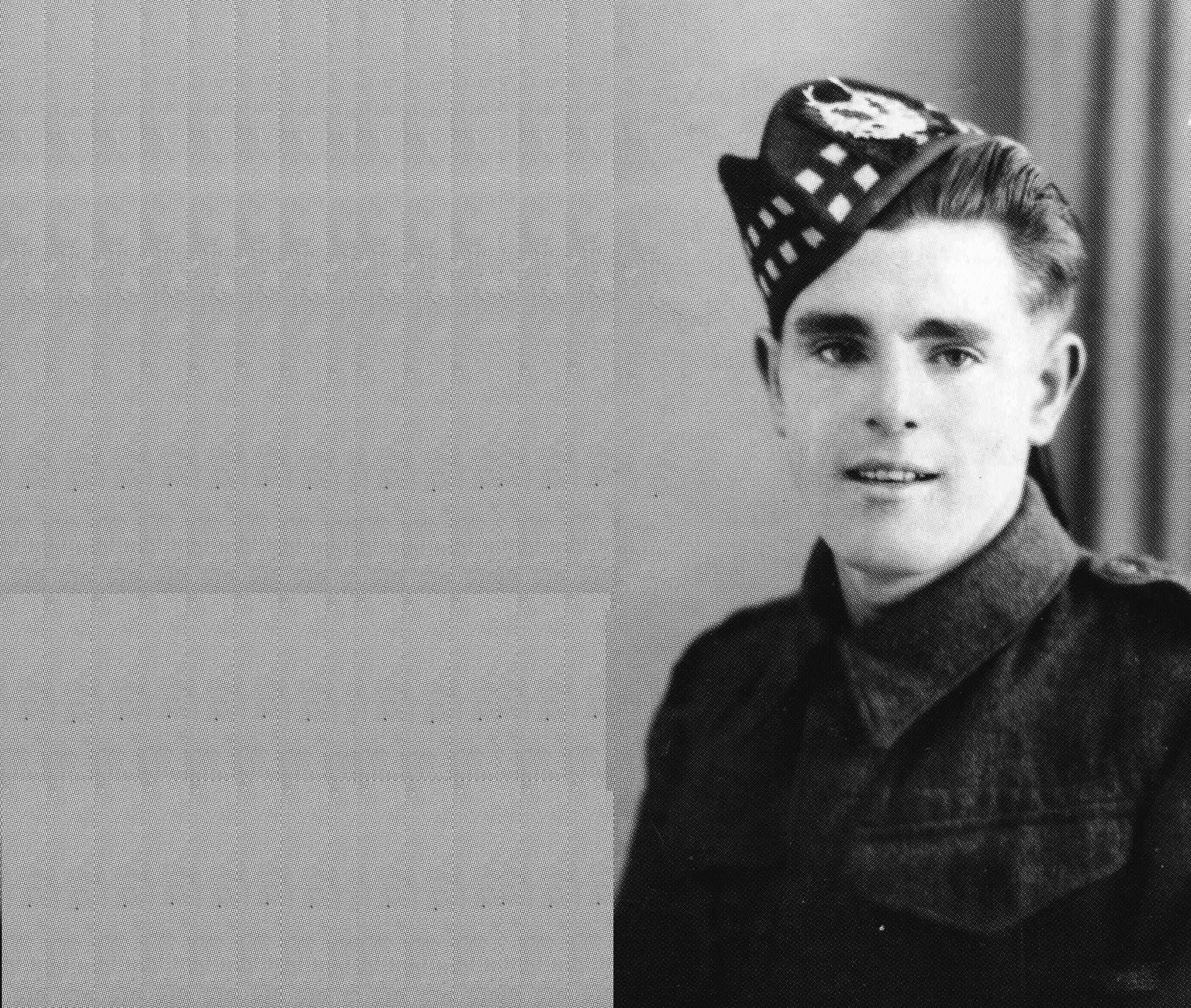
Jim was born and grew up in Turriff. He joined the Home Guard in 1941 at the age of 16 as a 'Runner'. In 1943 he began his training at the Gordon Highlanders’ Depot at the Bridge of Don.
After six weeks there, he was transferred to Sunnybank School, Aberdeen, where he continued his training for a further 10 weeks, before joining the 5th/7th Bn Gordon Highlanders in Chalfont St Giles in Buckinghamshire. He was initially posted to 'R' Company and then to 'A' Company.
Jim landed with the battalion at Juno Beach on June 6 1944. He was with 'A' Company and fought with them during the early days of the battle for Normandy.
On June 20, 1944, he was ambushed and sustained two bullet wounds in his right arm/shoulder. Jim was captured by the Germans and was transferred to a German-run hospital in Alencon, about 30 miles south of Caen. His family knew nothing about his capture or if indeed he was alive until a Colonel from The Red Cross who was visiting the hospital, passed his details back.
Once he had recovered, Jim was transferred by cattle-truck train to Stalag IV-B, near Muhlberg, just to the east of the River Elbe and north of Dresden. Jim was in a barrack block with other British Prisoners of War who were crowded in more than 100 to each block.
On arrival he had the one and only shower during his time in the camp - part of the delousing process. Thereafter washing was out of a sink or bucket. Food tended to be vegetable soup and bread, supplemented every now and again by a Red Cross parcel which was shared between 2 PoWs.
Jim found out on returning home that his mother had sent him three parcels, but they never arrived. Throughout his time as a PoW, Jim only had the uniform he had been captured in and it was not until he met up with the Americans after his release that he was able to replace his, by then, very worn British Battledress, with American uniform.
During the latter period Jim was a PoW, he was made to work filling bomb craters in Leipzig. He and a number of other prisoners were accommodated near a large factory on the outskirts of Leipzig and he remembers a large bomb falling on the far side of the factory and destroying most of the supporting wall.

Journey to freedom
By April 1945, with the Russians advancing from the east, the Germans decided to move some of the prisoners further west. As a result, Jim and approximately 200 other British and Canadian prisoners, were marched to Colditz.
But the prison, notorious for the numerous, often daring, escape attempts made by its inmates, was full and in contrast to those who dug or attempted to glide their way out of its fortifications, Jim and his comrades were turned away.
Instead they spent days being moved around the Leipzig area, camping out in barns or sleeping rough in the countryside. Jim later reported that the German guards did not seem to know what to do with them and many were deserting. Eventually all the German Guards had disappeared and the PoWs were left to fend for themselves.
Jim teamed up with six Canadians and they found a house where they were grateful to be given some food as they had not eaten for at least four days and a bed for the night. The owners of the house hoped that Jim and his Canadian colleagues would protect them from the advancing Russians, but after a night there they moved on, eventually meeting up with the advancing Americans near Leipzig.
The Americans gave them a car and Jim remembers heading off down a deserted autobahn for miles before arriving at a massive American transport depot and it was from here that the Americans arranged for him to be flown back to England, where he was sent on leave for eight weeks to 'fatten up'.
After his leave, Jim was sent to a general training depot near Leeds before moving on to another training camp on the English/Welsh border where he undertook further instruction. He was then posted to a camp near Irvine and began training with a Combined Special Operations Training Group in preparation for a move to Japan. With the end of the war in Japan, this unit was disbanded and Jim ended up in a camp at Ayr Racecourse.
As his mother's health was failing, he requested some leave, but his Company Sergeant Major was able to arrange for him to be posted to the Bridge of Don where he was employed in the Officers' Mess as a waiter. He did not like this job, so he swapped with one of the Mess Barmen.
In 1947 Jim travelled to York to be demobbed.

Always remembered
On returning home to Turriff, Jim spent the remainder of his working life as a welder, both onshore and offshore.
In 1953 he married Winnie and they had two children, a son, Jim 'Junior' and a daughter, Juliet.
Jim never forgot his wartime experience and he remained life-long friends with Ronnie McIntosh – a schoolfriend with whom he undertook the D-Day landings and battled hazards including mines and tanks as their unit worked its way inland towards Caen.
He also committed to preserving the memory of other friends and comrades who did not make it off the Normandy beaches, including Bill Norrie who was killed in action during Operation Overlord.
For more than 30 years Jim volunteered with the Gordon Highlanders Museum sharing his first-hand experience with visitors and commemorating those who gave their lives in service.
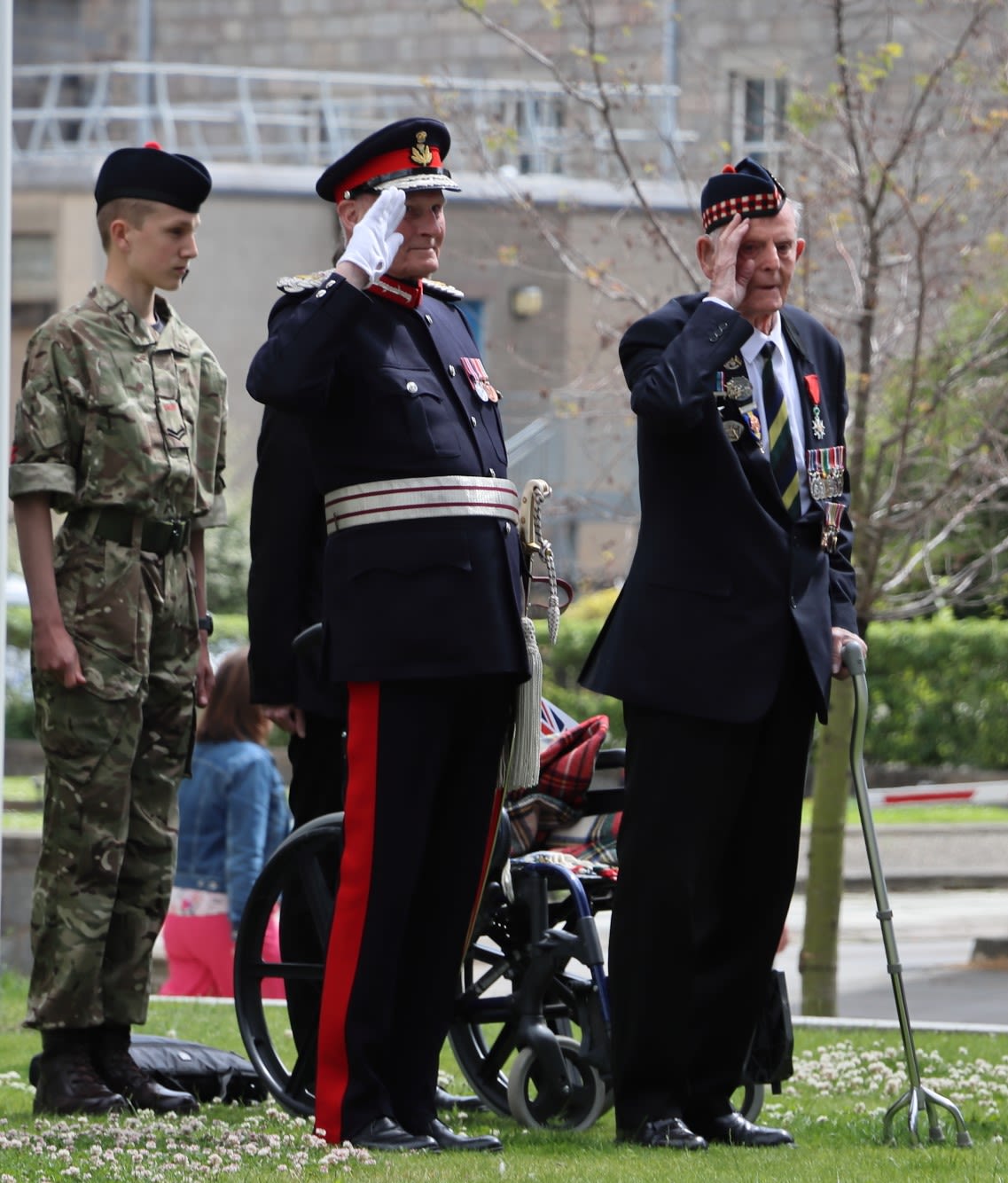
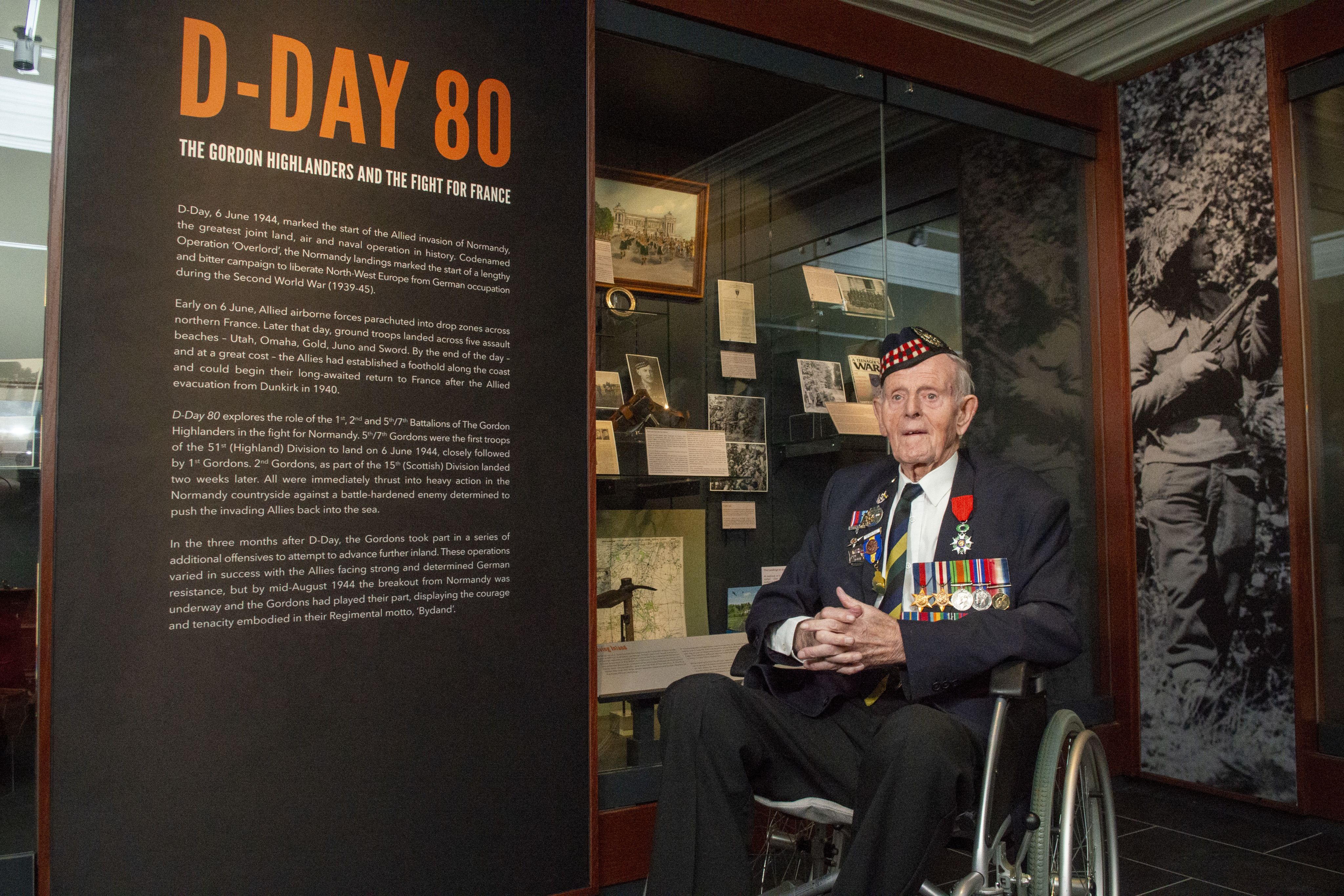
Jim received a Legion d'Honneur, France's highest national order of merit recognizing outstanding achievements in military and civilian service, in 2015 and the British Empire Medal (BEM) in 2025.
He had his portrait painted by artist Carl Randall in 2015 as part of a collection of portraits of D Day Veterans commissioned His Majesty King Charles, then his Royal Highness The Prince of Wales. It was displayed at the exhibition ‘Last of the Tide: Portraits of D-Day Veterans’ at The Queens Gallery, Buckingham Palace, London (2015); Holyrood Palace, Edinburgh, Scotland (2016); Portsmouth Museum (2019).
In October 2025 Jim was presented with an honorary degree by the University in recognition not only of his bravery in wartime, but for his lifelong dedication to education, remembrance, and community engagement.



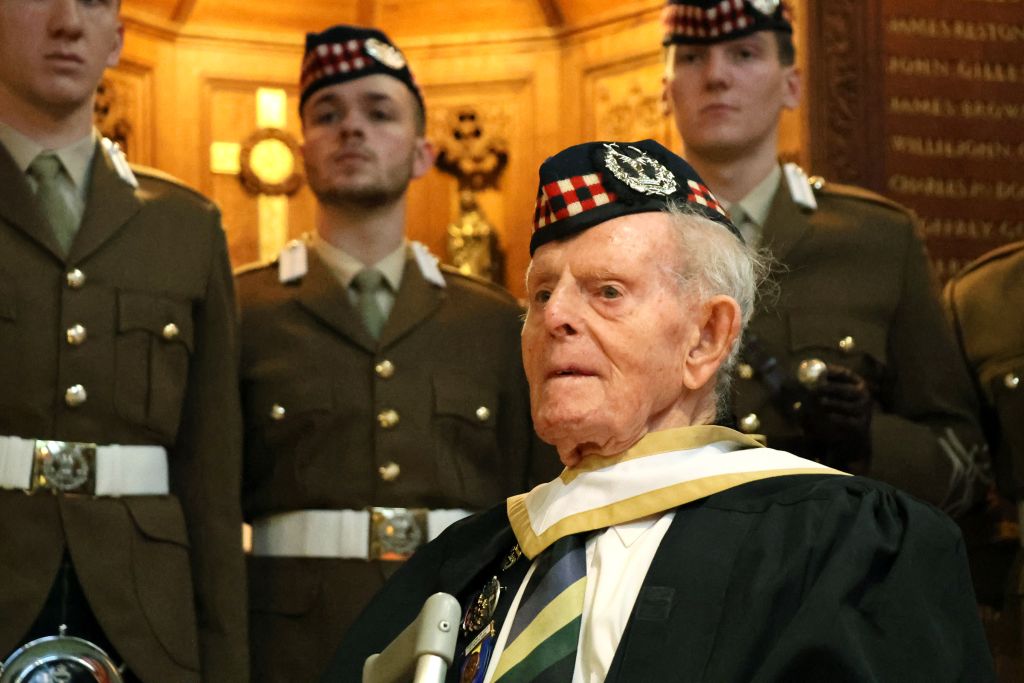
Jim Glennie received an honorary degree at the ceremony at King's College Chapel
Jim Glennie received an honorary degree at the ceremony at King's College Chapel

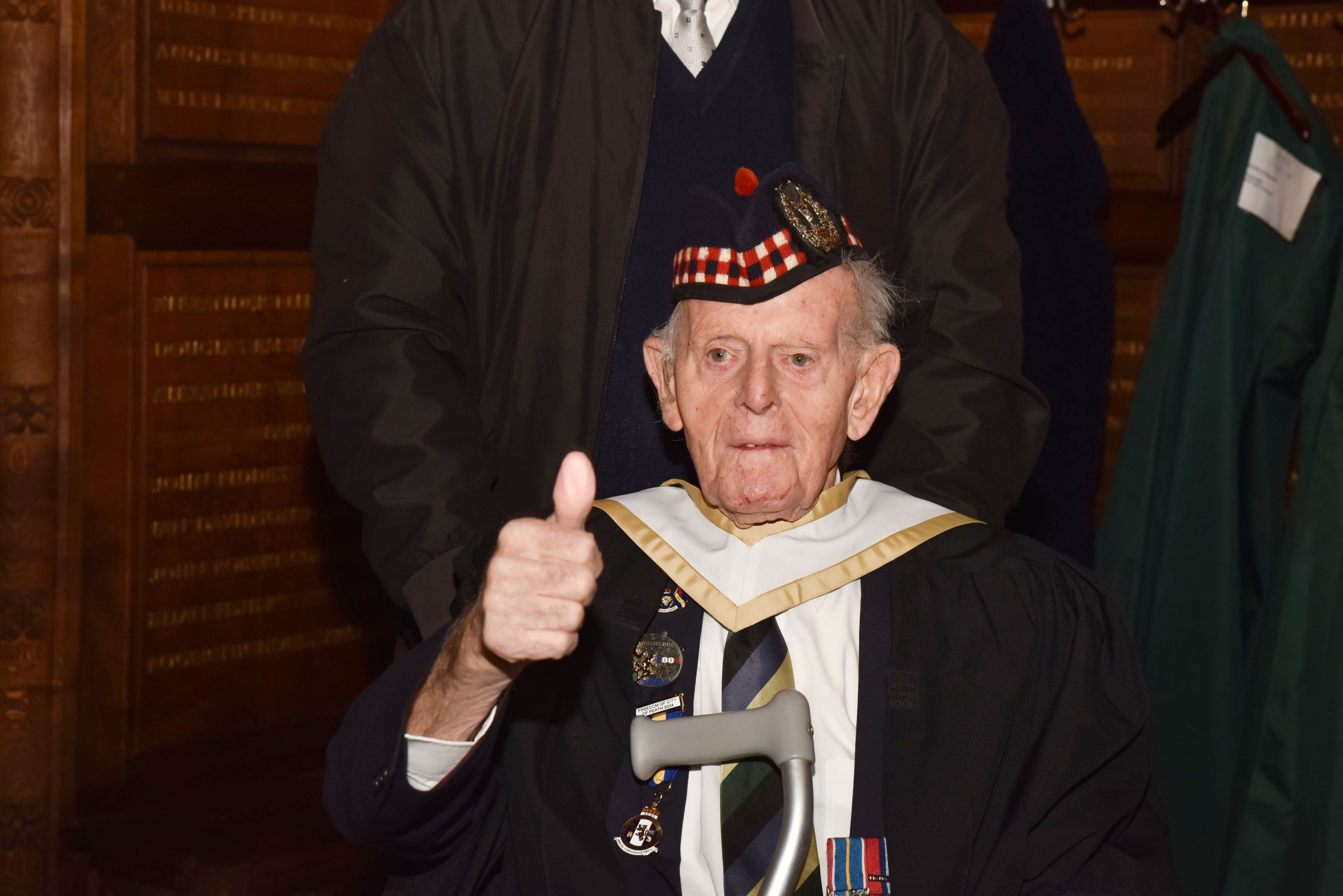
Jim Glennie giving a thumbs up
Jim Glennie giving a thumbs up
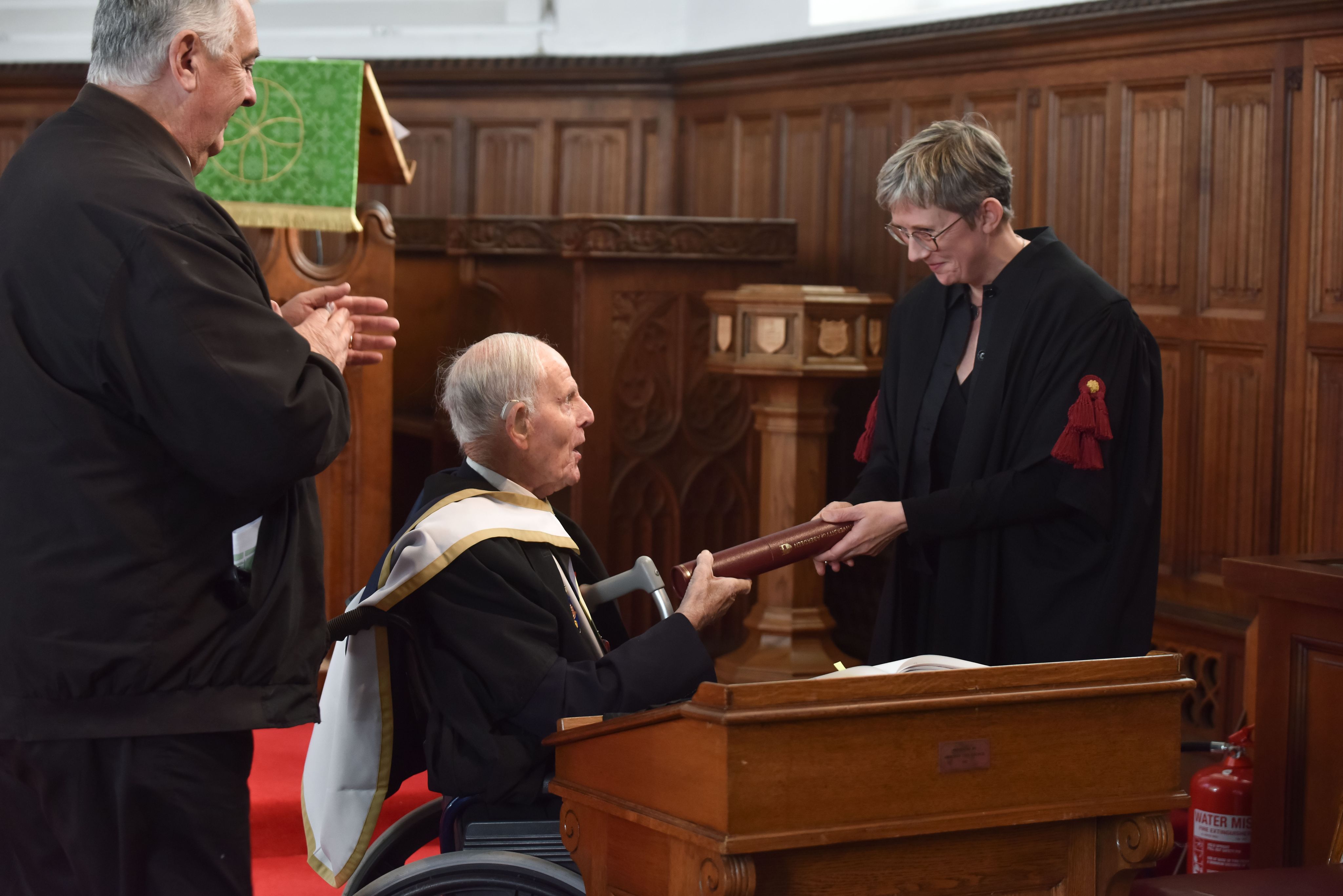
Jim Glennie receiving his honorary degree from Chief Governance Officer and University Secretary Dr Hulda Sveinsdottir
Jim Glennie receiving his honorary degree from Chief Governance Officer and University Secretary Dr Hulda Sveinsdottir
 Built with Shorthand