- What is it?
-
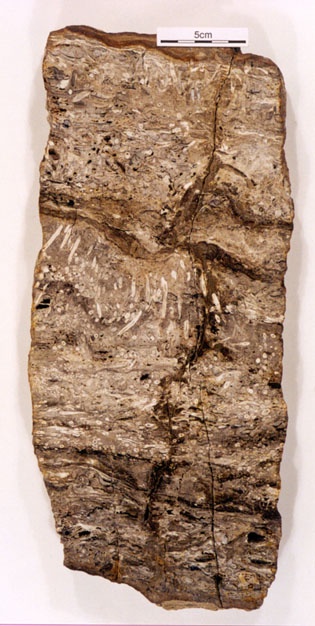
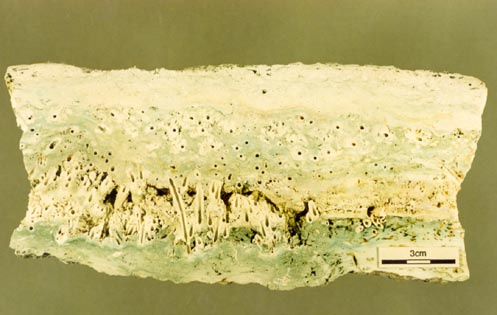
The 'Rhynie chert' falls into this last category and was originally deposited as sinter from ancient hot springs. It is a rather unusual variety of bedded chert of predominantly dark blue-grey colours that is of Early Devonian (Pragian) age, between 400 and 412 million years old (see inset right). The most remarkable feature of this particular rock is that it contains exceptionally well preserved fossils of some of the earliest plants and animals to colonise the land.
- Where is it?
-
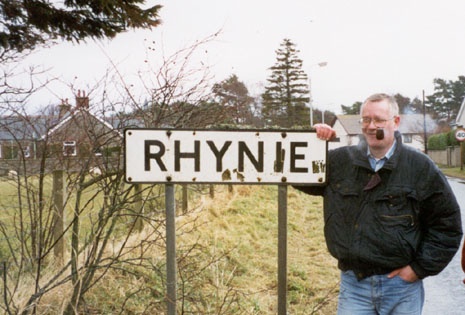
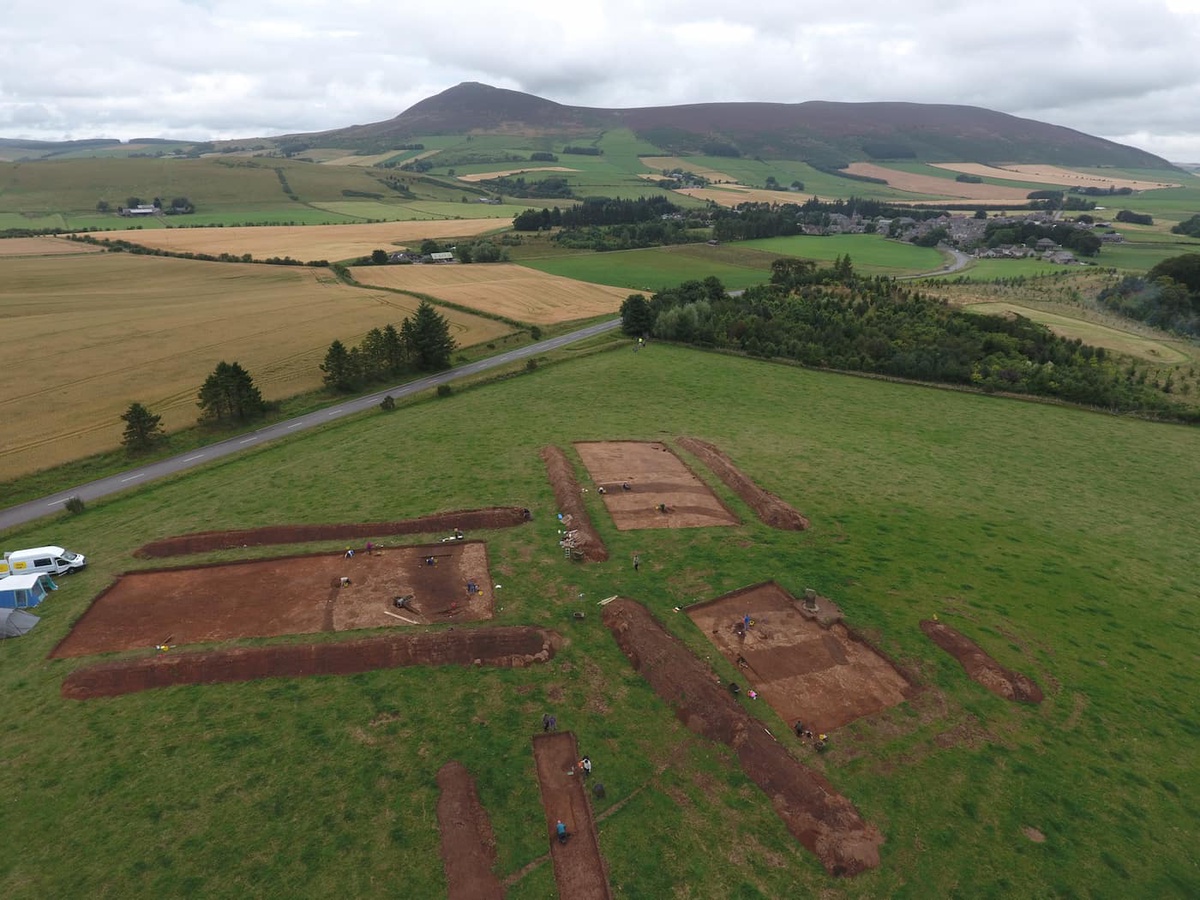
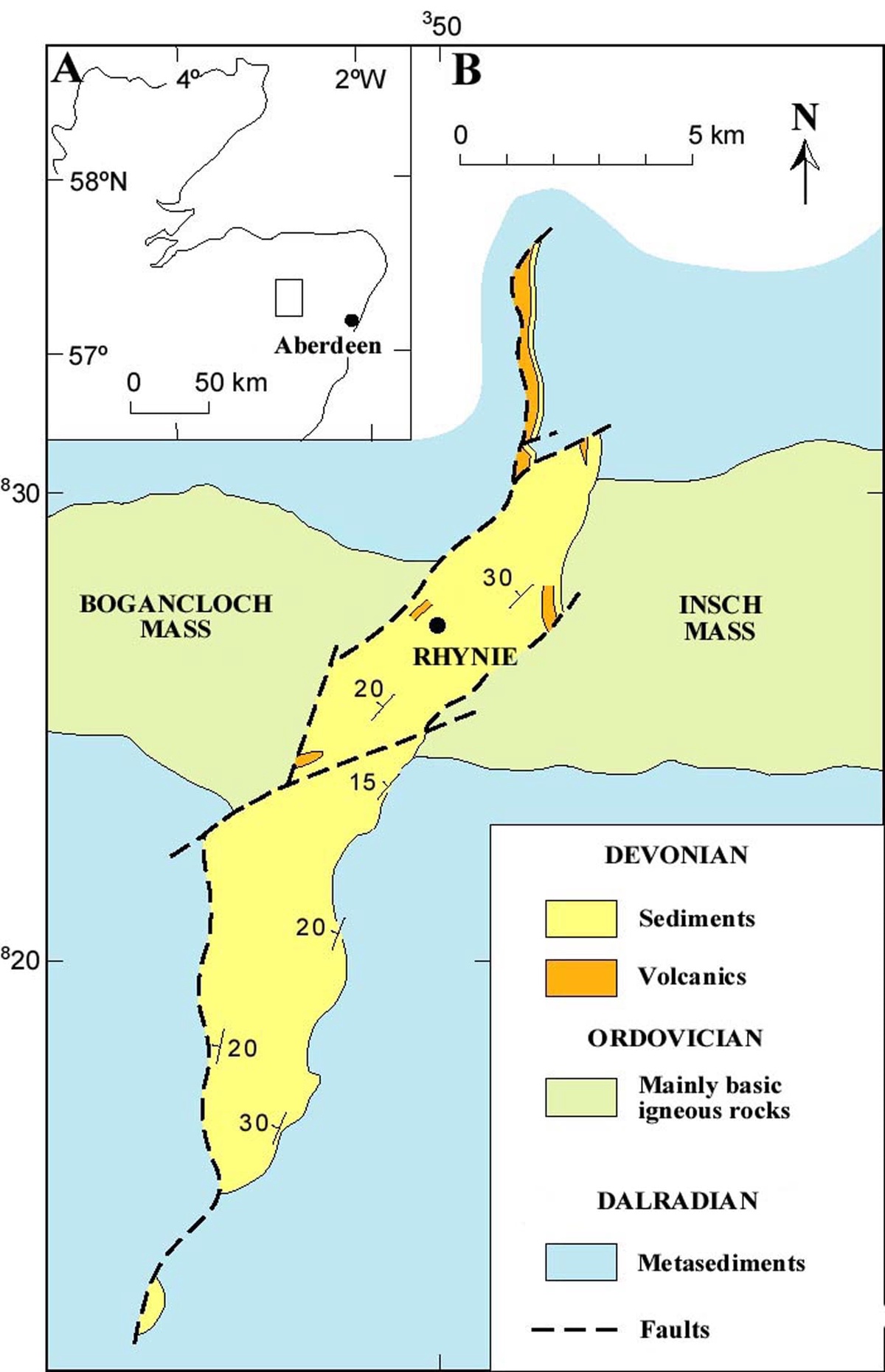
The 'Rhynie chert' is located near the village of Rhynie in north east Scotland, a village approximately 50km north west of Aberdeen (see insets below). The rock itself does not naturally outcrop at the surface. Most fossiliferous chert has been found as loose blocks within the soil. The chert has been located in situ by trenching at various times, and more recently by drilling and coring during 1988 and 1997.
- Why is it important to science?
-
There are a number of factors that give this rock its celebrated status!
- The most important is probably the preservation, in remarkable detail, of an Early Devonian terrestrial and freshwater community of plants and animals, together with bacteria and fungi.
- The plants are sometimes preserved in such exquisite detail that their internal anatomy can be described. They are the best preserved land plants known from 400 million or more years ago and as such form a cornerstone of palaeobotanical studies.
- The animals represent one of the earliest and certainly the best preserved terrestrial fauna known from the Devonian. Recent finds make this the most diverse associated fossil arthropod fauna of terrestrial and freshwater origin from rocks of comparable age anywhere in the world.
- The Rhynie cherts are part of the surface expression of an Early Devonian precious metal-bearing (contains minor gold) hot-spring system. This is the oldest hot spring system known where surface features such as geyser vents are preserved anywhere in the world.
- How was it formed?
-
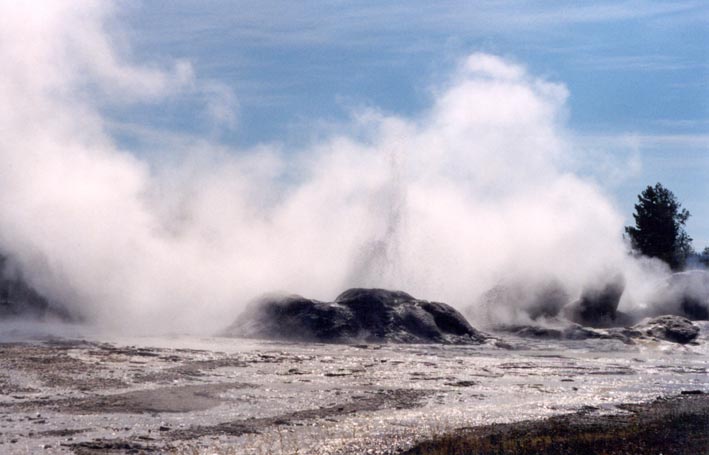
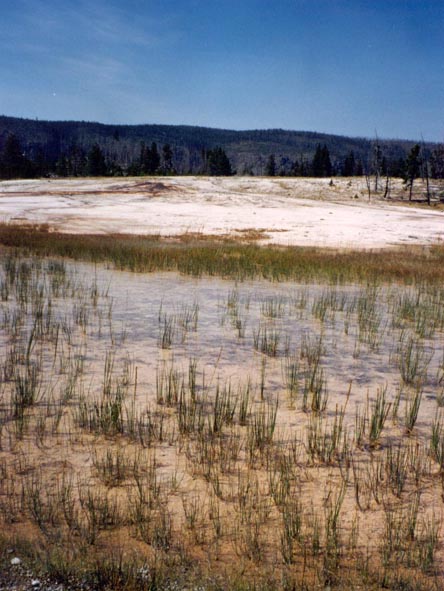
At the present day hot springs depositing siliceous sinters occur in many areas, notably Yellowstone National Park in the USA, and near Rotorua in New Zealand (see insets right and below).