
17 - 20 September 2003
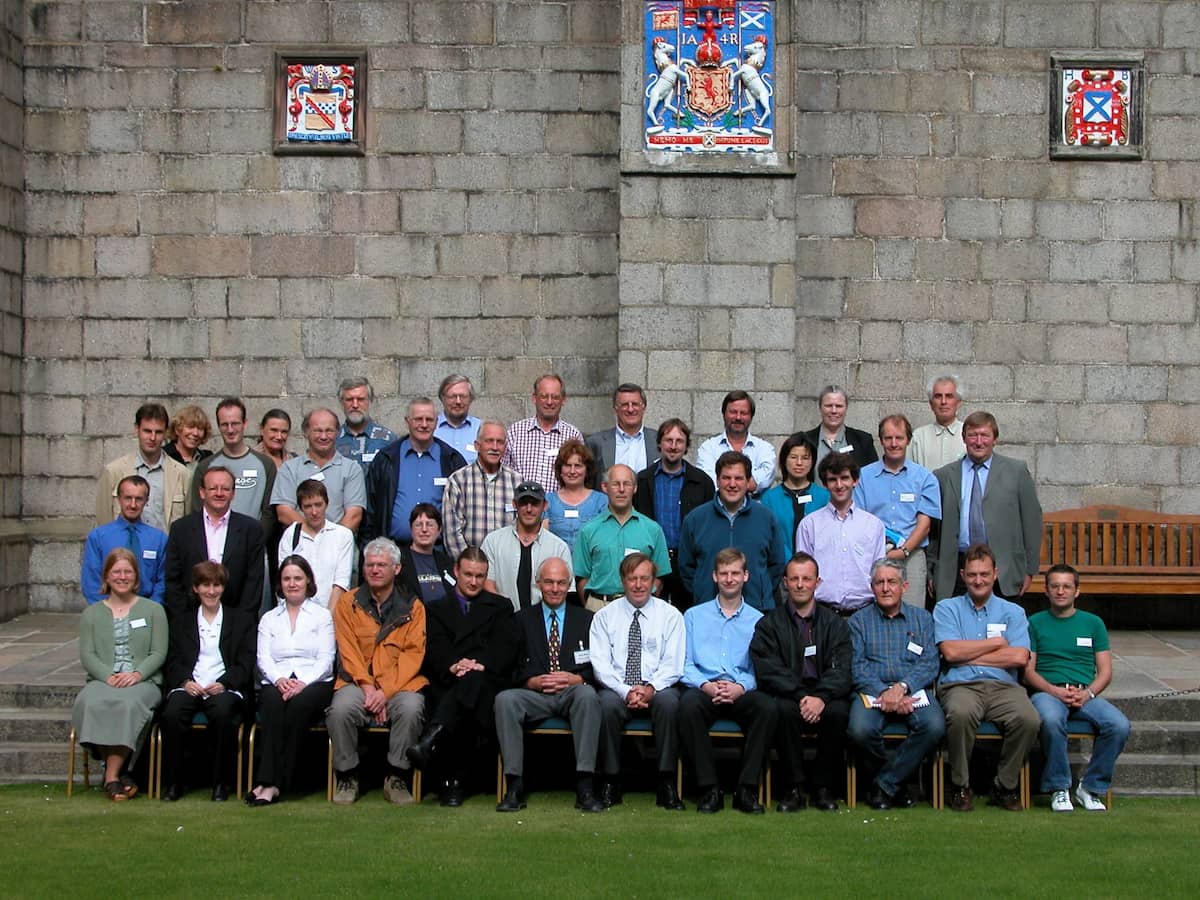
Over forty delegates attended this international conference and workshop, which provided a forum for discussion of all aspects of research on the Early Devonian Rhynie hot spring complex, Aberdeenshire Scotland. As well as from UK and European universities, delegates also came from the US, Australia and New Zealand.
A wide variety of areas of research were covered by oral and poster presentations, and are listed at the bottom of this page. Palaeontological aspects included both review papers and descriptions of new elements of the biota from the Rhynie and Windyfield cherts. Other areas covered included a history of Rhynie research, geology, mineralisation and dating of the Rhynie deposits. Various topics relating to modern hot spring analogues were also explored. These included taphonomy and preservation of biota, sinter formation and facies variation in hot spring environments, silica maturation and sinter diagenesis, together with the role of microbes in silicification, sinter formation and the precipitation of metals.
For the conference, with permission from Scottish Natural Heritage, a trench was excavated through part of the Rhynie chert-bearing unit, revealing a 12 metre sequence of cherts and chert-cemented sandstones interbedded with weathered carbonaceous sandstones, siltstones and shales (see inset below right). For the first time oriented blocks of chert were recovered from in situ chert beds, and will provide material for future work on the palaeoecology of the deposit. The trench was visited by the conference delegates on Saturday 20th September as the main part of a field excursion looking at the geology of the Rhynie area.
Transactions of the Royal Society of Edinburgh - Rhynie special publication:
The papers resulting from the conference and accepted by Transactions of the Royal Society of Edinburgh will shortly be published as Part 4 of Vol 94 (2004) of the Transactions.
Public open day at Rhynie
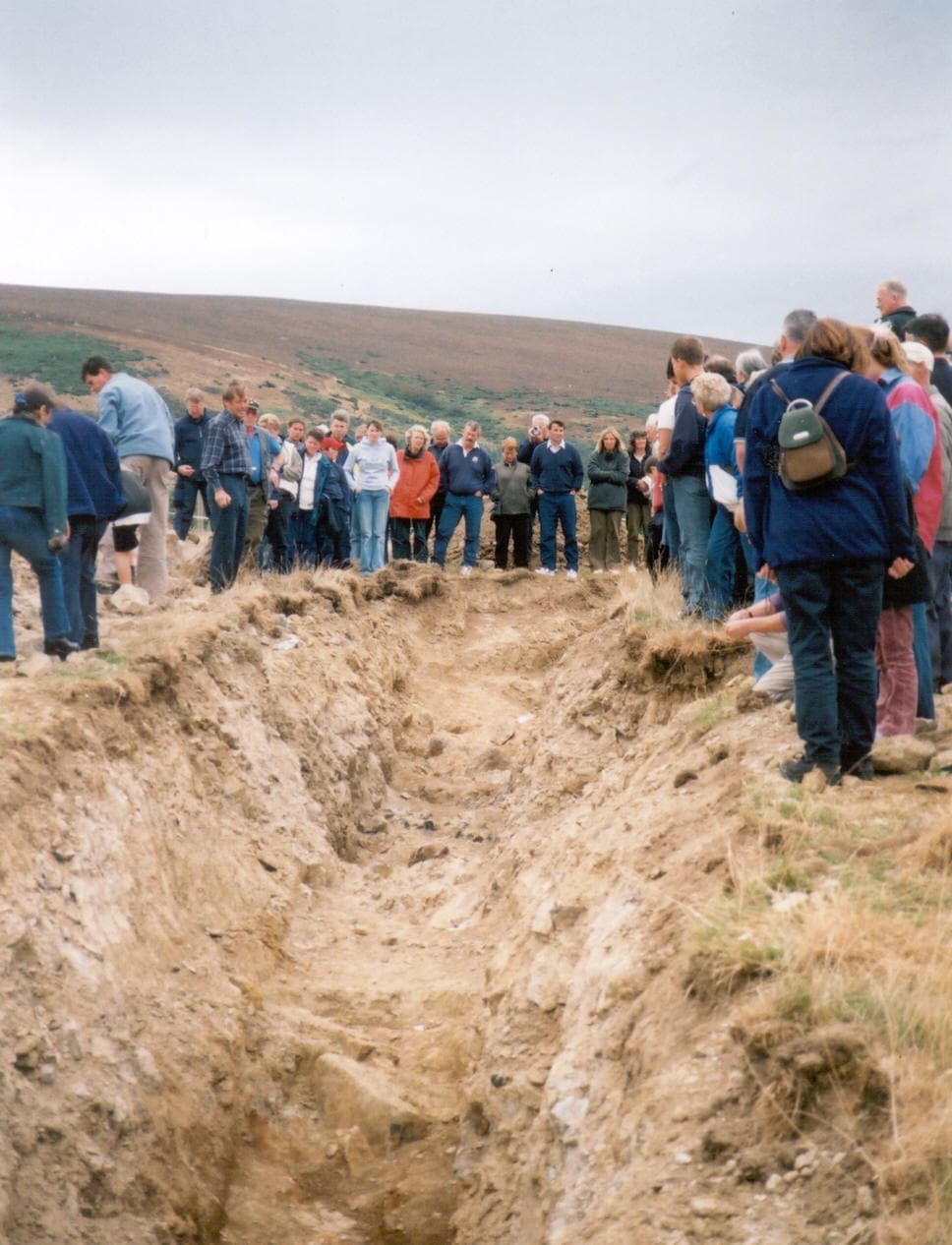
We would like to thank Scottish Natural Heritage, who own the Rhynie chert SSSI (Site of Special Scientific Interest) for their cooperation and allowing the excavation to take place. Jim Duncan is also thanked for his help in excavating the trench.
Conference Presentations
The following contributions were given during the conference, and the abstracts may be viewed here.
Oral Presentations
History
History of research on the geology and palaeontology of the Rhynie area, Aberdeenshire, Scotland. N. H. Trewin (University of Aberdeen)
Geological setting of the Rhynie Hot Spring System. C. M. Rice and W. A. Ashcroft (University of Aberdeen)
Absolute age and underlying cause of hot spring activity at Rhynie. S. F. Parry (University of Aberdeen) and S. R. Noble (N.I.G.L., Keyworth)
Palaeontology
A review of the sporophytes of embryophytes in the cherts at Rhynie . D. Edwards (University of Cardiff)
Rhynie chert gametophytes. H. Kerp and H. Hass (Westfälische Wilhelms-Universität Münster) and N. H. Trewin (University of Aberdeen)
Rhynie chert plants and adaptations to their substrates. H. Hass and H. Kerp (Westfälische Wilhelms-Universität Münster)
Assimilation and transpiration capabilities of rhyniophtic plants and implications for palaeoatmospheric carbon dioxide concentration . W. Konrad and A. Roth-Nebelsick (Institut für Geowissenschaften der Universität Tübingen)
Dispersed spore assemblages from the Lower Devonian sequence of the Rhynie outlier, Scotland. C. H. Wellman (University of Sheffield)
Fungi in the Rhynie chert: a view from the dark side. T. N. Taylor (University of Kansas), H. Hass (Westfälische Wilhelms-Universität Münster), M. Krings (University of Kansas), S. D. Klavins (University of Kansas) and H. Kerp (Westfälische Wilhelms-Universität Münster)
Charophyte algae from the Rhynie Chert. Université de Montpellier), N. H. Trewin (University of Aberdeen) and H. Hass (Westfälische Wilhelms-Universität Münster)
A review of the palaeoenvironments and biota of the Windyfield chert. S. R. Fayers and N. H. Trewin (University of Aberdeen)
A harvestman (Arachnida: Opiliones) from the Early Devonian Rhynie Cherts, Aberdeenshire Scotland. J. Dunlop (Humboldt Universitat, Berlin), L. I. Anderson (National Museum of Scotland), H. Kerp and H. Hass (Westfälische Wilhelms-Universität Münster)
A crustacean with cladoceran affinities from the Early Devonian (Pragian) Rhynie chert. L. I. Anderson, W. R. B. Crighton (National Museum of Scotland)
The feeding habits of Lower Devonian terrestrial fauna; evidence from an assemblage of coprolites preserved in the Rhynie chert. K. Habgood (Praxis Critical Systems, Bath)
Rhynie analogues - Modern hot springs
Experimental taphonomy: silicification of plants in Yellowstone hot spring environments. A. Channing (National Museum and Galleries of Wales)
Windows on silica sinter maturation, preservation and depositional environments, North Island, New Zealand. K. A. Campbell, B. Y. Smith, P. R. L. Browne and T. F. Buddle (University of Auckland)
Modern silicification of microbes in hot spring settings: implications for interpretation of ancient silicified microbes. B. Jones (University of Alberta), R. W. Renaut (University of Saskatchewan) and M. R. Rosen (USGS, Carson City)
Morphology, facies and development of sinter terraces. R. W. Renaut (University of Saskatchewan), B. Jones (University of Alberta) and R. B. Owen (Hong Kong Baptist University)
Exploration of possible metal precipitation pathways resulting from microbial communities present in metalliferous hot springs in New Zealand . Jennifer A. Haddow, Andy Meharg, James Prosser and Clive M. Rice (University of Aberdeen)
Bacterial silicification: Experimental field and laboratory studies . Liane G. Benning (University of Leeds) and Bruce W. Mountain (Wairakei Research Centre, Taupo, New Zealand)
Posters
Meet Medusa: silicification of arthropods in a modern-day, terrestrial, hot-spring system. L. I. Anderson (National Museum of Scotland), A. Channing (National Museum of Wales), N. H. Trewin (University of Aberdeen) and S. Sturtevant (Billings, Montana).
A geothermal wetland dominated by unconsolidated chemically precipitated silica sediment: A window on silica deposition in Palaeozoic geothermal environments? A. Channing (National Museum and Galleries of Wales) and S. Sturtevant (Billings, Montana)
Rhynie chert: Department of Palaeontology, Natural History Museum, London, Collection. P. G. Davis (Natural History Museum)
A new crustacean from the Pragian Rhynie chert, Rhynie, Aberdeenshire, Scotland. S. R. Fayers and N. H. Trewin (University of Aberdeen)
The Rhynie chert - a web-based teaching and learning resource. N. H. Trewin, S. R. Fayers (University of Aberdeen) and L. I. Anderson (National Museum of Scotland)
IGCP 491: Devonian Disaster ~ lahars and lagoons in northern New Brunswick. S. Turner and R. Miller (New Brunswick Museum, Canada)
Geothermal and magmatic-hydrothermal systems in Cenozoic arc basalts, South Shetland Islands, Antarctica . Robert C.R. Willan (BAS, Cambridge), Adrian J. Boyce and Tony E. Fallick (SUERC, Glasgow)
Correlation between 3 boreholes, drilled within the Rhynie SSSI, Aberdeenshire, Scotland . E. Wilson and N. H. Trewin (University of Aberdeen)
Old Red Sandstone Life Beyond the Litter: Devonian Terrestrial Arthropods Outside of Rhynie and Gilboa . Heather M. Wilson (University of Maryland)
Abstracts
Oral Presentations
HISTORY AND FRAMEWORK GEOLOGY
History of research on the geology and palaeontology of the Rhynie area, Aberdeenshire, Scotland.
Nigel H. Trewin1
1Department of Geology and Petroleum Geology, University of Aberdeen, Aberdeen. AB24 3UE.
Geological and palaeontological research in the Rhynie area has progressed in several stages. Following early surveys in the 19th C, Mackie mapped the western margin of the basin in 1910-1913, and discovered the plant-bearing chert. Kidston & Lang (1917-1921) described the plant fossils and Scourfield, Hirst and Maulik the arthropods in the 1920's. Following a 'dark age' of some 30 years, Geoffrey Lyon awakened interest in the late 1950's. Trenching in 1963-1971 provided Lyon with material for three PhD students, and resulted in finds of new plants, and reinterpretation of earlier work. The next phase was initiated by Winfried Remy's discovery of gametophytes in material given to him by Lyon. Since 1980 the Münster school has continued to make exciting discoveries. Aberdeen University involvement began in 1987 with geochemical work confirming a hot-spring origin for the chert. Drill cores taken in 1988 and 1997, and further trenching has allowed structural, sedimentological and stratigraphic reappraisals, and resulted in the discovery of a new biota in the Windyfield chert. Long-term collaborative international research continues to advance interpretation of this unique Early Devonian hot-spring system, and the remarkably diverse freshwater and terrestrial biota of the cherts.
Geological setting of the Rhynie hot spring system
C.M. Rice1 and W.A. Ashcroft1
1Department of Geology and Petroleum Geology, University of Aberdeen, Aberdeen, Scotland. AB24 3UE.
Trenching to bedrock combined with a ground magnetic survey over the margins of the northern half of the Rhynie basin show that the basin margins are mostly fault controlled. Four sets are recognised: N-S, NE-SW, NW-SE and ENE-WSW. The first three sets include faults believed to have been active during sedimentation. The last set hosts Permo-Carboniferous dykes and may be of a similar age.
The stratigraphic succession comprises three units, a lower mixed unit of sandstones, shales, conglomerates and andesitic lava (>650m), a middle unit of laminated grey shale (c.250m) and an upper unit of laminated sandstones and shales (>200m).
Small areas of chert float are found about 2 km east of the Rhynie SSSI and are interpreted as the surface expression of chert pods within the middle shale unit, which is believed to be the lateral equivalent of the shales which host the Rhynie cherts. The Windyfield cherts occur at a higher stratigraphic level within the upper unit. No further centres of hydrothermal activity have been found in the northern half of the basin.
The beds are folded into a NE-SW trending syncline and refolded in the Rhynie area into a NW-SE trending anticline which, together with cross faults, control the distribution of the Rhynie cherts. The folding predates a Permo-Carboniferous dyke and may be related to compressive phases within a regional strike-slip system of late Caledonian age.
Absolute age and underlying cause of hot spring activity at Rhynie
Stephen F. Parry1 and Stephen Noble2
1Department of Geology and Petroleum Geology, University of Aberdeen, Aberdeen, Scotland. AB24 3UE
2NERC Isotopes Geosciences Laboratory, c/o BGS, Keyworth, Nottingham NG12 5GG
Whilst significant progress has been made with regards to our understanding of the Rhynie hot-spring system, both an absolute age for the hydrothermal activity and a definitive causal mechanism have remained elusive. High-precision U-Pb (TIMS) geochronology, as applied to key igneous bodies, has the potential to resolve these outstanding problems. In this contribution, we thus report new U-Pb mineral ages for an andesitic lava (possessing a marginal peperitic facies where seen abutting sediments lithologically and palynologically identical to those bearing the Rhynie cherts) and a suite of variably altered and mineralized intermediate-acidic intrusions present in the Rhynie district. Published genetic models for Rhynie require amendment.
Two temporal groupings are recognised amongst the dated intrusions viz. (1) c. 470 Ma and (2) 425-430 Ma. Such ages clearly preclude the direct involvement of these bodies with a Pragian-earliest Emsian hot-spring system. Furthermore, none of the supposedly c. 400 Ma "Newer granites" - now believed to be no younger than c. 417 Ma - can be invoked as a heat/metal-fluid source for Rhynie. Heat influx associated with a pulse of andesitic magmatism, evidenced by the lava flows and tuffs of the Rhynie outlier, must therefore have driven the hydrothermal cells ultimately responsible for hot-spring activity. Pre-Devonian and Devonian structures served to channel the metalliferous fluids surfaceward. Metals such as molybdenum and tungsten, more commonly associated with granitic magmatism, were derived by en route scavenging.
PALAEONTOLOGY
A review of the sporophytes of embryophytes in the Cherts at Rhynie
Dianne Edwards1
1Department of Earth Sciences, University of Cardiff, PO Box 914, Cardiff, CF10 3YE
Almost 90 years of investigation on the Rhynie Chert have added only one new embryophyte sporophytic taxon (Trichopherophyton teuchansii) to the five plants known to Kidston & Lang (Rhynia gwynne-vaughanii, Aglaophyton major, Asteroxylon mackiei, Horneophyton lignieri and Nothia aphylla). A further recent addition is Ventarura lyonii from the Windyfield site. This somewhat slow progress in adding to species diversity has been compensated by intriguing advances in disparity which have raised almost as many questions as such phenomenal preservation has solved. Sophistication in growth pattern and in cell construction and arrangement is masked, with one exception, by simplicity in their axial, non-leafy architecture. Detailed anatomical studies have permitted inferences on palaeoeophysiology including quantification of their water relations, while stomatal frequencies have been used as atmospheric CO2 concentration proxies. Spore dispersal mechanisms have been deduced from sporangial wall construction. Uncertainty still remains on the precise taxonomic placement of Nothia, Horneophyton and Aglaophyton. In all cases more detailed information is needed on the ultrastructure of water-conducting cells, including the apparent absence of discontinuous secondary wall thickenings in Aglaophyton which seemingly combines features of the hydroids of mosses with other homoiohydric characters of tracheophytes. This lack of conspecificity and arguably lack of congeners with coeval Pragian megafossils preserved in clastic rocks of the Old Red Sandstone combined with the unusual hot-spring setting of the ecosystem, provide evidence to support the contention that the Rhynie Chert assemblage may be a highly adapted one.
Rhynie chert gametophytes
Hans Kerp1, Hagen Hass1 and Nigel Trewin2
1 Forschungsstelle für Paläobotanik, Westfälische Wilhelms-Universität, Hindenburgplatz 57, D-48143 Münster, Germany
2Department of Geology and Petroleum Geology, University of Aberdeen, Aberdeen, Scotland. AB24 3UE.
The Rhynie chert is not only of importance as one of the oldest anatomically preserved land floras, but also for the remarkable detail of preservation and for the occurrence of plants preserved in situ. Seven land plant species are currently known from the Rhynie chert and the neighbouring Windyfield chert; five are common, one is rare and one is only known from the Windyfield chert. Several of these plants are now known in great detail.
Among the most remarkable discoveries of the last decades are several gametophytes that have been described in the 1980s and early 1990s by Winfried Remy and his co-workers. They described two gametophytes with antheridia as Lyonophyton rhyniensis and Kidstonophyton discoides, and one gametophyte with archegonia as Langiophyton mackiei. Based on similarities in tracheid structure these can be related to three sporophytes, respectively Aglaophyton major, Nothia aphylla, and Horneophyton lignieri.
In recent years more gametophytes showing various stages of development have been found. Moreover, several new types of gametophytes have been encountered. With the discovery of archegonia-bearing axes belonging to Aglaophyton major, and antheridia-bearing gametophytes of Horneophyton lignieri all essential stages of the life cycles of these two plants are known. One of the most spectacular finds is an in situ gametophyte stand of Rhynia gwynne-vaughanii with numerous antheridia- and archegonia-bearing axes. Of three of the Rhynie chert plants the alternation of generations can now be fully documented.
Rhynie chert plants and adaptations to their substrates
Hagen Hass1 and Hans Kerp1
1Forschungsstelle für Paläobotanik, Westfälische Wilhelms-Universität, Hindenburgplatz 57, D-48143 Münster, Germany
Seven species of land plants have been described from the Rhynie and Windyfield cherts. Of five of these, which are also preserved in in situ stands, larger portions including basal parts are known. All these plants have a clonal growth and their basal parts served for anchorage and nutrition. Despite the relatively limited number of species, each of these plants shows specific morphological and histological adaptations of its basal parts to its substrate, varying from creeping rhizomatic axes, via subterranean tubers to deeper penetrating root-like axes.
Various aspects of clonal growth and plant architecture will be discussed, including the ontogeny of the basal parts, and different of types of growth strategies. Also different histological adaptations of the basal parts to anchoring and nutrition will be shown. The basal parts of all five plant species are penetrated by glomacean fungi. Apparently these fungi were lining as endophytes within the intercellular spaces and did not harm their hosts, suggesting broad adaptive relations between soil fungi and these Rhynie chert plants.
Assimilation and transpiration capabilities of rhyniophytic plants and implications for palaeoatmospheric carbon dioxide concentration
W. Konrad1 and A. Roth-Nebelsick1
1Institut für Geowissenschaften der Universität Tübingen, Sigwartstrasse 10, D-72076 Tübingen, Germany
Ecophysiological interrelationships of rhyniophytic plants are explored by modelling their gaseous exchange, which is basic to transpiration and assimilation. The simulation of the local gas fluxes through the various tissue layers of a plant axis is based on the gas diffusion inside a porous medium and on a well-established photosynthesis model. Necessary parameters consist of kinetic properties of the assimilation process and other physiological parameters (which have to be taken from extant plants), as well as physical constants and anatomical parameters, which can be obtained from well-preserved fossil specimens. Applying the model to three Rhynie chert taxa, it is found that gaseous exchange increases from Aglaophyton major to Rhynia gwynne-vaughanii to Nothia aphylla. Aglaophyton major shows the most extreme water-conserving strategy of the three taxa. The results are consistent with data from the fossil record. They indicate clearly that the structural properties of early land plants reflect an optimisation strategy with a fine-tuning of gaseous exchange. The results provide evidence that the atmospheric carbon dioxide concentration of the Lower Devonian amounted to roughly 120 mmol/m3.
Dispersed spore assemblages from the Lower Devonian sequence of the Rhynie outlier, Scotland
Charles H. Wellman1
1Centre for Palynology, University of Sheffield, Dainton Building, Brookhill, Sheffield, England, S3 7HF
Spore assemblages have been obtained from fine-grained horizons in cored intervals from throughout the Lower Devonian sequence of the Rhynie outlier. The palynological preparations contain spores, phytodebris (cuticles, tubular structures, fungal hyphae) and fragments of arthropod cuticle. Preservation varies: it is generally excellent and the spores of relatively low thermal maturity, but in close proximity to lava and chert horizons thermal maturity is often high. All of the spore assemblages belong with the polygonalis-emsiensis Spore Assemblage Biozone indicating a Pragian age, and suggesting that the Rhynie deposits accumulated rapidly. Comparisons with coeval spore assemblages from southern Britain and the Ardennes-Rhenish region demonstrate regional differences. The Rhynie spore assemblages are generally of low diversity, with certain taxa, and indeed morphotypes (e.g. patinate spores), conspicuous by their paucity or total absence. This probably reflect differences between the flora of an inland intermontane basin (Rhynie) and the lowland floodplain (southern Britain). Detailed examination of in situ spores preserved in the Rhynie chert plants permits identification of these spores in the dispersed spore assemblages. Analysis of the occurrence and distribution of these spores in dispersed spore assemblages (from Rhynie and elsewhere) is providing vital evidence regarding the ecology and distribution of the parent plants.
Fungi in the Rhynie Chert: a view from the dark side
T. N. Taylor1, H. Hass2, M. Krings1, S. D. Klavins1, and H. Kerp2
1Department of Ecology and Evolutionary Biology, Natural History Museum and Biodiversity Research Center, University of Kansas, Lawrence, KS, USA
2 Forschungsstelle für Paläobotanik, Westfälische Wilhelms-Universität, Hindenburgplatz 57, D-48143 Münster, Germany
It has been hypothesised that fungi originated in the Precambrian based on molecular data; the earliest fossils, however, appear in the Ordovician. Although these reports suggest that fungi have a long evolutionary history, none provides direct evidence for interactions with microorganisms, plants, or animals. The first unequivocal evidence of fungal interactions with plants occurs in the Early Devonian Rhynie Chert. The exquisite preservation of this ecosystem provides a unique opportunity to document the morphology and life histories of fungi, and to decipher interactions with other organisms. Continuing investigations of this aspect of the ecosystem have identified forms assignable to several major taxonomic groups (i.e. Chytridiomycota, Ascomycota, Zygomycota), as well as interactions including saprophytism, parasitism, and mutualism. Especially significant are several forms of specific host responses to fungal infection, which indicate that Early Devonian plants had already evolved methods of defence that are identical to those of extant plants, and that the mechanisms underlying the establishment and sustenance of interactions between plants and fungi were well in place prior to the age of the Rhynie Chert.
Charophyte Algae from the Rhynie Chert
Ruth Kelman1, Monique Feist2, Nigel H. Trewin1 and H. Hass3
1 Department of Geology and Petroleum Geology, University of Aberdeen, Aberdeen, Scotland, AB34 3UE
2Laboratoire de Paléontologie, Université de Montpellier 2, Place Eugène Batallion, Montpellier, France, F-34095
3 Forschungsstelle für Paläobotanik, Westfälische Wilhelms-Universität, Hindenburgplatz 57, D-48143 Münster, Germany
A diverse range of biota, representing both subaerial and subaqueous ecosystems, has been preserved in the Early Devonian Rhynie cherts, an ancient hot spring deposit in NE Scotland. A key element of the subaqueous ecosystem is the freshwater alga Palaeonitella cranii; this relatively small, uncalcified charophyte has furcating branchlets and dactyls composed of allantoid cells. In the fertile part of the plant antheridia are found at every branching node, giving Palaeonitella a nested appearance. Female gametangia have been observed amongst P. cranii thalli but are not seen in association with the antheridia and it has not been possible to determine the relationship between the two. The crustaceans Castracollis and Lepidocaris and the euthycarcinoid Heterocrania are associated with Palaeonitella and all are found in chert that formed as sinter in freshwater pools.
Palaeonitella cranii is very similar in both structure and form to extant species belonging to the Nitelleae tribe of the Characeae. However, the reproductive organs, although undoubtedly those of charophytes, lack the diagnostic characteristics that would allow Palaeonitella to be assigned to an established genera, either fossil or extant. Therefore, whilst P. cranii can be considered an ancestor of the Nitelleae, its exact taxonomic position remains unclear.
A review of the palaeoenvironments and biota of the Windyfield chert
Steve R. Fayers1 and Nigel H. Trewin1
1Department of Geology & Petroleum Geology, University of Aberdeen, Aberdeen, Scotland, AB24 3UE
The Windyfield chert is located 700 meters north-east of the original Rhynie chert locality at Rhynie, Aberdeenshire. Originally identified by concentrations of surface float material, a drilling and trenching programme of the area in 1997 revealed a chert "pod" in situ interbedded with fluvial/lacustrine sands and hydrothermally altered shales. This new material has allowed further insights into the nature of the palaeoenvironments and palaeoecology of the Rhynie area during the Early Devonian.
Chert morphotypes identified from float blocks and trench material range from tabular beds to lenticular pods displaying massive, nodular, laminated and brecciated textures. A suite of floral and faunal associations, when combined with distinctive macro and microscopic chert textures, have been used to interpret depositional conditions. Palaeoenvironments ranged from terrestrial laminated, brecciated and vegetated sinter sheets to low temperature pools and marginal aquatic settings.
The flora comprises six macro-land plant species, nematophytes, charophytes and various fungi and probable cyanobacteria. Arthropods include lipostracan branchiopods, a euthycarcinoid, trigonotarbid arachnids, centipedes, eoarthropleurids and other enigmatic myriapods. Together the Windyfield and Rhynie cherts contain the most diverse associated fossil arthropod fauna of terrestrial and freshwater origin from rocks of comparable age anywhere in the world.
A harvestman (Arachnida: Opiliones) from the Early Devonian Rhynie cherts, Aberdeenshire, Scotland
Jason A. Dunlop1, Lyall I. Anderson2, Hans Kerp3 and Hagen Hass3
1Institut für Systematische Zoologie, Museum für Naturkunde der Humboldt-Universität zu Berlin,Invalidenstraße 43, D-10115 Berlin, Germany
2Department of Geology & Zoology, National Museums of Scotland, Chambers Street, Edinburgh, Scotland EH1 1JF
3Forschungsstelle für Paläobotanik, Westfälische Wilhelms-Universität, Hindenburgplatz 57, D-48143 Münster, Germany
A harvestman (Arachnida: Opiliones) is described from the Early Devonian (Pragian) of the Rhynie Chert, Aberdeenshire, Scotland. This new genus and species is the oldest known harvestman and the fossil material includes both males and females preserving, respectively, a cuticular penis and ovipositor within the opisthosoma. Both these structures are of essentially modern appearance. The Rhynie fossils also include a pair of large, branching trachea, again with a detailed morphology very similar to that of living taxa. This is the oldest record of arachnid tracheal respiration and strongly implies that the Rhynie harvestman was fully terrestrial. Based on its annulate, setose ovipositor the Rhynie fossils can be excluded from the extant clades Dyspnoi and Laniatores in which the ovipositor lacks annulations. The presence of median eyes and long legs argues against its inclusion in the extant clade Cyphopthalmi. Our fossils therefore represent either the extant clade Eupnoi or its putative sister taxon. This remarkable material is thus implicitly a crown-group harvestman and is one of the oldest known crown-group chelicerates. It also suggests an extraordinary degree of morphological stasis within the eupnoid line of the Opiliones, with the Devonian forms differing little in gross morphology - and perhaps in reproductive behaviour - from their modern counterparts.
A crustacean with cladoceran affinities from the Early Devonian (Pragian) Rhynie chert
Lyall I. Anderson1, William R. B. Crighton1 and Hagen Hass2
1Department of Geology & Zoology, National Museums of Scotland, Chambers Street, Edinburgh, Scotland, EH1 1JF
2Forschungsstelle für Paläobotanik, Westfälische Wilhelms-Universität, Hindenburgplatz 57, D-48143 Münster, Germany
Blocks of Early Devonian (Pragian) Rhynie chert collected by Prof. Dr. W. Remy in 1979 have yielded many examples of a new, unusual aquatic arthropod. The small, broadly ovoid test appears to be bivalved, but lacks the concentric growth lines of conchostracans. In transverse cross-section, the ventral surface exhibits a broadly "W"-shaped outline. A series of fine, setose appendages are preserved positioned either side of the mid-line axis. In well-preserved examples, a ring-shaped internal structure is seen in this transverse aspect. In longitudinal cross-section, this structure is resolved into a segmented tube running axially. A small, anteriorly positioned rostrum is flanked either side by a pair of deep pits perhaps indicative of the sockets of antennal appendages. The arthropods are commonly found clustered together around plant axes, comprising groups of up to 20 similarly sized individuals. The chert texture enclosing many individual specimens indicates a sub-aqueous preservational environment
The morphology of this new arthropod strongly suggests that it is a benthic cladoceran. This is significant as the record of the group only extends as far back as sub-fossil material from Recent lacustrine sediments. Examples of the same organism have recently been discovered in chert preparations from the nearby Windyfield site.
The feeding habits of Lower Devonian terrestrial fauna; evidence from an assemblage of coprolites preserved in the Rhynie Chert
Kate Habgood1
1Praxis Critical Systems, 20 Manvers Street, Bath, BA1 1PX.
The fossils preserved in the Rhynie and Windyfield cherts include abundant and diverse coprolites. Coprolites of this age, known from Old Red Sandstone sedimentary rocks, are typically unvaried in morphology and content is largely dominated by plant spores. The assemblage preserved in the Rhynie chert differs; the coprolites are diverse in content and morphology and relatively few contain abundant plant spores. This assemblage of coprolites allows us some insight into the nature of Lower Devonian terrestrial food webs, indicating the presence of consumers differing in diet and life-habit. Modern relationships between faeces origin and character provide a key to interpretation, the faeces produced by soil-dwelling arthropods provide particularly useful analogues. Analysis of coprolite content and the available food provides further clues to their origin. They are concluded to be the product of at least four types of consumer including detritivores and herbivores. Spore-rich coprolites may suggest the presence of sporivory, however experimental results and fossil evidence reported in this paper suggest that they may be the product of detritivores.
RHYNIE ANALOGUES - MODERN HOT SPRINGS
Experimental taphonomy: Silicification of plants in Yellowstone hot spring environments
Alan Channing1
1Geology Department, National Museum and Galleries of Wales, Cardiff
Morphological change during crystallisation masks the primary silica deposition fabrics that could reveal physicochemical conditions and processes active during silica permineralisation of fossil plants. Taphonomy experiments conducted in Yellowstone hot springs and opal-A subfossils, however can provide analogous evidence of modern plant degradation and silicification.
In experiments, high water temperatures and waterlogging reduced microbial decomposition, promoting the retention of three-dimensional structure even in thin-walled parenchymatous cells. Silica in solution entered plants via rhizomes, stomata and through the degrading epidermis/cuticle. Silica permeated parenchymatous cells within 30-days of immersion. Within plants, silica polymerisation created cell wall lining films and intra-/intercellular silica sols (colloidal suspensions). Following 11-months, plants were thoroughly silica indurated. Inter- and intracellular silica deposition created a robust silica matrix that stabilised and replicated cell and tissue structure.
Silica fabrics in adjacent cells of similar function/structure displayed heterogeneity indicative of intraorganic microenvironments and fluctuating physicochemical conditions. Narrow particle size distributions suggest high levels of silica supersaturation and a single short-lived silica nucleation event, however, particle-aggregate cementation indicates low levels of supersaturation. Particle growth to the upper limit of colloidal stability and colloidal crystal structures indicate prolonged sol stability, whilst floc-like particle networks indicate localised sol instability.
Windows on silica sinter maturation, preservation and depositional environments, North Island, New Zealand
Kathleen A. Campbell1, B.Y. Smith1, P.R.L. Browne1 and T. F. Buddle1
1Geology Department, Private Bag 92019, University of Auckland, Auckland, New Zealand
Numerous siliceous sinter deposits (Miocene-Recent) occur in the Taupo Volcanic Zone, Northland and Coromandel. They show increases in structural ordering during diagenesis (noncrystalline opal-A, to paracrystalline opal-CT/opal-C, to microcrystalline quartz - moganite), progressive reductions in porosity and water content, and increases in particle density over ~30-40 kyrs. Microtextures also change from solid opal-A spheres, to hollow spheres with minute holes that unfold into hexagonal platelets, which then gather into closely packed opal-CT bladed lepispheres. Further diagenesis occurs along either fibrous or granular morphological pathways.
Biotic/abiotic inclusions are commonly well-preserved, except where patchy diagenesis can produce massive, mottled, quartzose sinter. Consequently the aging of silica sinter recorded in the North Island's thermal areas opens a series of taphonomic windows within a continuum of mineralogic-textural change. This paleoenvironmental-diagenetic approach is useful for reconstructing biosignals in these and other extreme environments preserved in the geologic record.
The geological settings of many New Zealand sinters are analogues for Rhynie and other older hot-spring systems. Topographically inverted landscapes contain stratigraphic associations that include sinters interbedded with fluvial, lacustrine, volcaniclastic and/or debris deposits. They indicate paleo-hydrology of fossil valleys, silicification of surrounding sediments by infusion of thermal waters, and ancient steam condensate alteration triggering past landslides.
Modern silicification of microbes in hot spring settings: implications for interpretation of ancient silicified microbes
Brian Jones1, Robin Renaut2, and Michael R. Rosen3
1Department of Earth and Atmospheric Sciences, University of Alberta, Edmonton, Canada, T6G 2E3
2Department of Geological Sciences, University of Saskatchewan, Saskatoon, Canada, S7N 5E2
3 US Geological Survey, 333 W. Nye Lane, Carson City, Nevada, U.S.A., 89706
The geological and biological utility of silicified microbes relies largely on the validity of their taxonomicidentifications. Such fossils commonly appear to be well preserved. Accordingly, they are commonly assigned to one of the major groups of microbes and invoke comparisons with extant taxa that underpin inferences about palaeoenvironmental conditions.
Modern, silica-precipitating hot springs, like those in New Zealand, are natural laboratories for assessing microbial silicification. In those systems, some microbes are silicified while they grow whereas others have been replaced and encrusted by opal-A silica over several decades. Their three-dimensional preservation indicates that rapid silicification occurred before decay had destroyed them. Thus, many silicified microbes seem to be life-like replicas of the original microbes and therefore appear to preserve all the features needed for their identification. This, however, is not the case. The taxonomic identification of extant cyanobacteria, for example, relies on as many as 37 different features, most of which are not preserved by silicification. Thus, identification of silicified microbes must rely on a limited set of morphological characteristics.
Our incomplete understanding of how diagenesis affects microbes following their initial silicification further complicates the identification of ancient silicified microbes. The identification of ancient silicified microbes, therefore, must be undertaken with great caution.
Morphology , facies and development of sinter terraces
Robin W. Renaut1, Brian Jones2 and R. Bernhart Owen3
1Department of Geological Sciences, University of Saskatchewan, Saskatoon, Canada, S7N 5E2
2Department of Earth and Atmospheric Sciences, University of Alberta, Edmonton, Canada, T6G 2E3
3Department of Geography, Hong Kong Baptist University, Kowloon Tong, Hong Kong, China
Terraces composed of siliceous sinter have formed downslope of geyser and hot spring vents at many major geothermal fields, including the Taupo Volcanic Zone (New Zealand), Yellowstone (Wyoming), and El Tatio (Chile).
The terraces are composed mainly of rimstone pools and rimstone dams, but they vary greatly in scale, morphology, and facies. Terrace growth commonly begins with opal-A precipitation at minor breaks of slope or upon obstacles, where fluids cool and evaporate. Terrace accretion and progradation are enhanced by positive feedback mechanisms. The factors that control terrace growth and its associated facies include original slope, chemical of composition of the outflow waters (especially amorphous silica saturation and pH), volume and temporal patterns of discharge, climate, and hydrostatic head. For example, where silica saturation is high and terrace growth is rapid, or where fluids are acidic or sulphurous, terrace surfaces commonly lack microbial mats even where waters are cool. Ornate geyserite or stratiform sinters may form. In contrast, thick bacterial mats may cover terrace surfaces where the outflow waters are neutral-alkaline and their silica saturation level is more moderate. Stromatolitic and intraclastic sinters form in the terrace pools. Such differences produce different fabrics in the terrace deposits that provide clues to the general nature of the spring system.
Exploration of possible metal precipitation pathways resulting from microbial communities present in metalliferous hot springs in New Zealand
Jennifer A. Haddow1,3, Andy Meharg1, James Prosser2 and Clive M. Rice3
1Department of Plant and Soil Science, University of Aberdeen, Aberdeen, Scotland, AB24 3UU
2Department of Molecular and Cell Biology, University of Aberdeen, Aberdeen, Scotland, AB25 2ZD
3Department of Geology and Petroleum Geology, University of Aberdeen, Aberdeen, Scotland, AB24 3UE
The Rhynie system is the oldest known terrestrial hot spring system and contains within its sinters elevated concentrations of gold, arsenic, antimony, tungsten and molybdenum. These metal concentrations may be a result of inorganic chemical processes; however, there is also a possibility that microorganisms played a role in concentrating metals at the surface of the system.
Geothermal activity in the Taupo Volcanic Zone, North Island, New Zealand provides a modern analogue for the Rhynie system as some of the thermal springs are actively precipitating high concentrations of heavy metals, including the suite seen at Rhynie. In Champagne Pool at Wai-o-tapu, orange precipitates along the edge of the pool contain up to 80 mg gold/kg and 170 mg silver/kg. In an attempt to determine the mechanism driving the precipitation of these heavy metals, we are using sediment, water and bacterial mat samples from these springs to inoculate microcosms (laboratory scale cells) designed to mimic the geothermal conditions in the field. Through these we hope to understand the role, if any, that the abundant microbial life within these pools plays in the precipitation of heavy metals. A range of molecular biology and geochemical techniques will be used to determine whether the inoculated organisms are participating in the precipitation of heavy metals within the laboratory microcosms.
Bacterial silicification: Experimental field and laboratory studies
Liane G. Benning1 and Bruce W. Mountain2
1School of Earth Sciences, University of Leeds, England
2IGNS, Wairakei Research Centre, Taupo, New Zealand
The silicification of microorganisms is a common occurrence in active hot spring environments due to exposure to geothermal waters supersaturated with respect to amorphous opaline silica. Such sites represent contemporary analogues for conditions under which microorganisms in ancient settings may have been fossilized. The role microorganisms play in silica precipitation is not well defined and previous studies have focused on the morphological details and quality of preservation, both of which are influenced by microbial activity. Although these studies provide useful information for a better understanding of the qualitative aspects of fossilization, they provide no insight into the mechanisms controlling microbially-mediated silica accumulation in environments such as modern hot springs or the ancient oceans.
Presented here are experimental results from a study that compares natural microbiall silicification rates as observed in geothermal areas in the Taupo Volcanic Zone in New Zealand (Wairakei and Tokaanu) with analogous silicification experiments carried out in the laboratory using Bacillus flavothermus, a thermophilic bacterium isolated from Wairakei. Spectroscopic and microscopic evidence for the differences between natural and laboratory silicification processes and the nucleation, growth, and aggregation dynamics of silica nano-spheres that form on the bacterial surfaces are discussed.
POSTERS
Meet Medusa: silicification of arthropods in a modern-day, terrestrial, hot-spring system
Lyall I. Anderson1, Alan Channing2, Nigel Trewin3 and Smokey Sturtevant4
1Department of Geology & Zoology, National Museums of Scotland, Chambers Street, Edinburgh, Scotland, EH1 1JF
2 Geology Department, National Museum & Galleries of Wales, Cardiff
3Department of Geology and Petroleum Geology, University of Aberdeen, Aberdeen, Scotland, AB24 3UE
4 5225 Alkali Creek Rd., Billings, Montana, MT 59106-9511, USA
The Norris Geyser Basin is arguably the most changeable and geothermally active area of Yellowstone National Park, Wyoming, USA. The basin consisting of many fumaroles, "frying pans" (areas of sizzling ground), hot springs, hot pools, mud pots and geysers. Norris is predominantly an acid sulphate area with many of the geothermal features currently precipitating silica from solution. We present here the initial findings of a survey of the Norris Geyser Basin deposits and report a wide and varied fauna of arthropods preserved, and currently preserving, within the siliceous sinters of the area. These include dragonflies, crickets, moths, spiders, beetles and hoverflies. To date, only three of the many hot springs in the area have yielded silicified fauna: Porkchop geyser, Opalescent spring and Medusa geyser. Subtly different preservational mechanisms are in operation at each locality, but the main controlling factors are abnormally high dissolved silica values, frequent vent overspill and the presence of adhesive bacterial mats. The mode of preservation of these arthropods has obvious implications for floral and faunal studies on the fossil sinter deposits of the Early Devonian Rhynie and Windyfield cherts, Scotland, and the Upper Devonian Drummond Basin cherts, Australia and comparisons are drawn with these sites.
A geothermal wetland dominated by unconsolidated chemically precipitated silica sediment: A window on silica deposition in Palaeozoic geothermal environments?
Alan Channing 1 and Smokey Sturtevant 2
1 Geology Department, National Museum & Galleries of Wales, Cardiff
2 5225 Alkali Creek Rd., Billings, Montana, MT 59106-9511, USA
In Yellowstone, geothermally influenced wetlands (where hot spring fluids mix with abundant emergent-aquatic plants) are a major silicification environment. Here, plant preservation occurs at the cellular level, in growth position (features common to many Rhynie chert beds) as soil horizons become inundated by rapidly accreting opal-A sediments. Sediment remobilisation (scours) and soft-sediment deformation (slumps/desiccation cracks), features noted in the Palaeozoic Conway/Verbena geothermal system, Australia, where the vegetation also locally comprised wetland plants, are common.
Such wetlands therefore have potential as analogues for Palaeozoic environments of silicification. However, most modern geothermal wetland sediments are dominated by diatom frustules, a biochemically precipitated silica source only present since the Late Jurassic.
A recently discovered wetland, fed by geothermal run-off and dominated by chemically precipitated opal-A sediment, may provide valuable evidence of silica deposition/silicification prior to the advent of the diatom silica-sink. The wetland contains plants and sedimentary structures directly comparable to those of more widespread diatomaceous wetlands. Over a 6-month period it experienced almost constant inundation by siliceous fluids, the development of suspended silica sols, and the colonisation, growth, senescence, partial silicification and burial of in situ wetland plants as suspended silica was deposited.
Rhynie Chert: Department of Palaeontology, Natural History Museum, London Collection
Paul G. Davis1
1 Department of Palaeontology, Natural History Museum, Cromwell Road, London, SW7 5BD, UK.
The purpose of this poster presentation is to interest current and future researchers in utilising the exceptionally large holdings of uncut blocks of Rhynie chert held at the NHM.
In 1963 and 1964 two trenches were dug at the Rhynie locality for the International Botanical Congress. The first trench (called 1A) was opened in the "lower field" in 1964. The other trench (called 2A) was opened in the "upper field" and remained open until 1964. This trench was almost exactly on the position of Tait's No. 2 trench (opened circa 1912).
The lithologies present in Trench 2A were recorded by Dr A.G. Lyon and Dr W. El-Saadawy, the results of which were recorded in a manuscript and El-Saadawy's PhD thesis.
Whilst these trenches were open, Dr John Pettit, Cedric Shute and Peter Whybrow (all from the NHM) collected several tons of highly fossiliferous material from one trench. These samples were collected at intervals of 1 foot (0.3m) for the first 10 feet (3.05m) of the trench. Correlating these samples with the work of Lyon and El-Saadawy has led the author to conclude that the samples were collected from Trench 2A
A new crustacean from the Pragian Rhynie chert, Rhynie, Aberdeenshire, Scotland
Steve Fayers1 & Nigel H. Trewin1
1Department of Geology & Petroleum Geology, University of Aberdeen, Aberdeen, Scotland, AB24 3UE
A new crustacean is described from the Rhynie Chert. This discovery is the first unequivocal addition to the crustacean element of the fauna since the discovery of the enigmatic lipostracan Lepidocaris rhyniensis.
The material comprises complete individuals up to 8mm long plus fragmentary remains. The head is frequently detached from the body, and damage to the anterior of the thorax suggests most specimens are exuviae. The head region appears domed with a labrum and a pair of robust mandibles and long biramous antennae. A few specimens exhibit what may be a detached and poorly preserved cephalo-thoracic shield. The trunk is multi-segmented, both thorax and abdomen possessing similar ring-like somites. The thorax variably comprises up to 26 segments. The anterior 11 segments possess long homologous, phyllopodous appendages, the remainder variably possess 10 to 15 phyllopodous appendages with a disposition of one per somite. The abdomen comprises up to 28 apodous segments. The tail comprises a telson with two caudal furcae.
The new animal is a branchiopod, possibly belonging in the subclass Calmanostraca. It is associated with Lepidocaris rhyniensis, charophytes and probable cyanobacteria within a clotted chert texture, indicative of deposition in a subaqueous environment, most probably a temporary pool.
The Rhynie Chert - a web-based teaching and learning resource
Nigel H. Trewin1, Steve Fayers1 & Lyall I. Anderson2
1Department of Geology & Petroleum Geology, University of Aberdeen, Aberdeen, Scotland, AB24 3UE
2 Department of Geology & Zoology, National Museums of Scotland, Chambers Street, Edinburgh, Scotland, EH1 1JF
We have created, with funding from the Joint Information Systems Committee (JISC), a web-based teaching and learning resource based on the Rhynie Chert and its flora and fauna. The resource is designed for use as an Honours level palaeontology course, but has application for botanists, zoologists, hot-spring enthusiasts and interested amateurs.
The data-base includes sections on History of Research, Geology of the Rhynie area, the biota, and comparisons with modern hot-spring environments. A glossary and extensive reference list is also included. An illustrated description is given for each of the major plants and animals so far described from the chert.
A "teaching manual" section gives ideas for tutors on course content and assessment with suggested essay and examination question topics. This particular section will be password protected, tutors interested in accessing this should contact the authors.
The learning resource may be accessed through the University of Aberdeen, Department of Geology and Petroleum Geology web site at www.abdn.ac.uk/rhynie and the authors would welcome suggestions for improvements and feedback from tutors using the course. The site will be updated as new material is described in the literature.
GCP 491: Devonian Disaster ~ lahars and lagoons in northern New Brunswick
Susan Turner1, 2 and Randy Miller1
1. New Brunswick Museum, 277 Douglas Avenue, Saint John, NB Canada E2K 1E5
2. School of Geosciences, Monash University, Clayton, Victoria 3800, and Queensland Museum, S. Brisbane, Qld 4101, Australia
Early Devonian (Pragian-Emsian) rocks from the Campbellton Formation indicate early complex terrestrial ecosystems resembling a modern land surface. Modelling the evolution of early vertebrates within these environments can potentially aid understanding of current problems (deforestation, land/water degradation). A new look at the Atholville beds exposes volcanic events inundating vegetated coastal plains. Sugarloaf Mountain was probably the source of ash and fast-flowing mudflows. Ostracodes, snails, eurypterids, plants, cephalaspids, placoderms, acanthodians, and chondrichthyans were killed in one devastating event, leaving a chaotic mess of remains and bedded rock chunks. This geographically-limited basal beds lahar formed almost instantaneously. Higher beds are paler-coloured, lagerstätten mudstones with well-preserved remains suggesting quieter lagoonal conditions. Large carapaces of euryperid Pterygotus anglicus result from mass-moult ecdysius. The earliest known shark with tooth rows and a dental lamina, Doliodus, also had paired fin spines, necessitating all acanthodian taxa based on fin spines to be examined including from comparative sites, e.g., in Scotland. Comparison of faunas suggests close geographic links between the Midland Valley and Avalon terranes as island arcs then among a range of terranes scattered across temperate to subtropical (mainly northern) palaeolatitudes. Eurypterids, plants, and vertebrates are closely comparable between Canada, Scotland (and as far 'east' as Podolia).
Geothermal and magmatic-hydrothermal systems in Cenozoic arc basalts, South Shetland Islands, Antarctica
Robert C.R. Willan1, Adrian J. Boyce2 and Tony E. Fallick2
1Geological Sciences Division, British Antarctic Survey, Cambridge CB3 0ET, UK
2 Scottish Universities Environmental Research Centre, Glasgow G75 0QF, Scotland, UK
Hydrothermal systems in eroded settings may be useful analogues in understanding the Rhynie system at depth. The South Shetland Islands volcanic arc (West Antarctica, ~ 62°S) contains an 80 km zone of propylitized volcanic rocks, with numerous silicic, sericitic, argillic and advanced-argillic occurrences. At Barton Peninsula, a terrestrial sequence of plant-bearing shales and basaltic lavas (49-44 Ma) contains massive chalcedonic-quartz, cherty veining and sericitic/propylitic alteration along ESE faults. Similar silicic clasts occur in nearby lapilli tuffs. Drusy quartz, calcite veins may represent feeders to the near-surface silicification. A deep, near neutral-pH geothermal system is suggested by anomalous Ag, Pb, Sb, Au, Te, Se, Zn, As, δ34S ~ -2 � and 18Oqz of +4 to +7 �. The lavas and silicified zones were then brecciated and replaced by massive alunite (+ native S, pyrite) and pyrophyllite (+ pyrite, zunyite, diaspore) with anomalous Hg, Se, As, Bi, Au, Tl, Sb, Cu. Such advanced-argillic alteration is typical of magmatic volatiles (δ18O = +6 to +10 �) mixing with near-surface (<500 m) meteoric groundwaters (δ18O -8 �, D �55 �). δ34S alunite of +9 to +27 � and pyrite of �20 to �5 � indicate complex sulphur sources and kinetic processes. Barton Peninsula may be an analogue for Rhynie, 500m to 1 km below the land surface. Eocene plant communities in the South Shetland Islands arc may have been centred on active hot-spring systems.
Correlation between 3 boreholes, drilled within the Rhynie SSSI, Aberdeenshire, Scotland
Elizabeth Wilson1 and Nigel H. Trewin1
1Department of Geology and Petroleum Geology, University of Aberdeen, Aberdeen, Scotland, AB24 3UE
The Rhynie Cherts represent the earliest known subaerial expression of a hot-spring system and preservation of the biota in the vicinity of the hot-springs provides a unique insight into Early Devonian terrestrial and freshwater ecosystems. The cherts occur within the Dryden Flags and Shales; a series of fluvial overbank and lacustrine sediments, deposited on an alluvial plain with small lakes.
Three boreholes drilled within the Rhynie SSSI intersected the Rhynie chert in situ allowing identification of up to 38 discrete chert beds. The floral content, organic and detrital textures, of each chert bed were used to attempt correlation of the Chert beds and give an insight into lateral variation.. Flora and macroscopic chert textures were found to be of greatest use for correlation.
It is shown that over the 45-65 m distance covered by the boreholes general correlation can be made of the chert-bearing unit, and also sandstone and shale units. However there is no bed-to-bed correlation of the cherts or other lithologies, neither is there a correlation in the sequences of plants recorded.
It is considered that the sequence was deposited in the distal regions of sinter deposition on a low angle outwash apron from a hot spring. Overbank flooding from a northward-flowing river system periodically inundated the outwash apron, depositing sand and mud and interrupting sinter deposition. Similar environments are seen today on the distal marshy areas of outwash aprons from hot springs in Yellowstone National Park, USA.
Old Red Sandstone Life Beyond the Litter: Devonian Terrestrial Arthropods Outside of Rhynie and Gilboa
Heather M. Wilson1
1Department of Entomology, 4112 Plant Sciences Building, University of Maryland, College Park, MD 20742, USA
Much of our knowledge of Devonian arthropod faunas of the Old Red Sandstone continent is derived from two deposits, the Lower Devonian Rhynie Chert of Scotland and the Middle Devonian Panther Mountain Formation at Gilboa, New York State. At each of these localities, the arthropod fauna is preserved as organic cuticle, in chert and mudstone respectively. These faunas are comparable in composition to extant litter/soil faunas and are comprised of small detritivores (e.g. mites, collembolans, small arthropleurideans) and their predators (e.g. trigonotarbids, centipedes, pseudoscorpions). At each of these localities macro-arthropods are only represented by fragmentary remains, likely reflecting taphonomic biases. In contrast to Rhynie and Gilboa, the remaining known ORS terrestrial arthropods are macro-arthropods. Macro-arthropods have been found in three majors areas of the ORS: the Midland Valley of Scotland, the Maritime Provinces of Canada, and the Catskills of Pennsylvania and New York States. Arthropods from these localities consist almost exclusively of scorpions, millipedes and kampecarids, of which the millipede fauna (comprised of five genera in three orders) is best known.